Ageing and sexing details:
|
JAN - JUL: after-second-year
male |
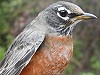
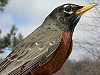
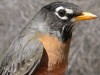
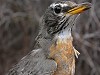
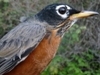
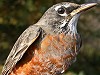
ASY males are the darkest in appearance, with rich orange underparts and a substantial blackish tone to the head.
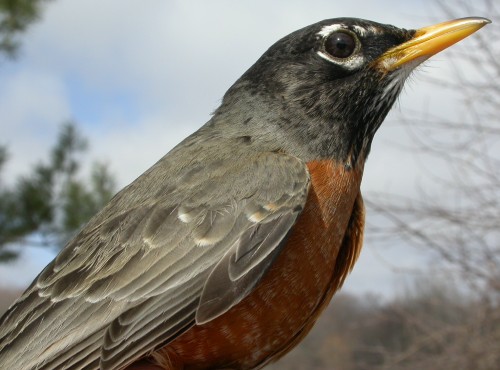
A somewhat intermediate ASY male; some are even darker both below and on the head.
Photo by Marcel Gahbauer,
McGill Bird Observatory (QC), April 2006
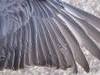
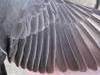
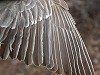
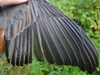
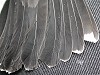
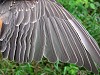
ASY American Robins lack molt limits on the wing, but beware that there can be some variability in appearance among feathers, sometimes making it difficult to be certain, and some individuals may not be reliably aged in spring.
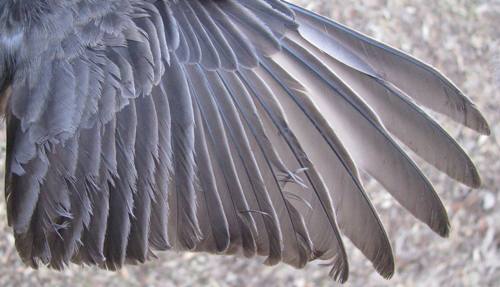
A typical ASY wing.
Photo by Peter Pyle,
Delta Marsh (MB), May 2009
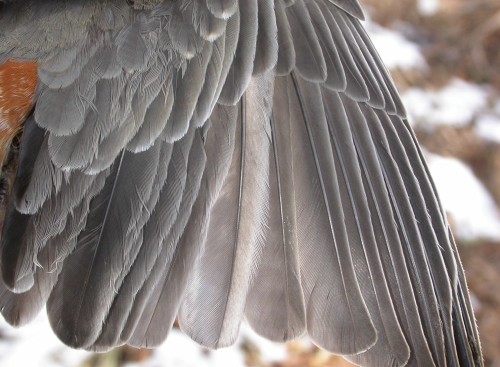
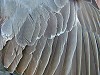
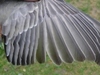
An unusual ASY wing in which the first secondary is unusually pale.
Photo by Marcel Gahbauer,
McGill Bird Observatory (QC), April 2006
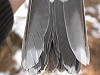
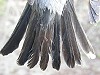
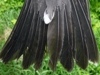
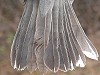
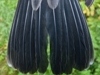
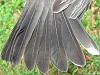
ASY male rectrices are dark and tend to be relatively broad and rounded, though there are many intermediates with respect to shape, and only distinct extremes may be reliable for ageing. ASY males also tend to have somewhat more white at the tip of outer rectrices, but this requires further study.
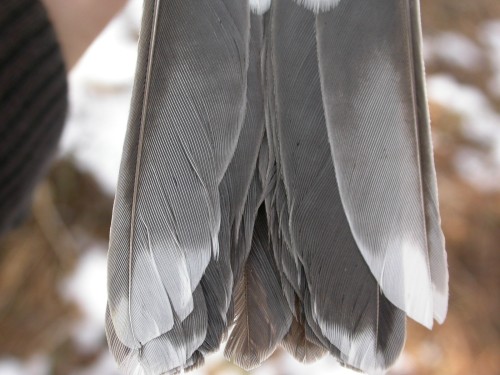
Photo by Marcel Gahbauer,
McGill Bird Observatory (QC), April 2006
RETURN TO AGE/SEX
OVERVIEW
|
JAN - JUL: after-second-year
female |
ASY females tend to have a somewhat paler orange breast than males, and also are usually not quite as dark on the head or back.
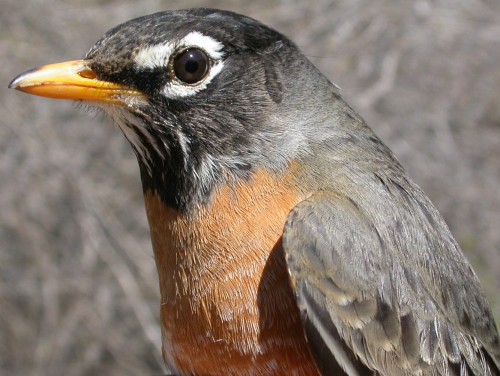
A relatively dark ASY female American Robin.
Photo by Marcel Gahbauer,
McGill Bird Observatory (QC), May 2006
ASY American Robins generally have a
uniformly grayish wing, lacking molt limits. However, ageing
based solely on the wing should generally be avoided because there is much
variability in appearance.
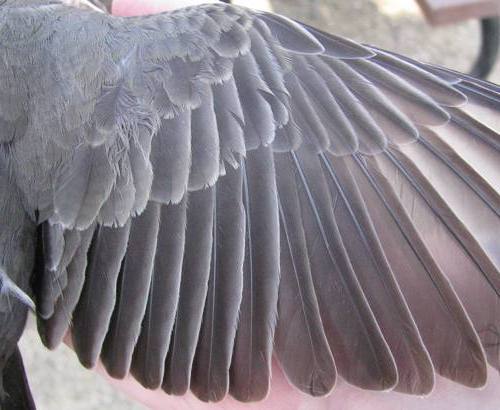
A distinct ASY wing, uniform in colour and with pale edging to broad outer primary
coverts, and showing very little wear overall.
Photo by Peter Pyle,
Delta Marsh (MB), May 2009
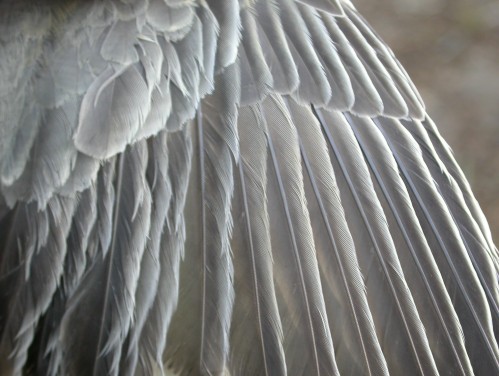
A closeup of another ASY female wing, with somewhat more wear showing on the
greater coverts and secondaries, making it more difficult to assess.
Photo by Marcel Gahbauer,
McGill Bird Observatory (QC), May 2006
ASY females have dark brown to blackish rectrices, usually relatively broad and rounded, although shape can be quite variable. Although ASY American Robins typically have fresher-looking tails by spring, the feathers can appear quite abraded by spring, as is the case with other species that spend a lot of time on
the ground. Unless both tail and wing criteria
clearly indicate the same age, robins should be aged AHY in spring.
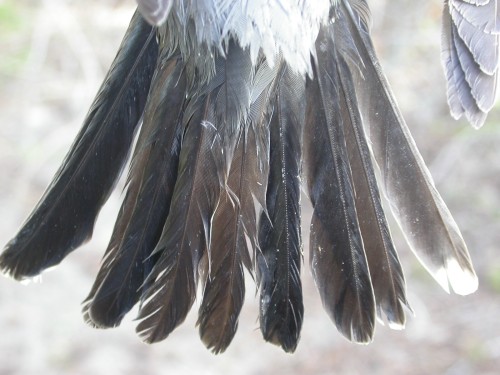
A rather abraded ASY female tail.
Photo by Marcel Gahbauer,
McGill Bird Observatory (QC), May 2006
RETURN TO AGE/SEX
OVERVIEW
|
JAN - JUL: second-year
male |
SY males are generally not quite as dark as ASY males, especially on the breast, but overall colour is not necessarily reliable for ageing.
SY robins can be easily recognized if they retain any juvenile greater
coverts with white marks extending up along the shaft. If these
are not visible, check for older secondaries contrasting with one or two fresh
tertials, as these are occasionally replaced in the preformative molt.
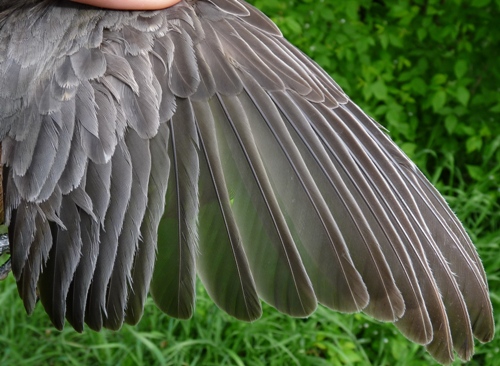
A distinct example, with the inner replaced greater coverts darker, grayer, and longer
than the adjacent retained juvenile covert showing a distinct shaft streak.
Photo by Marcel Gahbauer,
McGill Bird Observatory (QC), May 2010
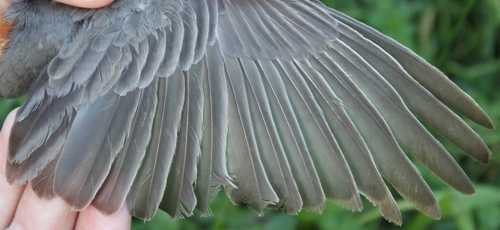
A less distinct example, without a clear molt limit, but note the generally more worn
appearance, lack of whitish edging on the primary
coverts, and rather pointed primaries.
Photo by Peter Pyle,
Braddock Bay Bird Observatory (NY), May 2010
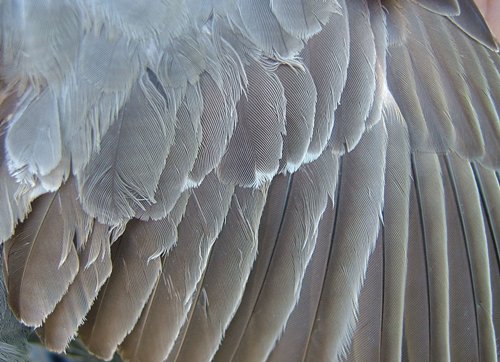
Another example showing a clear contrast between formative inner greater coverts vs.
shorter retained juvenile greater coverts with white shaft streaks.
Photo by Peter Pyle, San Francisco Bay Bird Observatory (CA), April 2006
SY males generally have
grayish to grayish brown tails, with relatively narrow and pointed.
However, some ASY birds also have rather worn tails that can sometimes look similar, so caution
must be used, and ageing should be done in combination with wing
characteristics.
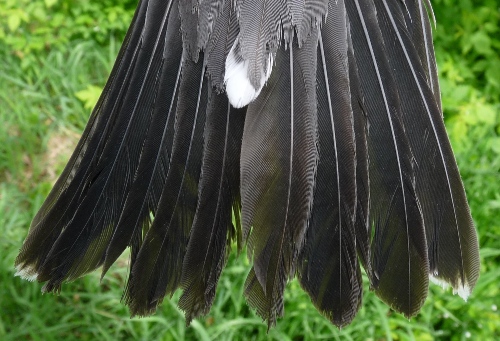
Photo by Marcel Gahbauer,
McGill Bird Observatory (QC), May 2010
RETURN TO AGE/SEX
OVERVIEW
|
JAN - JUL: second-year
female |
SY females are the palest of all, usually with a fair amount of white or gray interspersed with a dull orange breast, and relatively light grayish-brown above, with minimal dark plumage on the head.
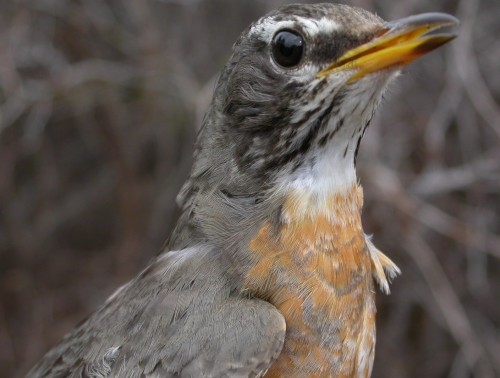
Photo by Marcel Gahbauer,
McGill Bird Observatory (QC), May 2005
SY American Robins can be easily recognized if they retain any juvenile greater
coverts with white marks extending up along the shaft. If these are not visible, check for older secondaries
contrasting with 1-2 fresh tertials, as these are occasionally replaced
in the preformative molt. However, there is much
variability in the feather coloration on the wing, and therefore unless
the greater coverts and/or tertials are distinctly indicating SY, the
bird should often be considered AHY unless the tail is particularly
distinct.
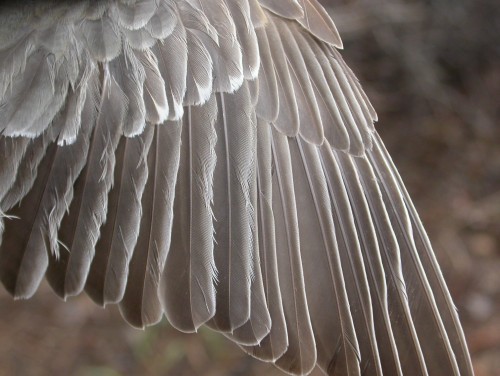
A particularly distinct SY wing, with large and prominent shaft streaks on the
retained juvenile greater coverts.
Photo by Marcel Gahbauer,
McGill Bird Observatory (QC), May 2005
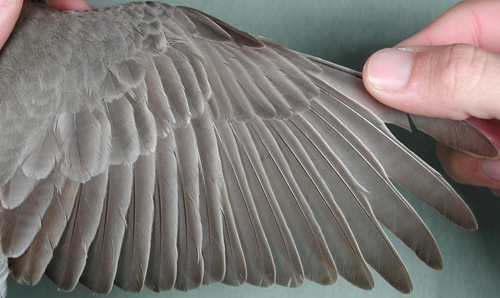
A much more subtle molt limit, with the inner five greater coverts somewhat longer
and grayer than the four retained outer greater coverts.
Photo by Peter Pyle,
Big Sur Ornithology Lab (CA), May 2007
SY females generally have grayish to
grayish brown tails, with relatively narrow and pointed rectrices. However,
some ASY American Robins also have rather worn-looking tails, so caution must be
used, and ageing should be done in combination with wing
characteristics.
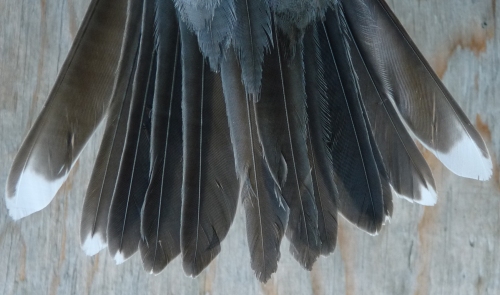
Photo by Simon Duval,
McGill Bird Observatory (QC), May 2010
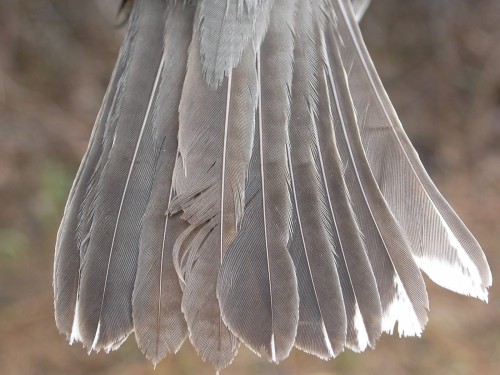
A pale and relatively worn SY female tail, but with unusually extensive white, including
tips on all except the central rectrices.
Photo by Marcel Gahbauer,
McGill Bird Observatory (QC), May 2005
RETURN TO AGE/SEX
OVERVIEW
|
JUN - DEC: after-hatch-year
male |
AHY males have a dark orange breast and blackish head; some also have an orange tinge to the nape and or wings.
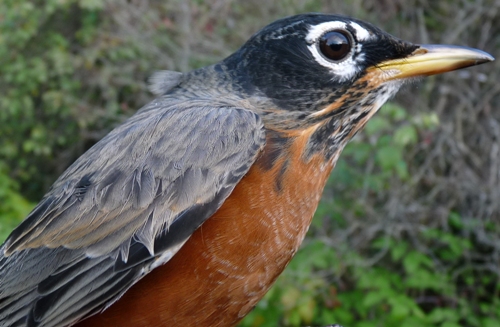
A dark AHY male, readily recognizable just by overall plumage.
Photo by Marcel Gahbauer,
McGill Bird Observatory (QC), October 2009
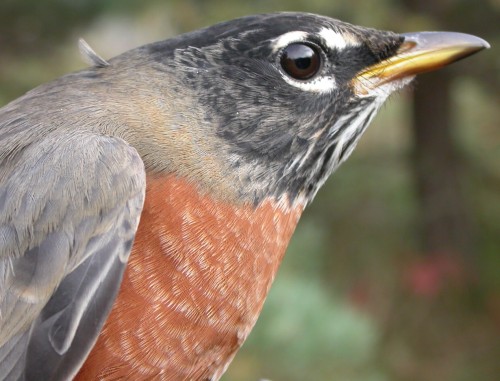
A somewhat lighter AHY male, but note still the dark orange breast and blackish head,
as well as the orange nape.
Photo by Marcel Gahbauer,
McGill Bird Observatory (QC), October 2005
AHY males have a dark wing lacking molt limits, but there are often pseudolimits that can be tricky. Note that the primaries tend to be somewhat broader than on HY American Robins, though differences in shape may be more subtle in fall than spring.
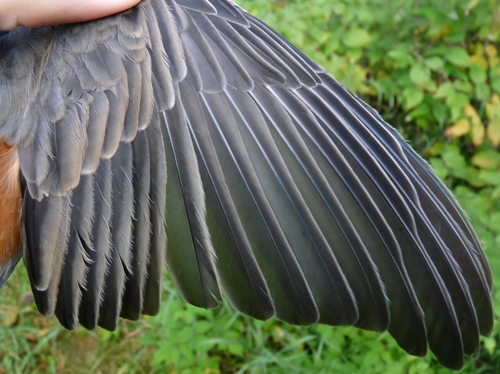
A typically dark AHY male wing; note that in this case there is a fair amount of orange
edging on the greater coverts, even extending to the tertials.
Photo by Marcel Gahbauer,
McGill Bird Observatory (QC), October 2009
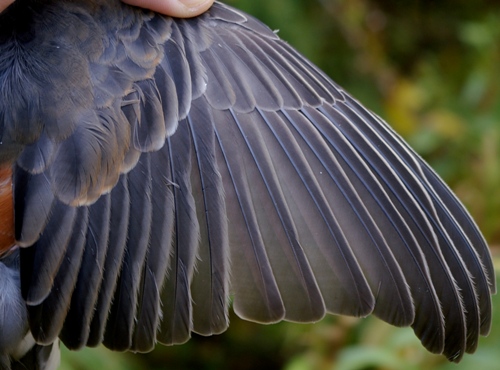
An example of a pseudolimit between the greater and primary coverts; because of the
variability in appearance of the wing, it is advisable to always consider other features
too before determining age of American Robins, unless obviously juvenile feathers
are present (usually among the greater coverts).
Photo by James Junda,
McGill Bird Observatory (QC), October 2008
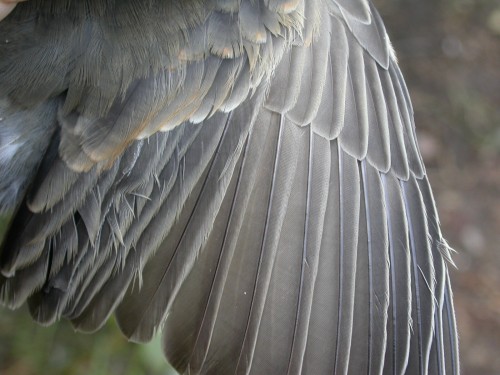
A somewhat paler wing, but relatively uniform in appearance aside from some
orange edging to the inner greater coverts.
Photo by Marcel Gahbauer,
McGill Bird Observatory (QC), October 2005
AHY males typically have blackish rectrices that are relatively broad and rounded.
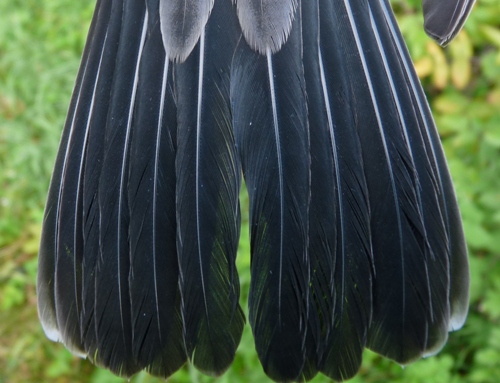
A relatively typical AHY male tail, although many have more extensive white at the
tips of the outer rectrices.
Photo by Marcel Gahbauer,
McGill Bird Observatory (QC), October 2010
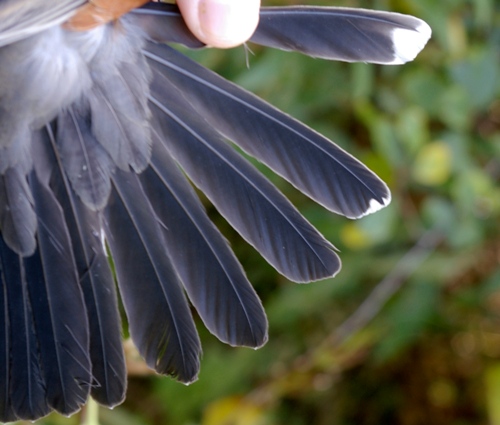
Another example, showing the broad and rounded shape of the outer rectrices.
Photo by James Junda,
McGill Bird Observatory (QC), October 2008
RETURN TO AGE/SEX
OVERVIEW
|
JUN - DEC: after-hatch-year
female |
AHY females may have some dark patches on the head, but generally not a solid dark cap like AHY males. They have a moderately dark orange breast, but usually mottled with a fair amount of white or gray.
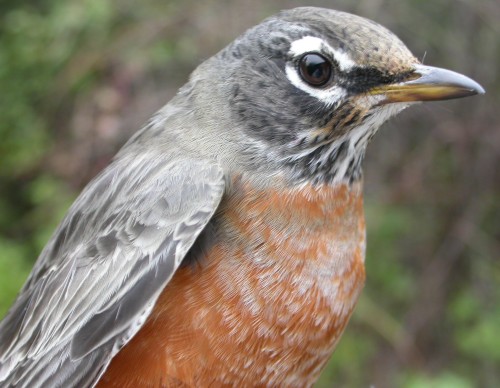
A typical AHY female, with some white and gray patches on the breast, and darker
feathers on the head mostly limited to the lores.
Photo by Marcel Gahbauer,
McGill Bird Observatory (QC), October 2005
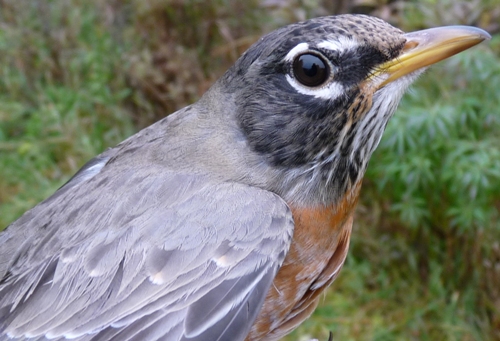
Another pattern, with somewhat less orange on the breast, and a slightly darker head.
Photo by Marcel Gahbauer,
McGill Bird Observatory (QC), October 2010
AHY females typically have a fairly uniform wing, grayish but usually not quite as dark as AHY males. Note that there may be small white tips to the greater coverts, but not shaft streaks as in HY robins. However, the distinction can be difficult to assess with certainty on some individuals, and therefore ageing
based solely on the wing should be avoided in many cases.
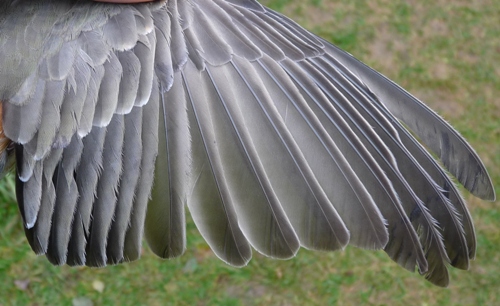
A uniformly gray wing; note that while some greater coverts have pale tips, they do not
differ in length or colour from the inner coverts, and therefore do not represent the type
of molt limit that would be seen on HY American Robins.
Photo by Marcel Gahbauer,
McGill Bird Observatory (QC), October 2010
AHY females have dark grayish to blackish rectrices that are generally broad and rounded.
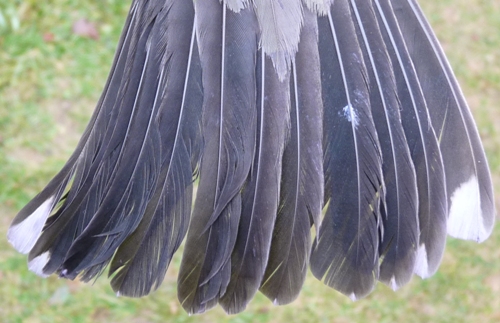
A typical AHY female tail.
Photo by Marcel Gahbauer,
McGill Bird Observatory (QC), October 2010
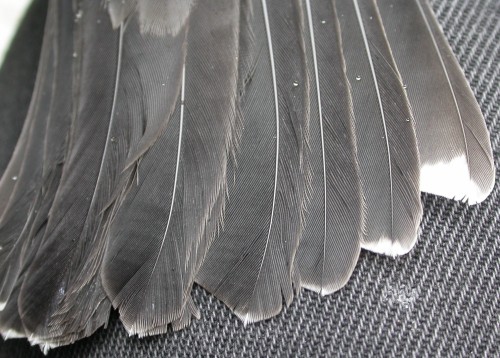
Another example showing particularly broad rectrices.
Photo by Marcel Gahbauer,
McGill Bird Observatory (QC), October 2005
RETURN TO AGE/SEX
OVERVIEW
|
JUN - DEC: hatch-year
male |
HY males can be quite variable in appearance, and may not always be separable from females. Those that are distinctly recognizable have a relatively dark orange breast (although often with extensive white or gray mottling) and some blackish feathers in the face and on the crown. .
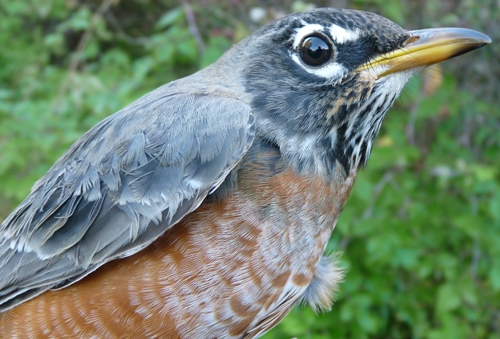
A typical HY male, with black in the lores and on the crown, and a relatively extensive
dark orange breast, but differing from an AHY male in the extent of white on the breast.
Photo by Marcel Gahbauer,
McGill Bird Observatory (QC), October 2010
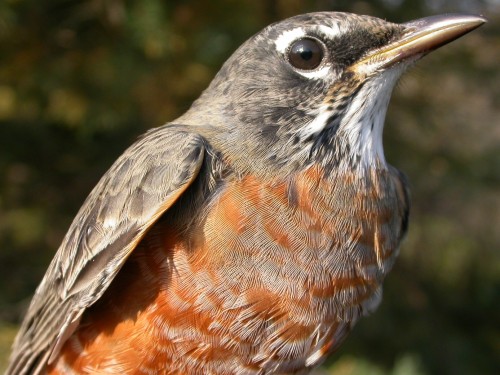
Another HY male, somewhat lighter on the head, but with rather dark underparts.
Photo by Marcel Gahbauer,
McGill Bird Observatory (QC), August 2005
Many HY
American Robins can be easily aged by the presence of a molt limit among the greater coverts, with the inner replaced formative feathers generally longer and grayer/darker than the retained outer juvenile feathers, which are browner and often have white tips or shaft streaks. However, there can be considerable variability in the appearance of both HY and AHY wings, so if there is not a distinct molt limit, other features should be considered to determine age.
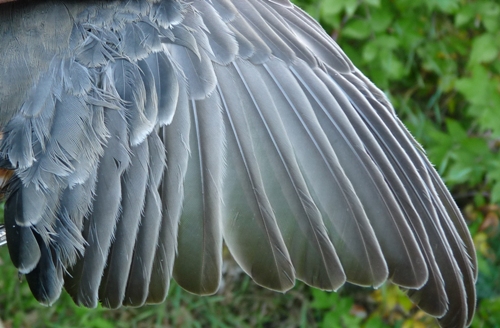
Photo by Marcel Gahbauer,
McGill Bird Observatory (QC), October 2010
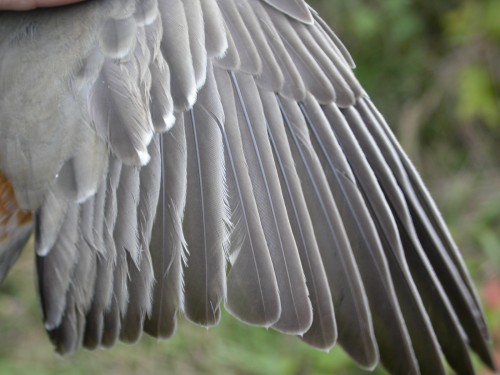
Note the distinct white shaft streaks on some greater coverts.
Photo by Marcel Gahbauer,
McGill Bird Observatory (QC), August 2005
HY birds generally have grayish to
grayish brown tails, with tapered and relatively narrow rectrices.
However, there is considerable variation in tail appearance among both
HY and AHY birds, so tail characteristics should
usually be used in combination with the wing.
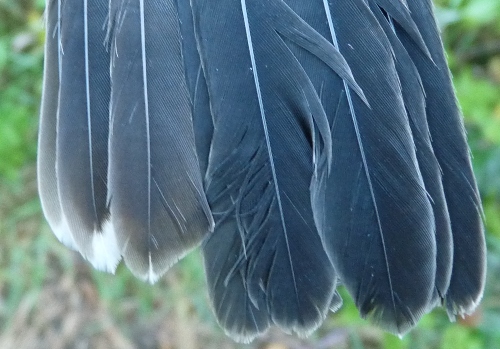
Note the contrast between the prematurely replaced outer feathers on the left side and
the remainder of the tail.
Photo by Marcel Gahbauer,
McGill Bird Observatory (QC), October 2010
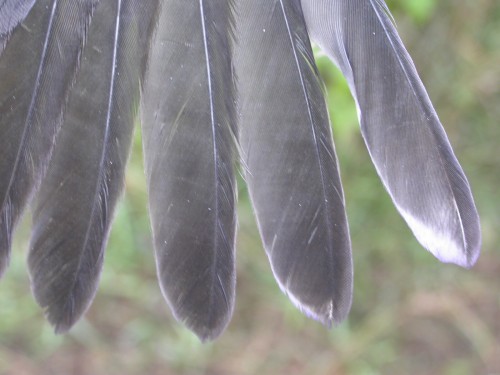
A more typical HY tail, relatively dull, narrow, and somewhat pointed.
Photo by Marcel Gahbauer,
McGill Bird Observatory (QC), August 2005
RETURN TO AGE/SEX
OVERVIEW
|
JUN - DEC: hatch-year
female |
HY females are generally the pales of all American Robins. Orange on the breast tends to be pale to moderately dark, but usually is relatively limited in extent, with lots of gray and white. There is usually minimal dark brown or black on the face and crown. However, beware that some intermediates in fall may not be reliably sexed.
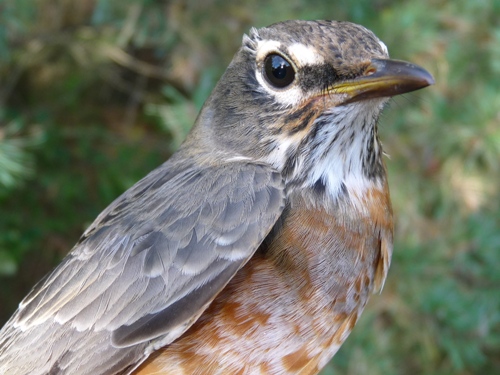
A typical HY female, with a dull and mottled breast, and hardly any dark plumage on the head.
Photo by Marcel Gahbauer,
McGill Bird Observatory (QC), October 2010
Many HY American Robins can be easily aged by the presence of a molt limit among the greater coverts, with the inner replaced formative feathers generally longer and grayer/darker than the retained outer juvenile featheres, which are browner and often have white tips or shaft streaks. However, there can be considerable variability in the appearance of both HY and AHY wings, so if there is not a distinct molt limit, other features should be considered to determine age.
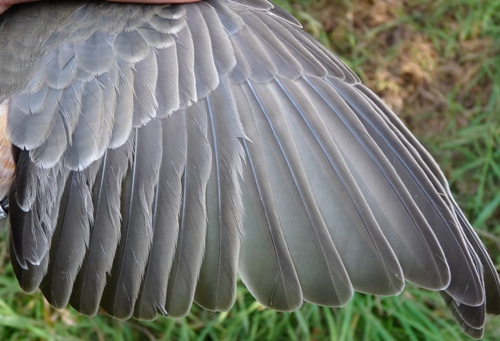
A subtle molt limit in the middle of the greater coverts; this is an example of where other
features would need to be checked to confirm age.
Photo by Marcel Gahbauer,
McGill Bird Observatory (QC), October 2010
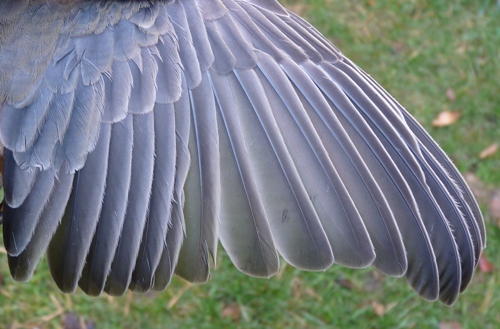
Note the particularly large difference in length between the inner replaced greater
coverts and the outer retained juvenile greater coverts.
Photo by Marcel Gahbauer,
McGill Bird Observatory (QC), October 2010
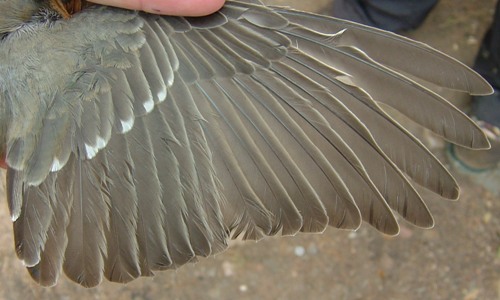
An example with particularly prominent white shaft streaks on most of the greater
coverts, with only the innermost covert having been replaced.
Photo by Peter Pyle,
Durango (MEX), October 2008
HY American Robins generally have grayish to
grayish brown tails, with tapered and relatively narrow rectrices.
However, there is considerable variation in tail appearance among both
HY and AHY birds, so tail characteristics should
be used in combination with the wing.
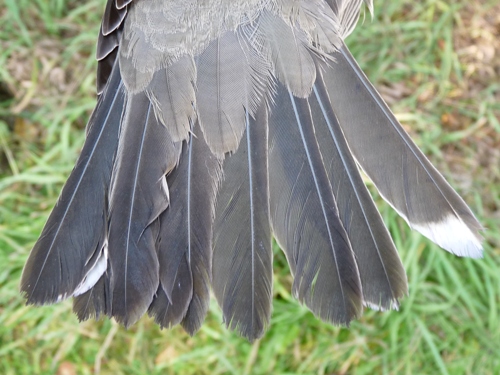
Photo by Marcel Gahbauer,
McGill Bird Observatory (QC), October 2010
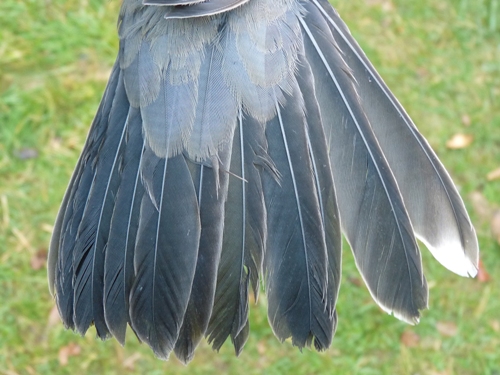
Photo by Marcel Gahbauer,
McGill Bird Observatory (QC), October 2010
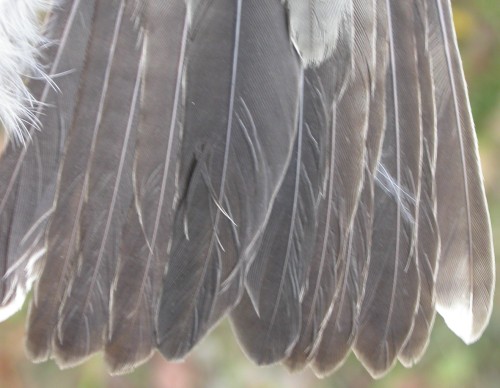
Photo by Marcel Gahbauer,
McGill Bird Observatory (QC), October 2005
|
JUN - SEP: juvenile sex unknown |
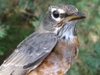
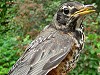
Until their preformative molt, juveniles are heavily marked with dark spots on the
breast; sex can generally not be assessed at this age.
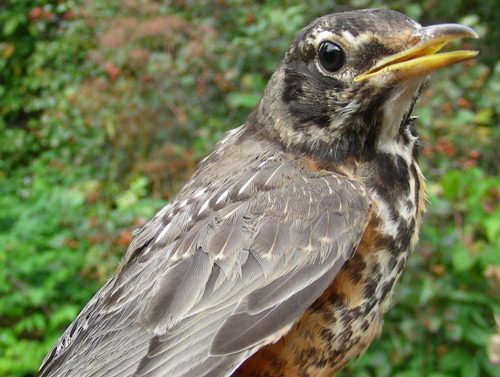
Photo by Marcel Gahbauer,
McGill Bird Observatory (QC), September 2008
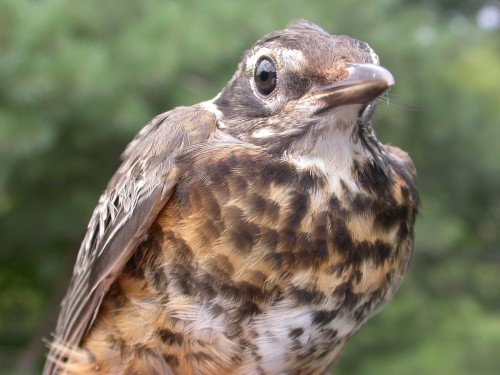
Photo by Marcel Gahbauer,
McGill Bird Observatory (QC), August 2005
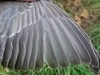
There are frequently white streaks visible along the
shaft of the greater coverts and median coverts on juvenile American Robins.
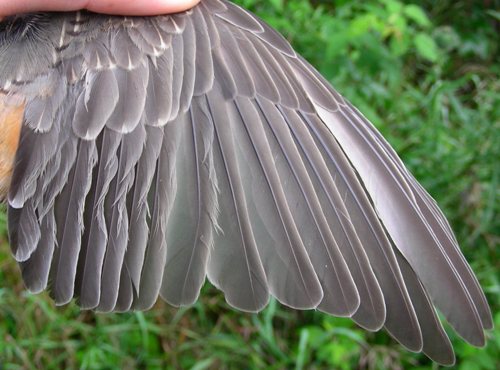
Photo by Marcel Gahbauer,
McGill Bird Observatory (QC), August 2008
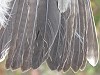
The rectrices of juvenile American
Robins are grayish and fairly narrow and tapered.
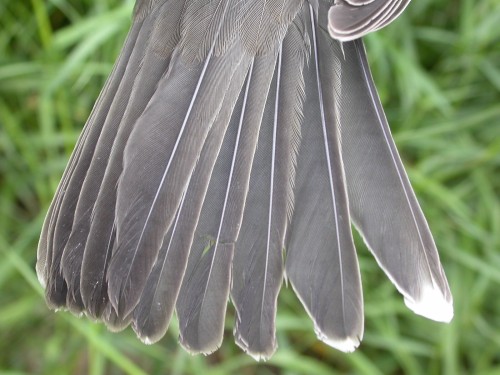
Photo by Marcel Gahbauer,
McGill Bird Observatory (QC), August 2005
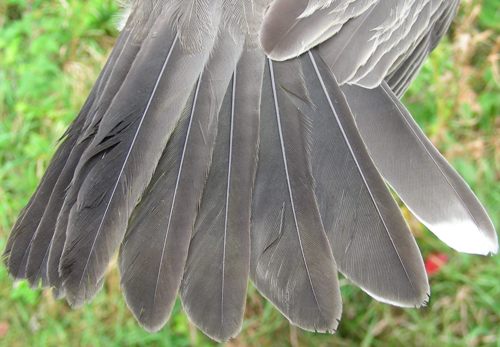
Photo by Marcel Gahbauer,
McGill Bird Observatory (QC), September 2008
RETURN TO AGE/SEX
OVERVIEW