|
|
McGILL BIRD OBSERVATORY |
||||||||||||||||||||||||||||||||||||||||||||||
NOTE:
This species account has been moved to Piranga to allow for improved comparison
among examples.
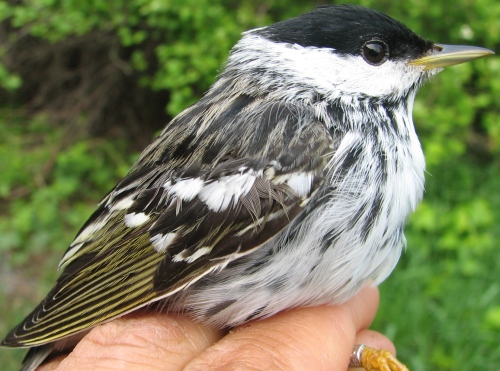
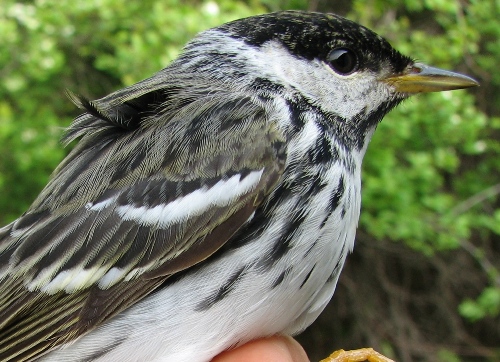
Ageing and sexing details: After-second-year males have a solid black cap contrasting sharply with the white cheeks; wing and tail should be examined to ensure reliable separation from second-year males.
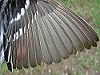
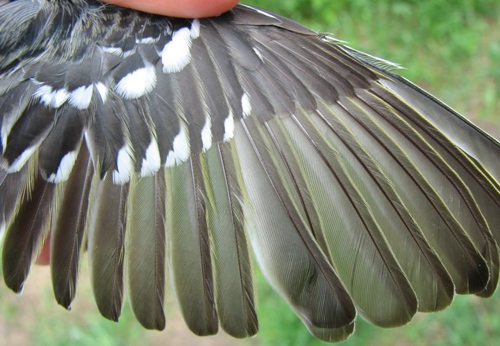
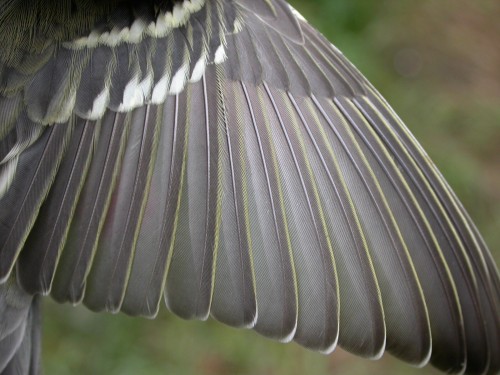
There is often a slight contrast between the primary coverts and greater coverts, as some to all of the latter are replaced in the prealternate moult, but on the whole the wing is relatively uniformly dark, and usually in good condition.
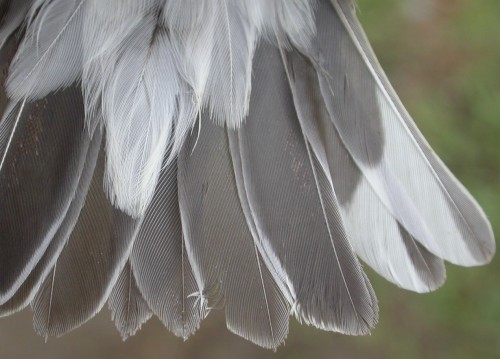
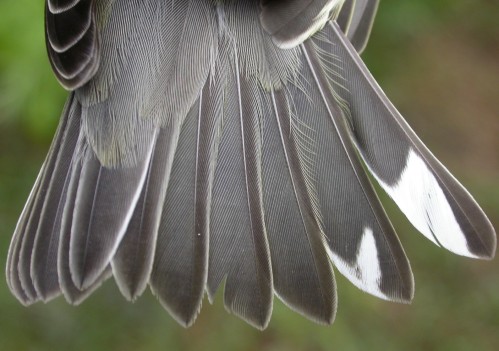
The outer rectrices are broad and rounded, and showing relatively wear.
After-second-year females have an olive-gray crown with distinct black streaking; this alone is usually sufficient to distinguish them from second-year females, but the wing and tail should also be checked when possible.
The moult limit apparent in the example below (i.e. among the greater coverts and between the tertials and secondaries) reflects the extent of the prealternate moult. Of greater significance is that the primary coverts are broad and rounded, and show no contrast with the unreplaced outer greater coverts.
The outer rectrices tend to be quite broad and rounded.
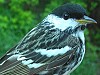
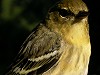
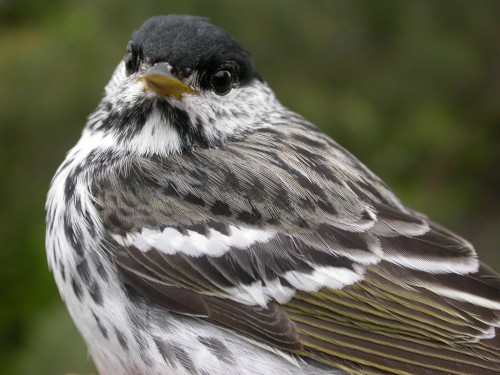
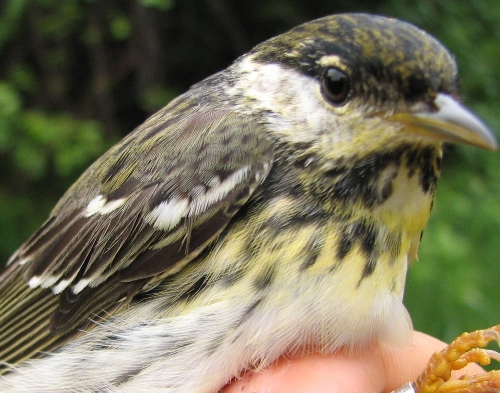
Second-year males have a blackish crown and whitish cheeks, but one or both are often slightly mottled in appearance. The third example below is a relatively rare case with yellowish plumage on the upper breast and throat.
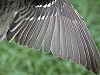
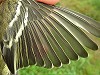
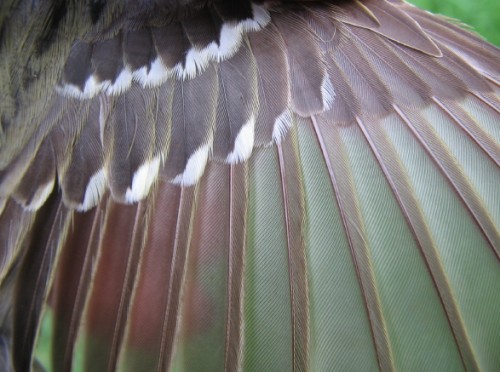
On second-year Blackpoll Warblers, it is often possible to identify three generations of feathers on the wing, with a distinct moult limit between the juvenile primary coverts and formative outer greater coverts, as well as among the greater coverts, where the inner feathers have typically been replaced during the prealternate moult.
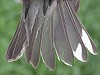
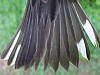
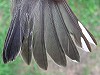
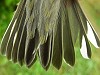
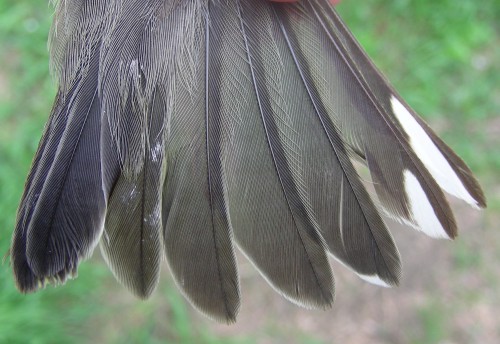
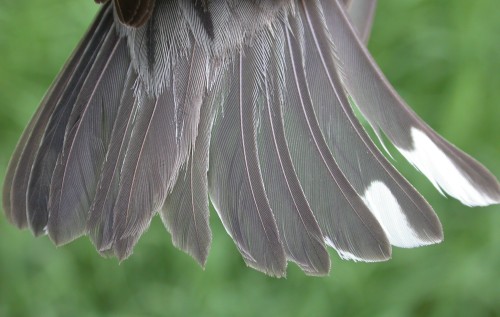
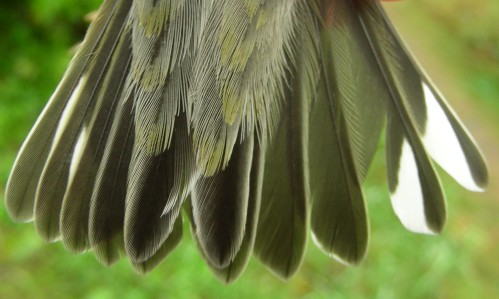
Second-year Blackpoll Warblers may have relatively narrow and tapered rectrices as in the first photo below, which are a good clue to age, but many have somewhat intermediately shaped rectrices as in the second photo, in which case ageing should be based on the wing and crown.
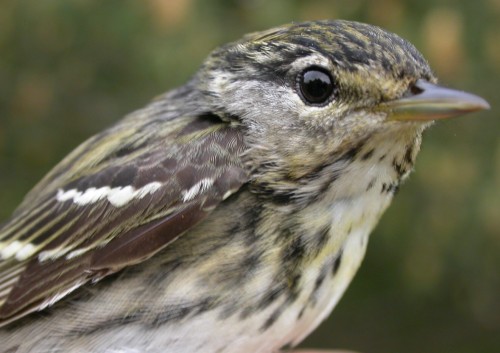
Second-year females are often recognizable by their olive-gray crowns with minimal dark streaking, but the wing and tail should be checked to help confirm age.
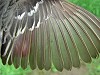
Second-year Blackpoll Warblers often show moult limits between the primary coverts and outer greater coverts, as well as within the greater coverts. Note also that the primaries and secondaries may appear particularly pale brown by spring, contrasting sharply with the greater coverts, as in the photo below.
The shape of the rectrices varies considerably in Blackpoll Warblers, but in cases such as the examples below where they are narrow and pointed, they are a good indicator of a second-year bird.
After-hatch-year males may retain some black in the throat or crown, which other age/sex classes lack, but in the absence of this may be more difficult to identify. They also tend to have more whitish underparts, but the wing and tail should also be considered whenever possible.
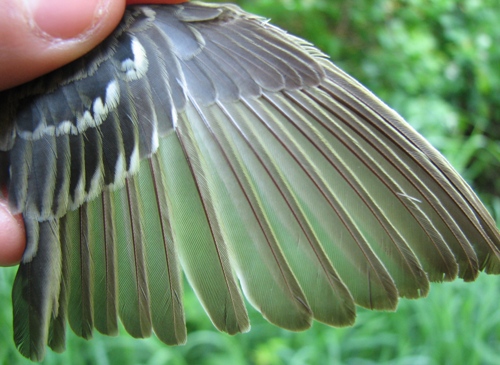
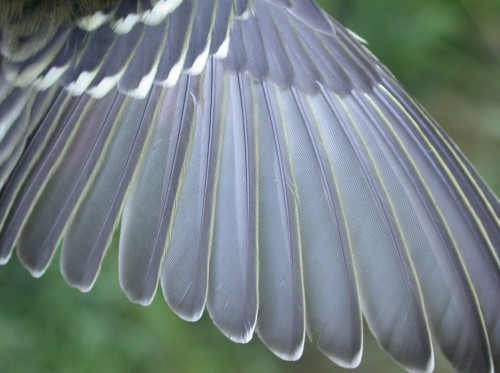
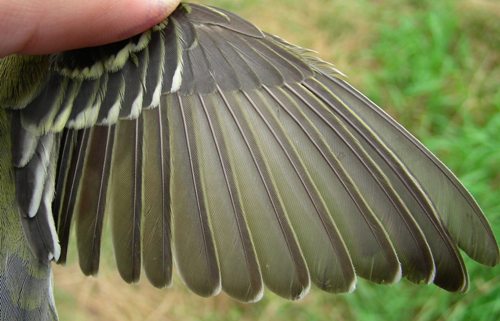
In all age/sex classes, the primary coverts appear at least slightly paler than the greater coverts, but for after-hatch-year males the entire wing is dark, with relatively subtle internal variation in colour.
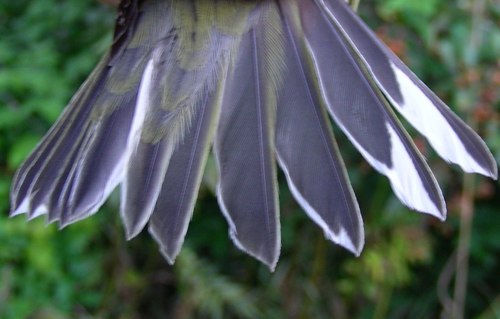
The rectrices on after-hatch-year Blackpoll Warblers are quite broad and rounded at the tip.
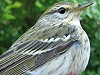
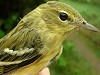
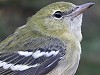
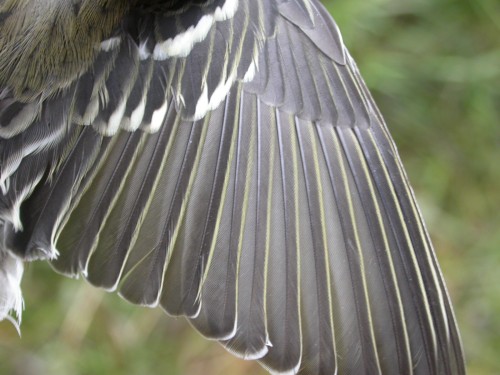
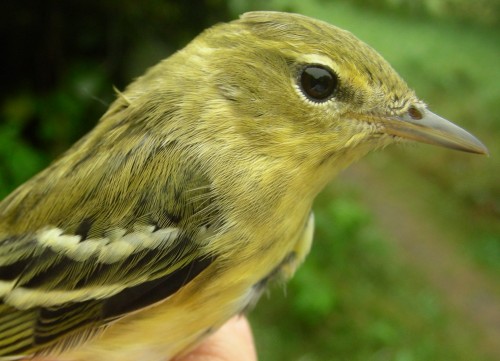
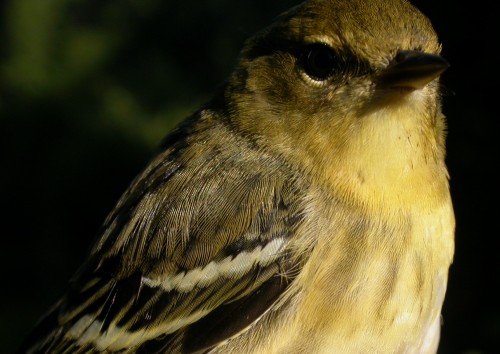
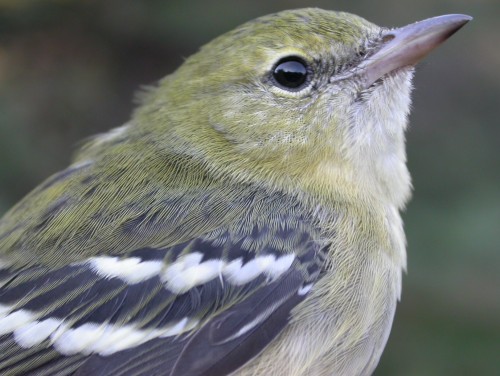
After-hatch-year females are quite greenish-yellow all over; some hatch-year Blackpoll Warblers may have a similar overall appearance, therefore wing and tail need to be examined to determine age.
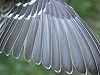
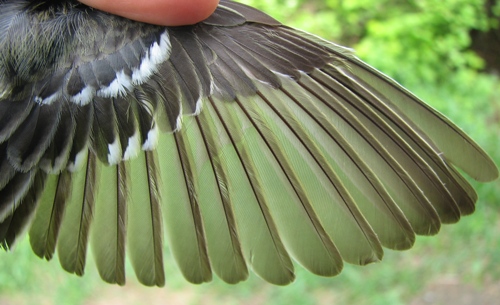
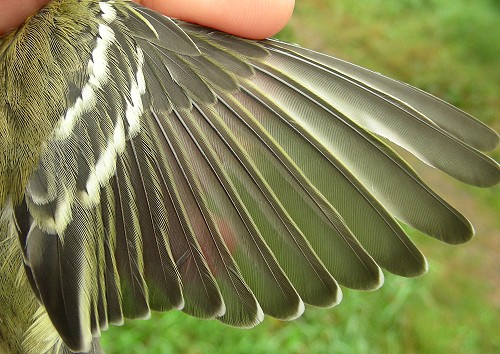
The wing of after-hatch-year females is quite uniform in appearance; note the distinct greenish edging to the feathers.
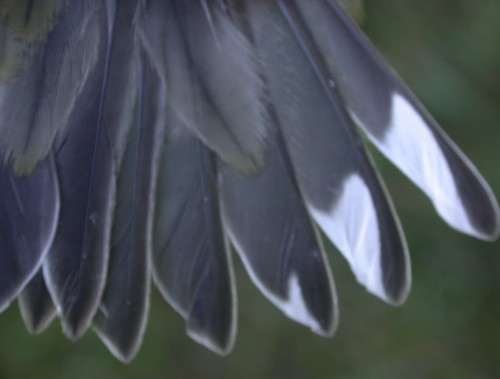
Outer rectrices of after-hatch-year Blackpoll Warblers are quite broad and rounded at the tip.
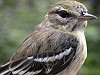
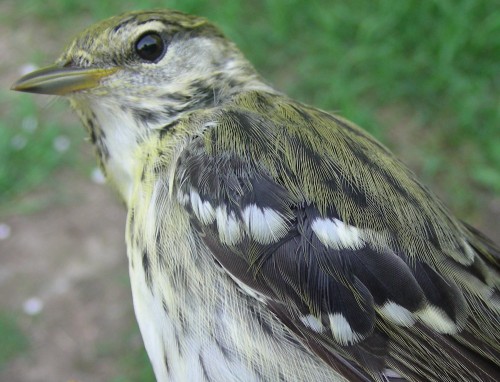
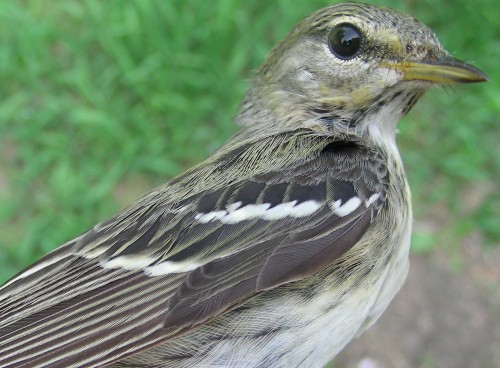
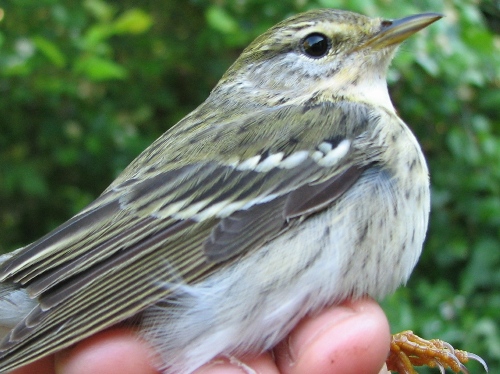
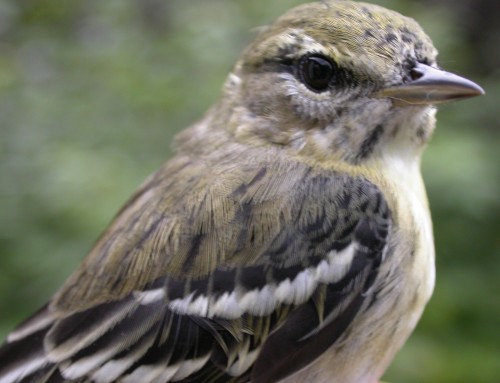
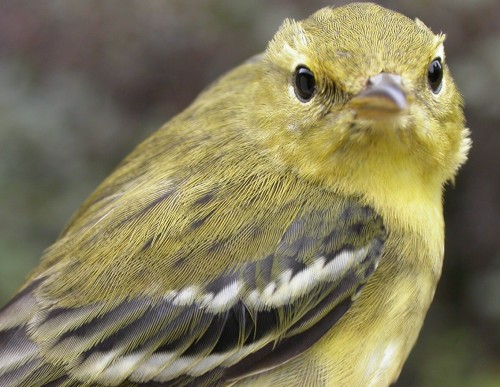
Hatch-year Blackpoll Warblers may appear similar to after-hatch-year females, and examination of the wing and tail is often required to determine age with confidence. In most cases, sex of hatch-year Blackpoll Warblers cannot be determined, but there are some extremes of plumage and size (as measured by wing chord) that can probably be identified reliably.
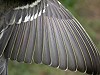
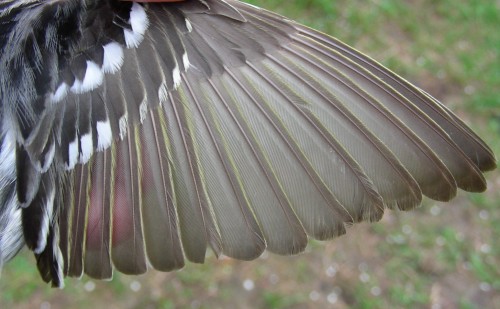
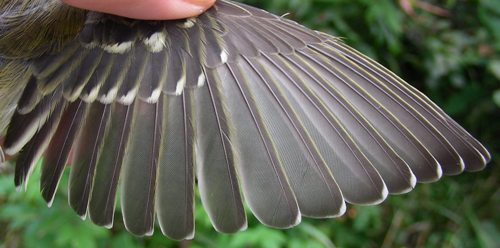
There is a distinct moult limit between the primary coverts and greater coverts, indicating this to be a hatch-year bird. However, the wing is overall very dark, and in combination with a large wing chord (>76 mm) this was determined to be a male.
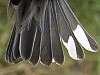
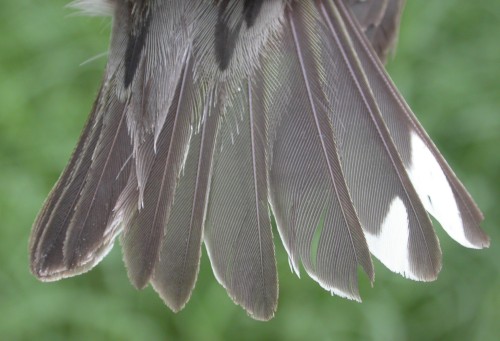
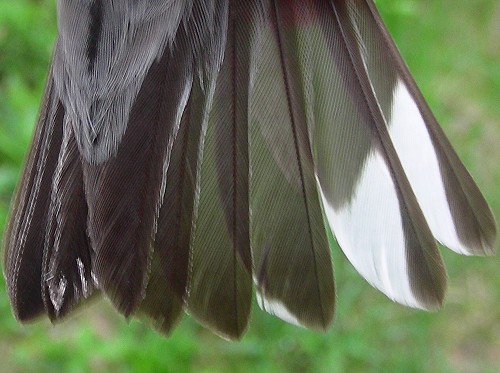
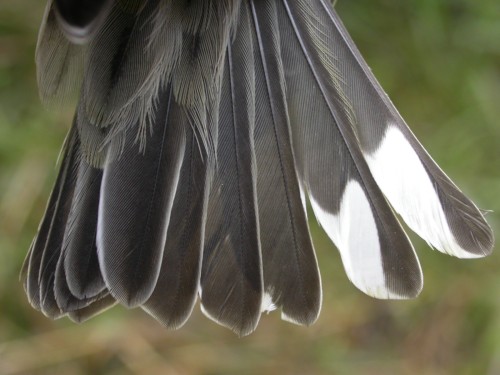
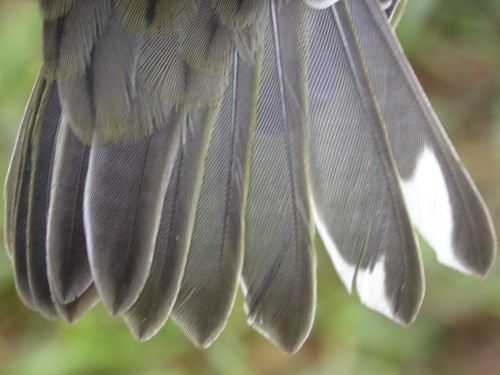
Hatch-year Blackpoll Warblers tend to have somewhat narrower and more pointed rectrices than after-hatch-year birds, but the distinction may be subtle. While the extent of white on the outer rectrices shows less distinct variation among age/sex classes than in other Dendroica warblers, the amount in the photo is particularly extensive, supporting the classification of this individual as a male.
Hatch-year Blackpoll Warblers may appear similar to after-hatch-year females, and examination of the wing and tail is often required to determine age with confidence. In most cases, sex of hatch-year Blackpoll Warblers cannot be determined, but there are some extremes of plumage and size (as measured by wing chord) that can probably be identified reliably.
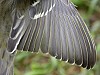
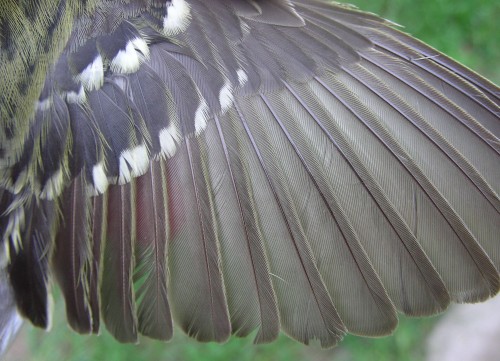
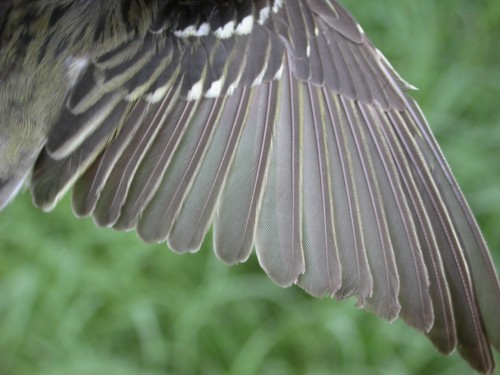
The distinct moult limits (between primary coverts and greater coverts) on the wings below identifies these individuals as hatch-year Blackpoll Warblers, while the overall brown (vs. grayish-black) tone of the wing suggests they are females.
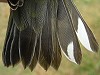
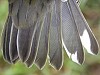
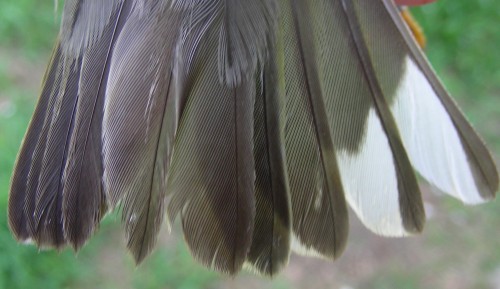
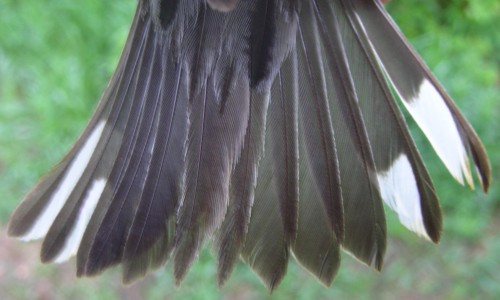
Rectrix shape can be quite variable for Blackpoll Warbler. Individuals with rectrices as narrow and pointed as the first example below are very likely to be hatch-year birds, while in the case of the second example, clues from the wing should override what is suggested by the tail.
|