|
|
McGILL BIRD OBSERVATORY |
||||||||||||||||||||||||||||||||||||||||||||||
NOTE:
This species account has been moved to Piranga to allow for improved comparison
among examples.
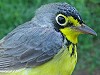
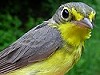
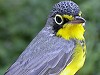
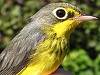
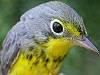
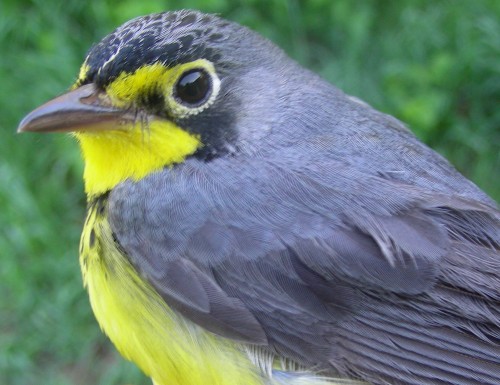
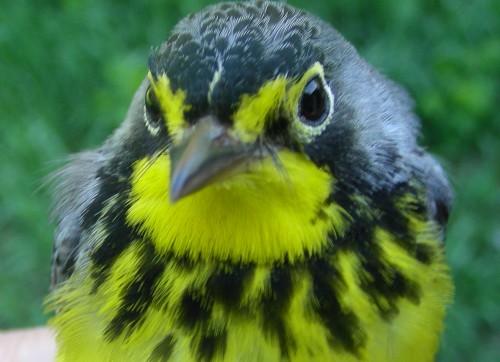
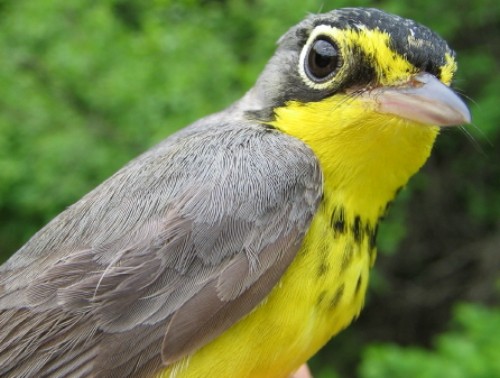
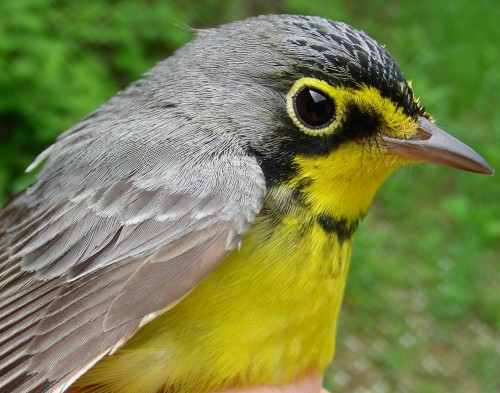
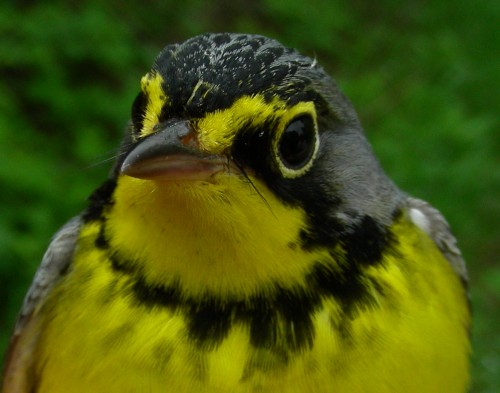
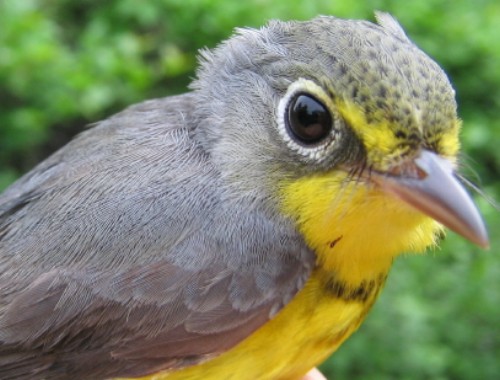
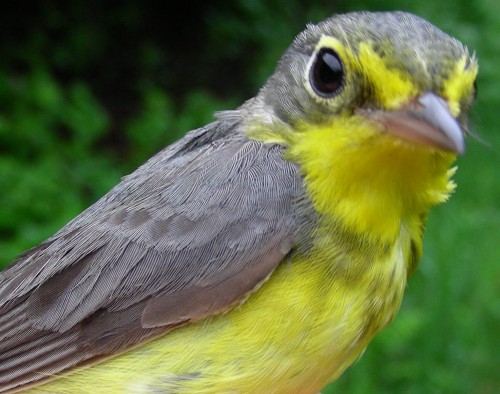
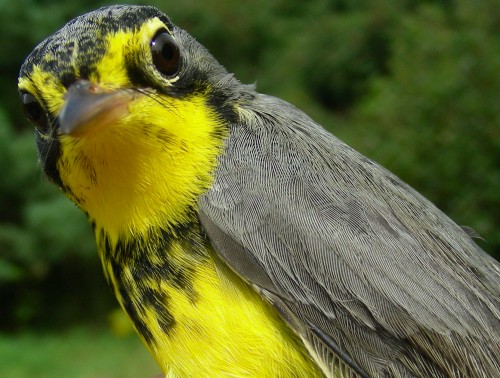
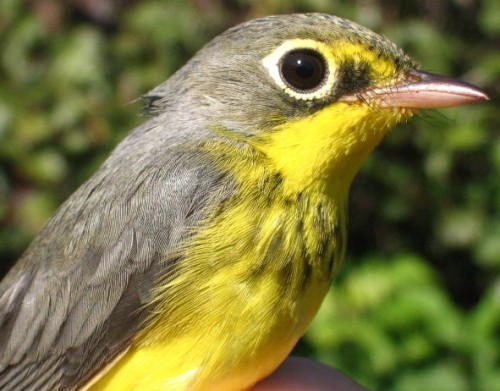
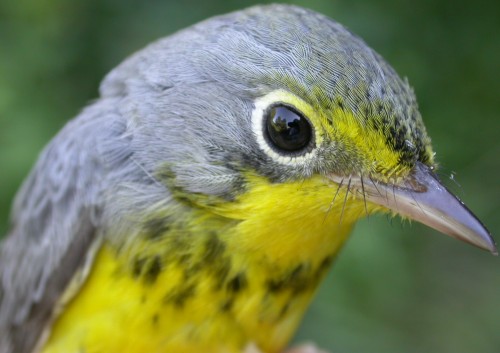
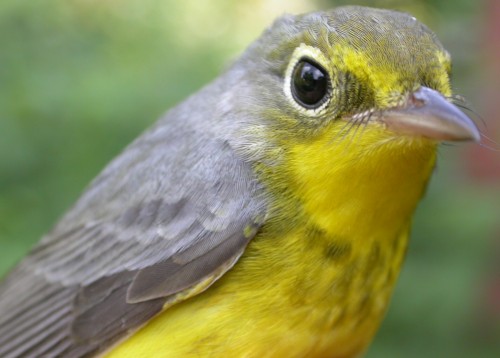
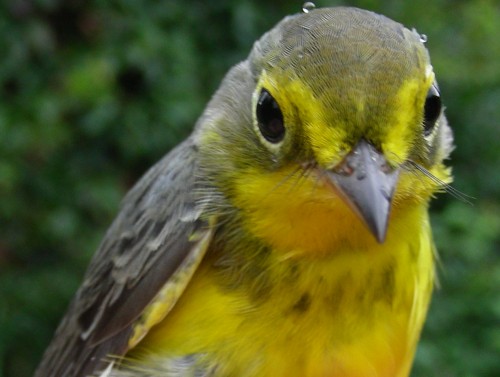
Ageing and sexing details: After-second-year males have the greatest amount of black on the forehead, face, and necklace, but appearance can vary depend on the angle of viewing, as illustrated by the two photos of the same bird below. Therefore ageing should usually take wing and/or tail into account.
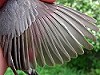
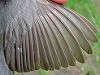
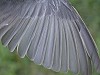
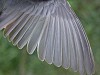
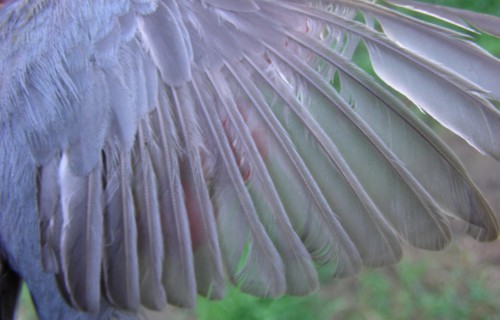
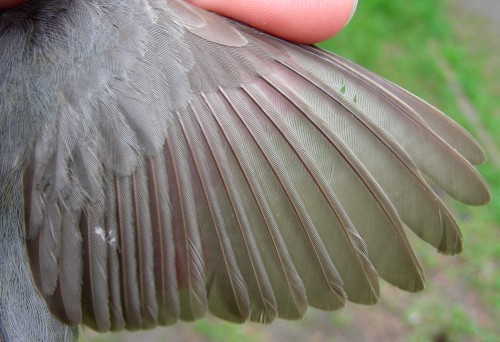
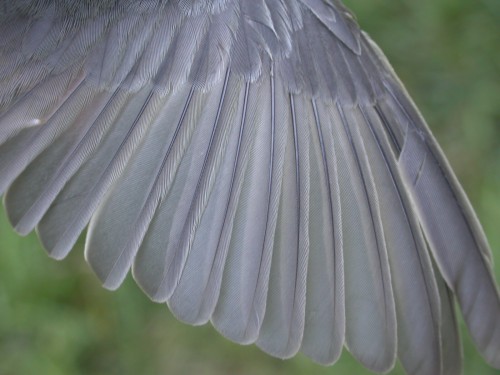
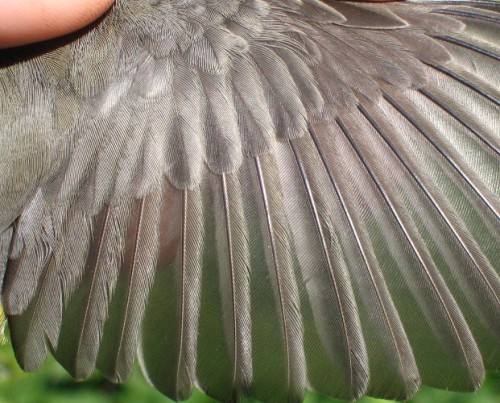
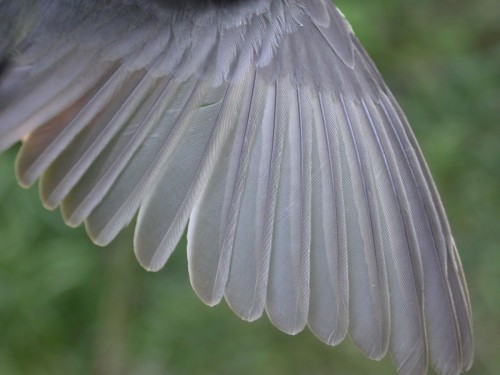
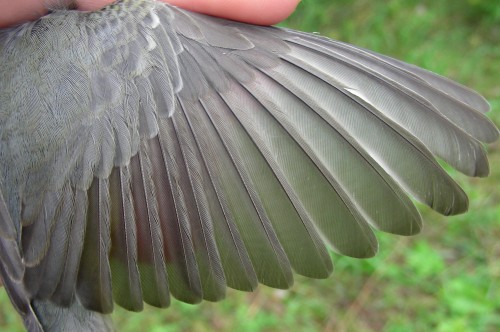
While the wing may appear somewhat worn by spring on Canada Warblers of all ages, the colour is relatively uniform gray on after-second-year birds.
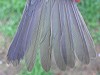
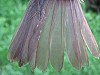
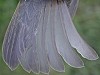
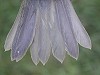
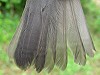
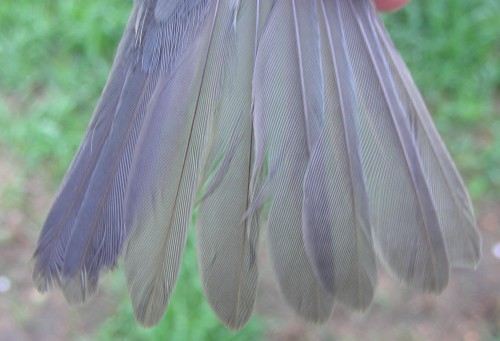
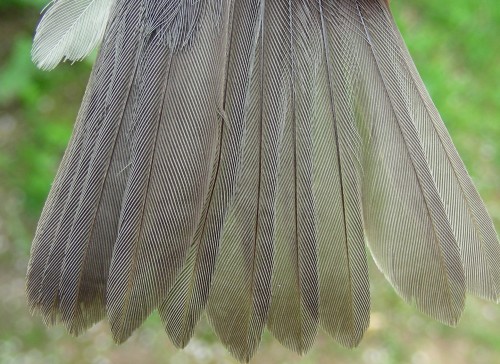
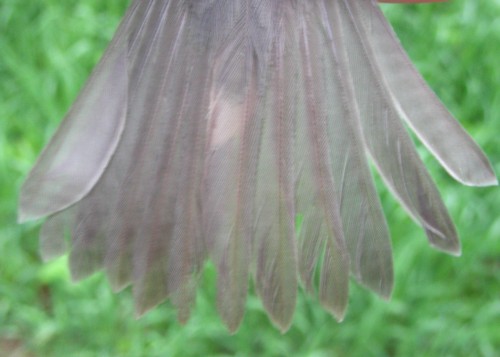
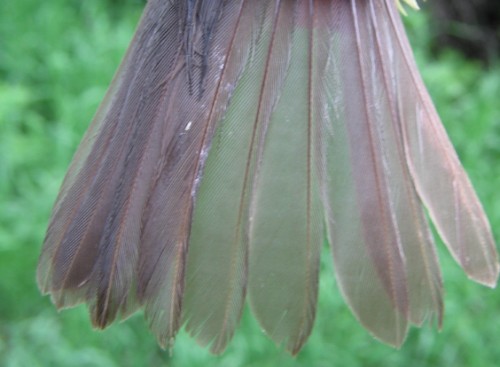
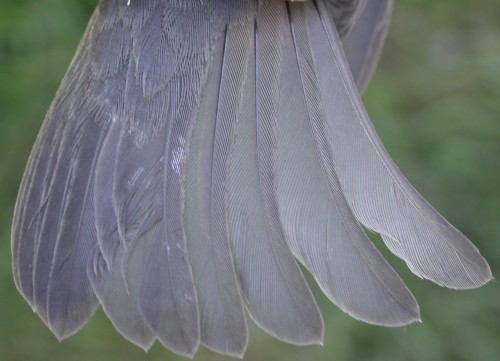
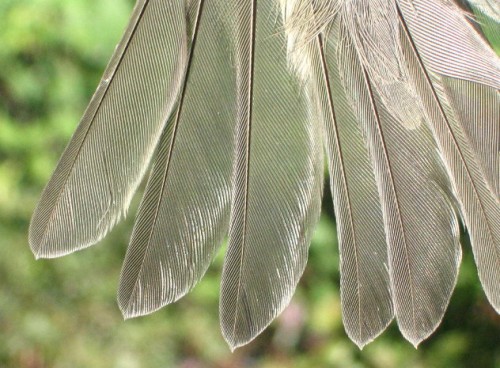
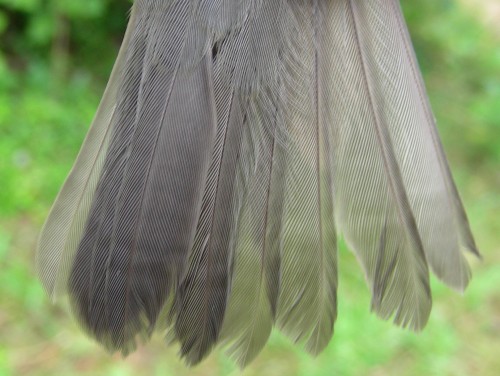
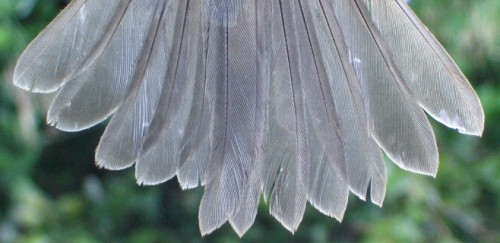
The rectrices of after-second-year Canada Warblers tend to be somewhat more broad and rounded than those of second-year birds.
Second-year males tend to have somewhat less black on the forehead, and especially on the necklace, but the wing and/or tail should be examined to be confident about age. Note, however, that in some cases the contrast between brownish primary coverts and gray greater coverts can be seen on a perched bird.
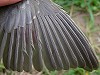
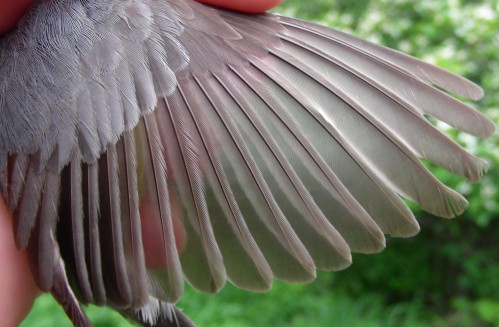
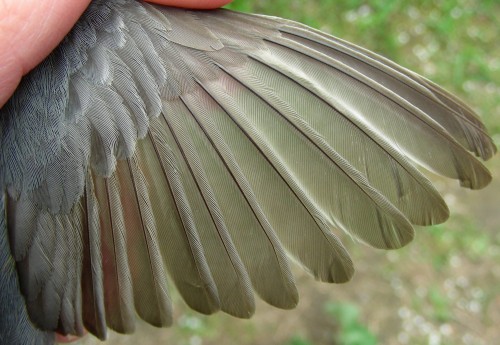
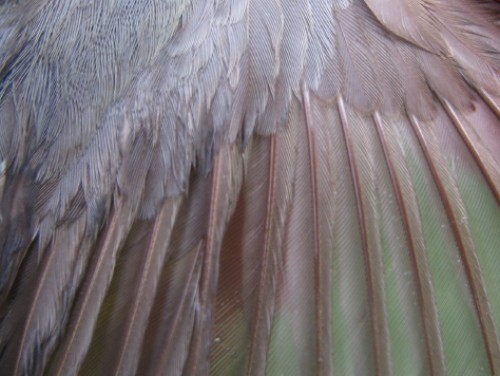
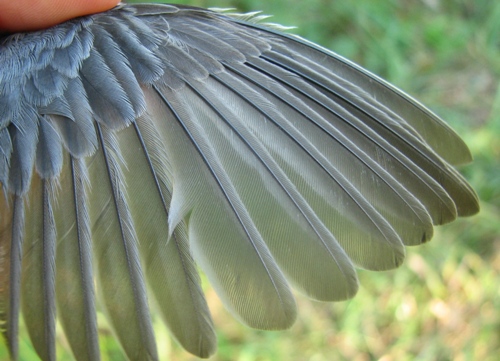
A moult limit between unreplaced brownish primary coverts (and primaries and secondaries) and the fresher gray greater coverts is a good indicator for second-year Canada Warblers. However, beware that while the contrast is very evident in some birds such as the first photo below, it can be more subtle in others, as in the second photo.
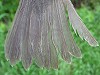
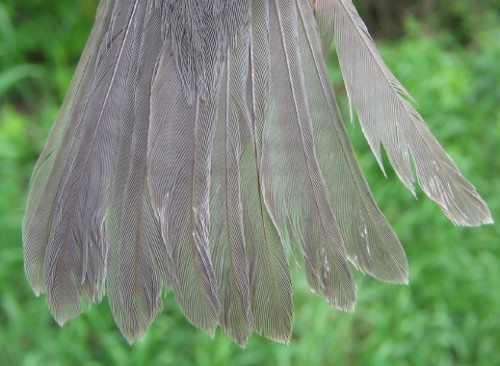
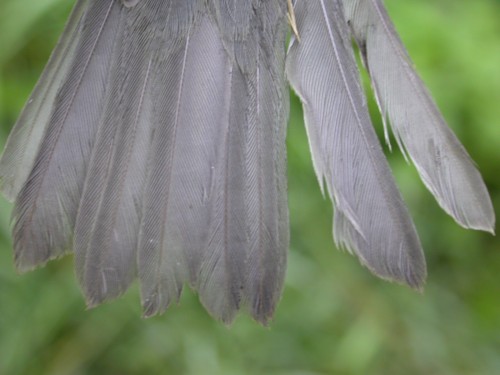
Rectrices of second-year Canada Warblers tend to be somewhat narrower, more pointed, and showing greater wear than those of after-second-year birds, but there can be considerable variation, therefore moult limits on the wing are more reliable for this species.
Second-year females are distinctly paler than other age/sex classes in spring, with a largely greenish-gray forehead and a faint grayish necklace.
Second-year Canada Warblers typically show a moult limit between unreplaced brownish primary coverts (and primaries and secondaries) and the fresher gray greater coverts, but the contrast varies from subtle to distinct.
Second-year Canada Warblers tend to have somewhat narrow, pointed, and worn rectrices, but there is a fair amount of variation in appearance.
After-hatch-year males are the only age/sex class in fall to have extensive black on the forehead and face, and to show a distinct black necklace.
After-hatch-year Canada Warblers have a uniformly gray wing.
The rectrices are generally relatively broad and rounded at the tip.
After-hatch-year females and hatch-year males may be relatively similar in appearance, both having a partial necklace and a largely gray forehead and face, sometimes with some black flecks. They are best separated by looking for the presence (hatch-year) or absence (after-hatch-year) of moult limits on the wing.
After-hatch-year females have a uniformly gray wing.
After-hatch-year Canada Warblers have relatively broad and rounded rectrices, but there is considerable variation; the example below is quite intermediate and of limited use in helping with ageing.
Hatch-year males and after-hatch-year females appear relatively similar, both having a partial necklace and a largely grayish forehead and face, often with a few black flecks. They are best distinguished by looking for the presence (hatch-year) or absence (after-hatch-year) of moult limits on the wing.
Moult limits on hatch-year Canada Warblers usually occur between the primary coverts and greater coverts, with the latter being bluish-gray, contrasting with the dull brownish-gray of the unreplaced primary coverts (note, however, that in early fall the colour distinction may be subtle because the primary coverts are also still relatively fresh and have not yet faded much).
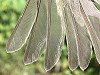
Typical hatch-year rectrices are narrow and distinctly pointed as in the photo below, but there is considerable variation in shape and some intermediates may not be useful for ageing.
Hatch-year females are usually readily identifiable by their greenish-gray head and minimal indistinct necklace.
Hatch-year Canada Warblers usually show a moult limit between the duller, slightly browner primary coverts and fresher, grayer greater coverts. In some cases, such as the examples below, the contrast is even more evident in that some juvenile median coverts (first photo) or greater coverts (second photo) have been retained with distinct white or buff tips.
Hatch-year Canada Warblers typically have somewhat narrower and more pointed rectrices than after-hatch-year birds, but there is considerable variation among individuals. In the third photo below, r2 through r6 on the left side have been prematurely replaced, illustrating the relatively subtle difference in shape between juvenile and adult rectrices.
|