|
|
McGILL BIRD OBSERVATORY |
||||||||||||||||||||||||||||||||||||||||||||||
NOTE:
This species account has been moved to Piranga to allow for improved comparison
among examples.
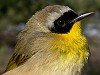
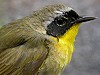
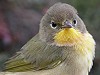
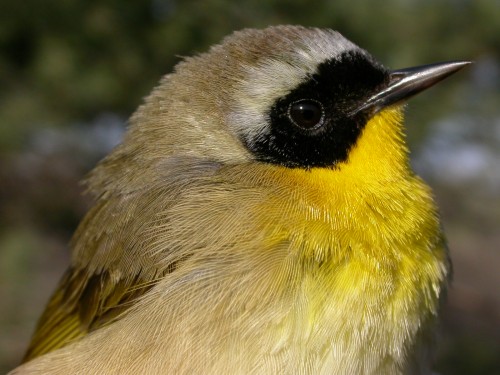
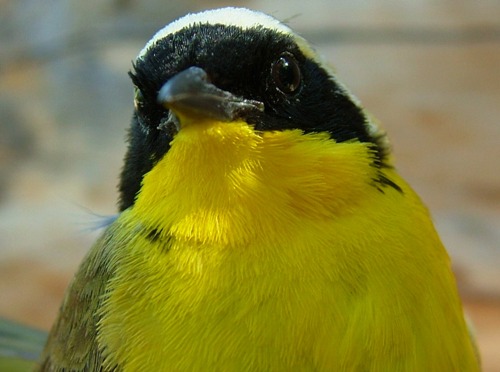
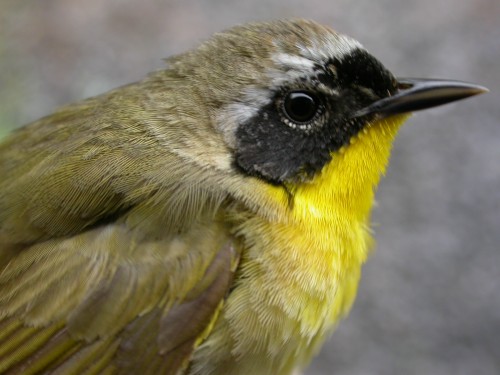
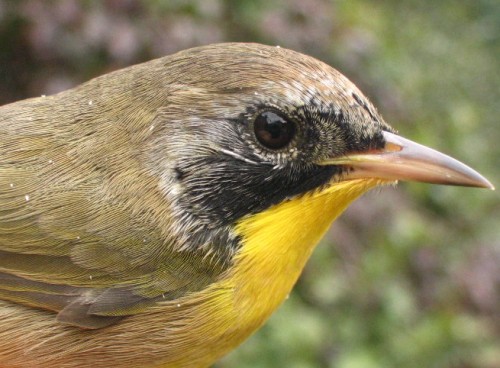
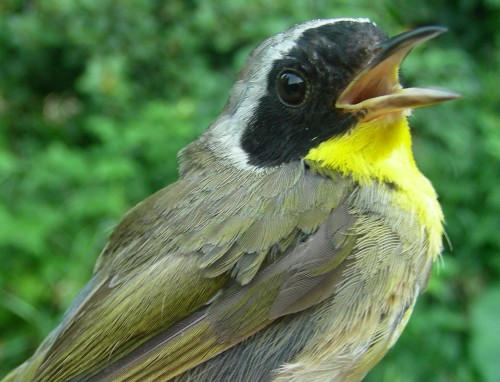
Ageing and sexing details: Males are easily recognized in spring by their distinctive black facial mask. Close examination of the wing and/or tail is usually required to determine age. Note that there may be a fair amount of variation in extent of yellow on the breast, as shown in the photos below; this represents regional and/or individual variation, and should therefore not be used as an indicator of age.
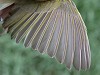
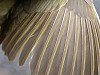
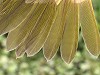
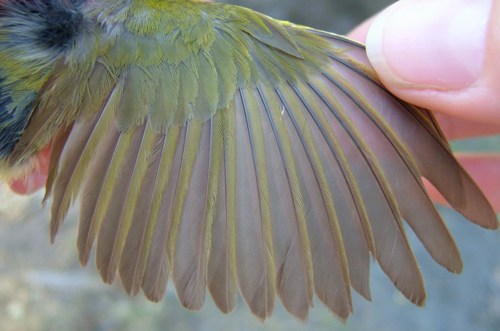
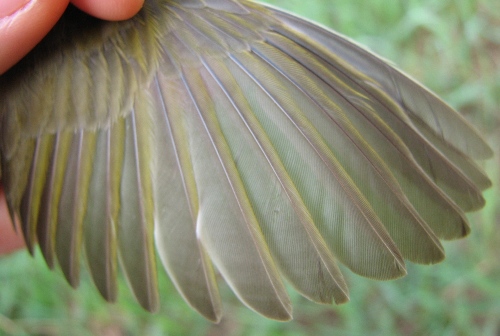
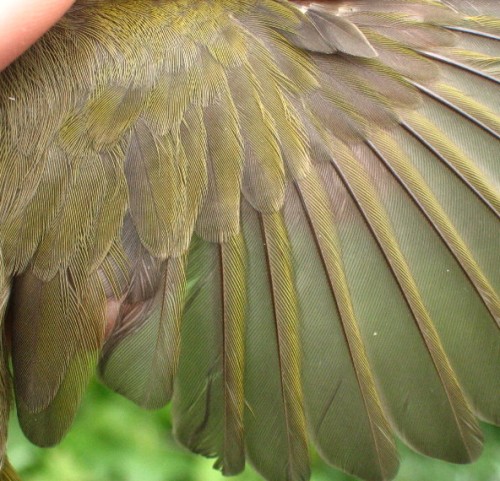
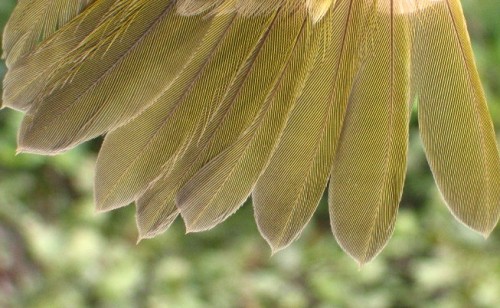
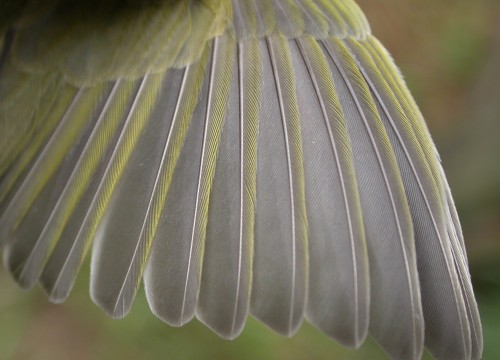
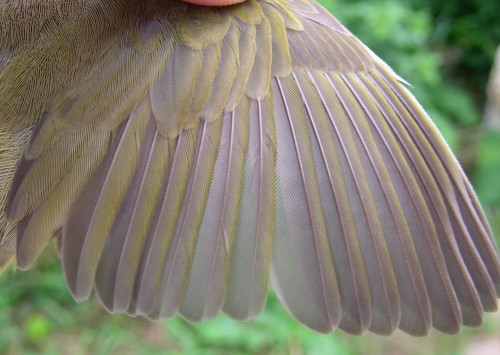
On after-second-year Common Yellowthroats, the primary coverts have a distinctive greenish outer edge, and tend to be somewhat more broad and rounded than those of second-year birds, but the difference can be subtle and should not be the only criterion considered.
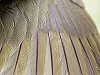
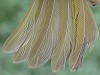
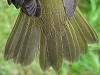
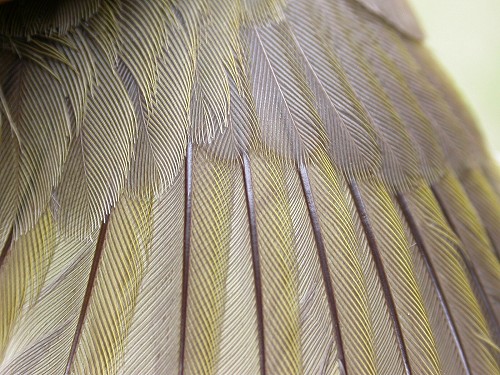
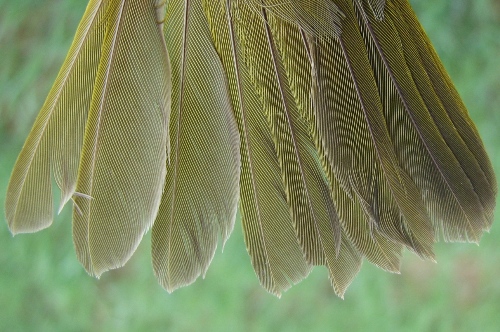
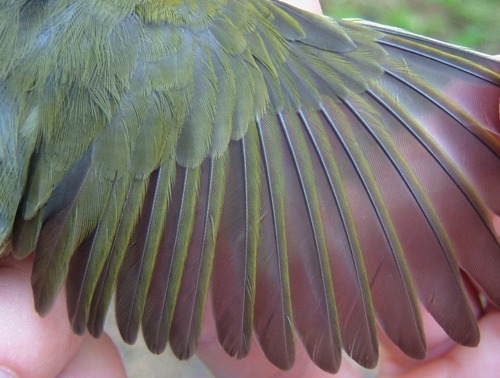
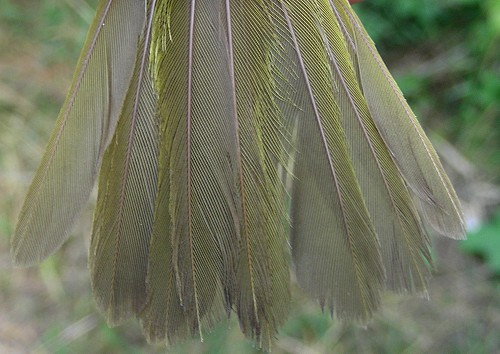
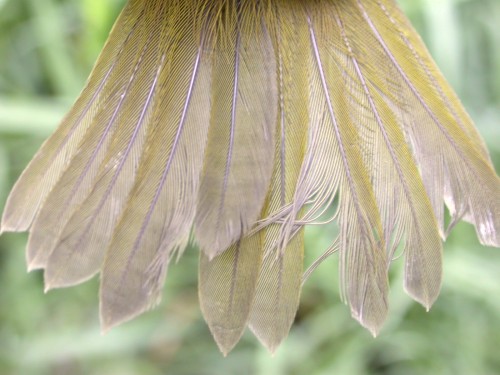
Largely because they spend more time in denser ground vegetation than most other warblers, the rectrices of Common Yellowthroats can appear rather worn and tattered by spring, regardless of age. However, the wear tends to be less severe on after-second-year birds, and the feathers are also typically broader and more rounded toward the tip, though as the second photo below shows, the wear on the feathers may make that distinction difficult to assess reliably.
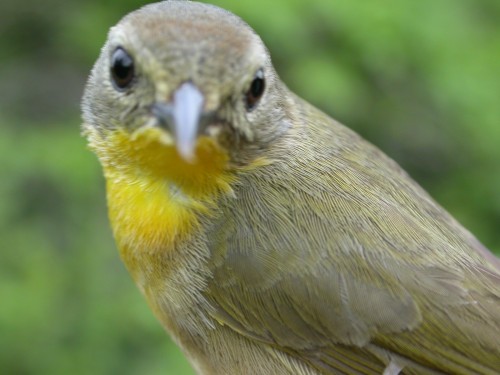
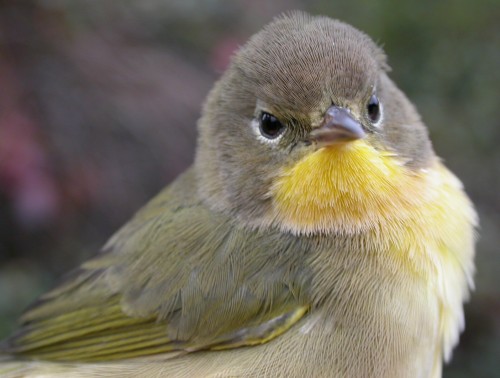
Females are easily recognized in spring by the lack of any black on the face, but close examination of the wing and/or tail is usually required to determine age.
On after-second-year Common Yellowthroats, the primary coverts have a distinctive greenish outer edge, and tend to be fairly broad and rounded. However, the appearance of some second-year birds is quite similar, so this criterion should be combined with others to determine age.
Largely because they spend more time in denser ground vegetation than most other warblers, the rectrices of Common Yellowthroats can appear rather worn and tattered by spring, regardless of age. However, the wear tends to be less severe on after-second-year birds, and the feathers are also typically broader and more rounded toward the tip, though the wear on the feathers may make that distinction difficult to assess reliably.
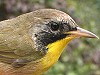
Males are easily recognized in spring by their distinctive black facial mask, but close examination of the wing and/or tail is usually required to determine age. Sometimes on second-year males the mask is slightly patchy, as in the photo below, but confirming the age with other features is strongly recommended.
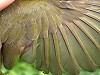
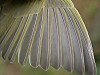
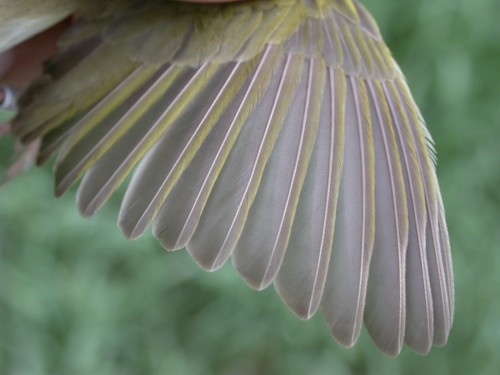
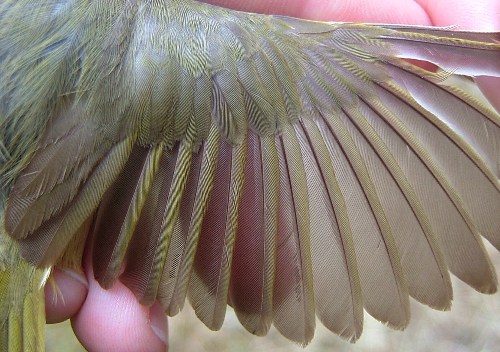
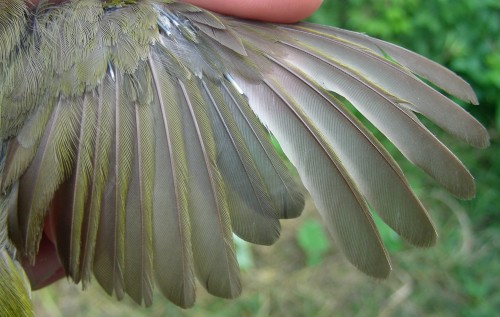
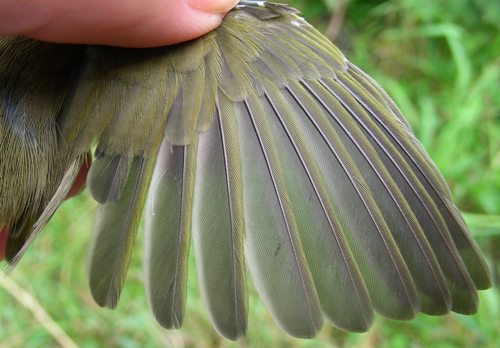
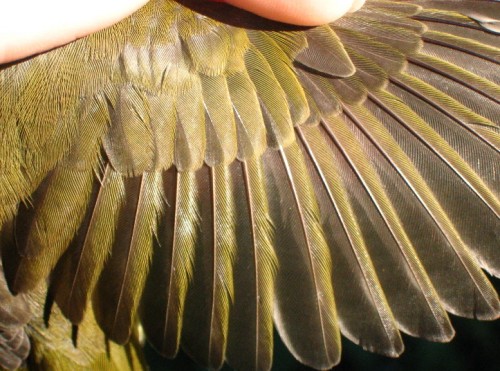
On second-year Common Yellowthroats there is usually a moult limit between the primary coverts and the greater coverts, but the contrast is often slight and easily overlooked, as the photo below illustrates. Where it is distinct, it can be taken as a reliable indicator of age, but in most cases the tail will provide a clearer clue, and ideally both should be assessed in tandem. Note that some individuals (as in the second photo below) undergo an eccentric preformative moult, in which some primaries and/or secondaries are replaced, with the resulting moult limit still easily visible in spring as a contrast between the fresher green-edged feathers and browner, more worn juvenile feathers.
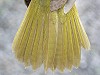
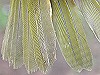
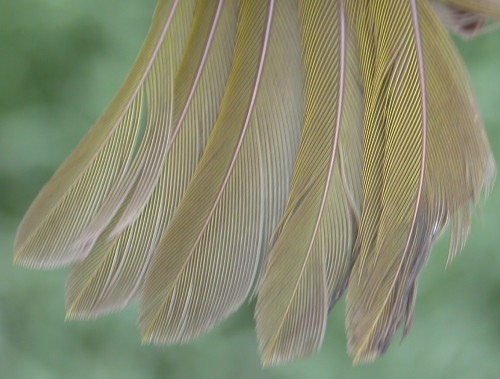
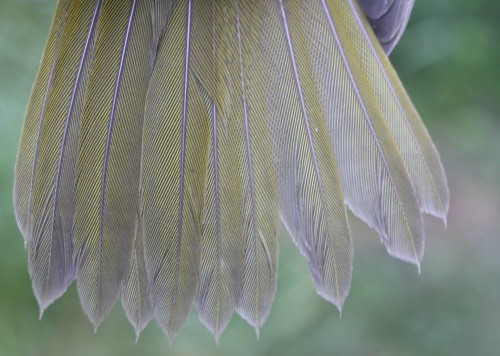
The first photo below shows the condition of severe wear that many second-year Common Yellowthroat tails are showing by spring, with tattered edges and very pointed tips; the tail in the second photo shows slightly less wear, but the rectrices are even more pointed. In both cases, uniform growth bars can be seen across the tail, indicating that the feathers grew simultaneously (as is the case when the first set of rectrices grows in, but not with subsequent moults). While useful if visible, they are not always present or visible, so their absence should not be taken as an indicator of after-second-year.
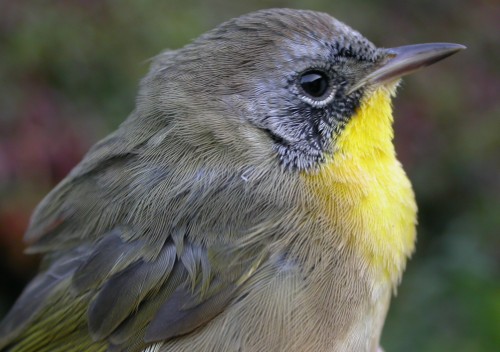
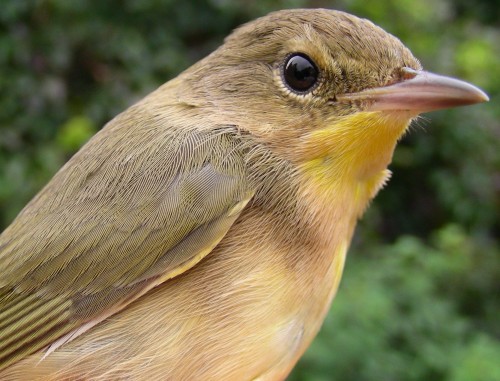
Females are easily recognized in spring by the lack of any black on the face, but close examination of the wing and/or tail is usually required to determine age. Note, however, that on this bird the throat is particularly pale and the greater alula appears quite pale and frayed at the edge. Both of these features suggest that it is a second-year female, but checking the wing and tail for confirmation is strongly recommended.
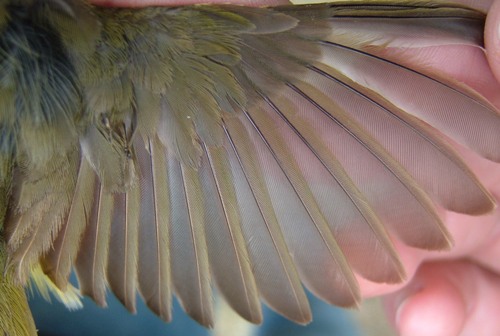
On second-year Common Yellowthroats there is usually a moult limit between the primary coverts and the greater coverts, but the contrast is often slight and easily overlooked, as the photo below illustrates. Where it is distinct, it can be taken as a reliable indicator of age, but in most cases the tail will provide a clearer clue, and ideally both should be assessed in tandem. Note also the often poor condition of the primaries and secondaries by spring, especially when looking at the tips of the feathers.
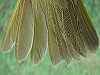
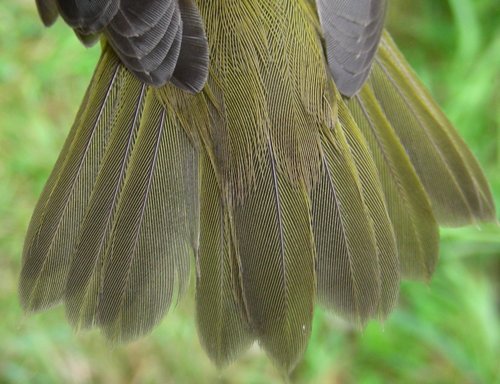
This photo illustrates the fact that some Common Yellowthroats replace their central rectrices in their first prebasic moult - note how they are fairly rounded and in good condition, compared with the five left outer rectrices that are paler, more tattered, and at least in some cases relatively pointed. After-second-year birds will have replaced all rectrices during their moult, so a "mixed" tail such as this is a good sign of a second-year bird.
After-hatch-year males are generally quite easy to recognize in fall as they are the only age/sex class with an extensive black mask. However, there is some potential for confusion between after-hatch-year males with particularly mottled facial patches and hatch-year males with unusually extensive black flecking, and especially in such cases the wing and tail should be examined closely to confirm age. The two photos below are of the same individual, one year apart; in 2006 it had nearly completed its prebasic moult already, while in 2007 it was still well underway at the time photos were taken.
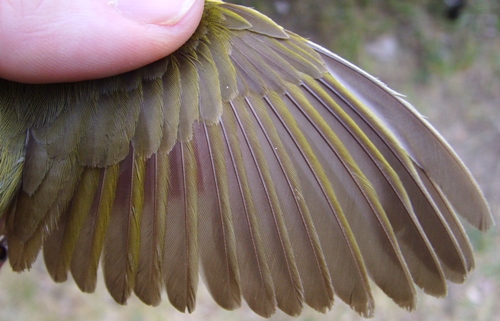
On after-hatch-year Common Yellowthroats, the primary coverts have a distinctive greenish outer edge, and all of them are fairly broad and rounded, as shown in the first photo below. However, the appearance of some second-year birds is quite similar, so this criterion is of relatively limited value. Especially in early fall, some birds may be seen with primaries and/or secondaries being replaced, and this is also suggestive of after-hatch-year, though some hatch-year birds do replace some of these feathers as part of an eccentric preformative moult.
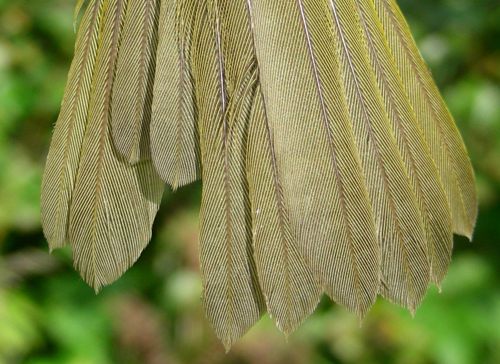
After-hatch-year Common Yellowthroats have relatively broad and rounded outer rectrices, but they may become fairly rapidly worn due to the dense habitat they prefer. Note that in the example below some of the individual rectrices have a fairly distinct tip, but that most feathers remain fairly broad to near it, rather than tapering gradually toward the tip as is more typical for hatch-year birds. Nonetheless, it can be confusing enough that it re-emphasizes that this is a species for which multiple characteristics should be combined to determine age. The second photo shows the same individual one year later, and it appears to have not yet moulted its tail.
Typical after-hatch-year females are moderately recognizable in fall, as they lack any black on the face yet have a distinctly yellow throat. Beware, however, some hatch-year males that have not yet acquired any black in the face. Checking the wing and tail to determine age will help resolve this uncertainty.
On after-hatch-year Common Yellowthroats, the primary coverts have a distinctive greenish outer edge, and all of them are fairly broad and rounded. However, the appearance of some second-year birds is quite similar, so this criterion is of relatively limited value. Sequential replacement of all primaries and secondaries (as shown in the second photo below) is also indicative of after-hatch-year birds, but beware that some hatch-year individuals may undergo an eccentric moult of some of these feathers.
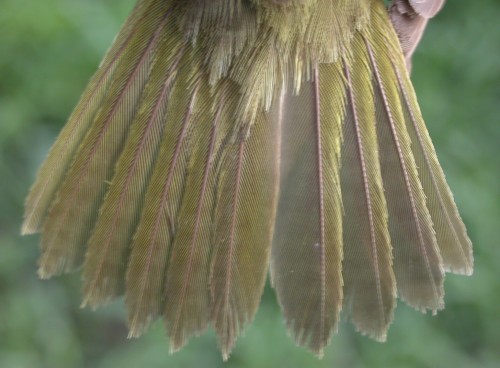
After-hatch-year Common Yellowthroats have relatively broad and rounded outer rectrices, but they may become fairly rapidly worn due to the dense habitat they prefer. Note that in the example below some of the individual rectrices have a fairly distinct tip, but that most feathers remain fairly broad to near it, rather than tapering gradually toward the tip as is more typical for hatch-year birds. Nonetheless, it can be confusing enough that it re-emphasizes that this is a species for which multiple characteristics should be combined to determine age.
Typically hatch-year males have some black flecking in the area of the facial mask. However, in some it may be extensive enough to overlap with relatively pale after-hatch-year males, and in other cases they may not yet have any black at all and could be confused with after-hatch-year females. In both cases, looking closely at the wing and tail for other clues to determine age should resolve most questions.
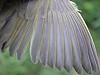
On hatch-year Common Yellowthroats there is a moult limit between the primary coverts and the greater coverts, but the contrast is often slight and easily overlooked, though in the photo below it is actually apparent. In cases such as this where it is distinct, it can be taken as a reliable indicator of age, but in most cases the tail will provide a clearer clue, and ideally both should be assessed in tandem.
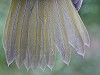
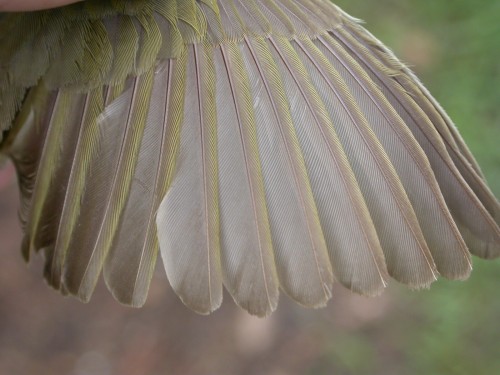
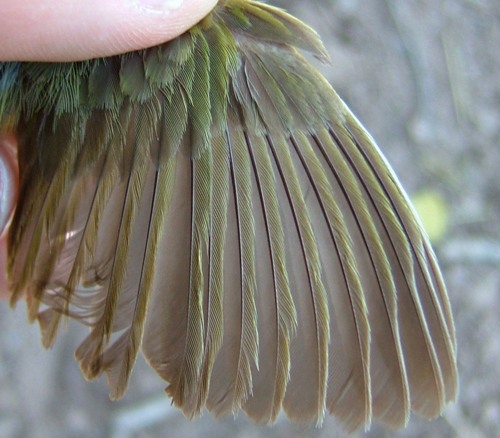
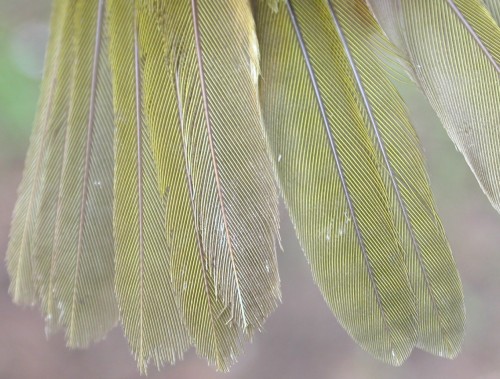
Hatch-year Common Yellowthroats have relatively narrow rectrices that are tapered to a pointed tip, though only rarely is the shape as extreme as in the example below.
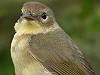
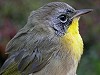
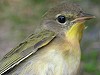
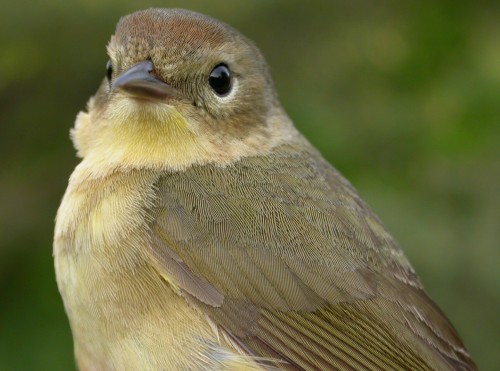
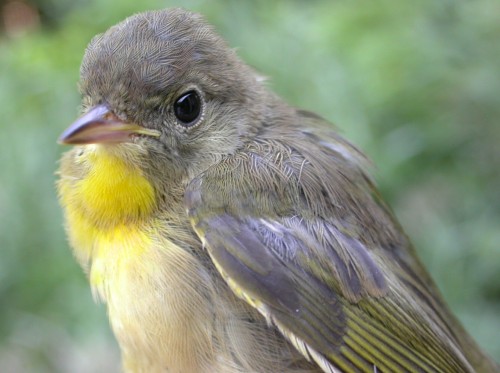
Common Yellowthroats identified as hatch-year through wing and tail characteristics, but lacking any black on the face, are most likely to be females. However, as some hatch-year males do not have any black on the face either, these should generally be considered as sex unknown. The intensity of yellow in the second example below is suggestive of a male.
On second-year Common Yellowthroats there is a moult limit between the primary coverts and the greater coverts, but the contrast is often slight and easily overlooked, as the photo below illustrates. Where it is distinct, it can be taken as a reliable indicator of age, but in most cases the tail will provide a clearer clue, and ideally both should be assessed in tandem.
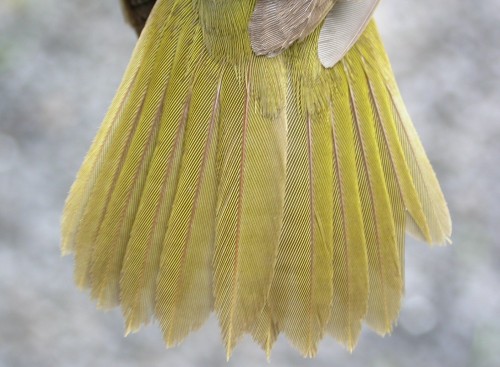
Hatch-year Common Yellowthroats have relatively narrow rectrices that are tapered to a pointed tip. Note, however, that Common Yellowthroats are particularly likely to replace some or all of their rectrices prematurely; the second photo below shows an example of two new rectrices growing in, with distinctly denser barbs and more rounded tips than the retained juvenile feathers.
|