|
|
McGILL BIRD OBSERVATORY |
||||||||||||||||||||||||||||||||||||||||||||||
NOTE:
This species account has been moved to Piranga to allow for improved comparison
among examples.
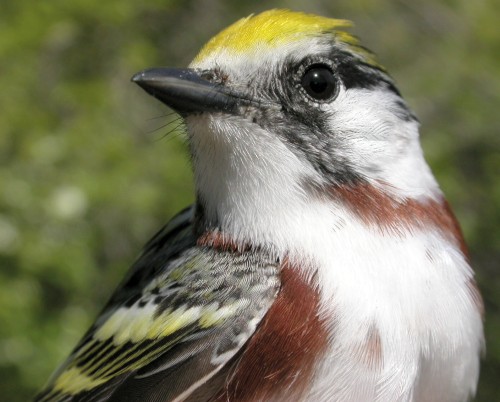
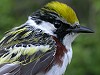
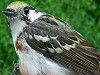
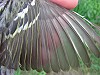
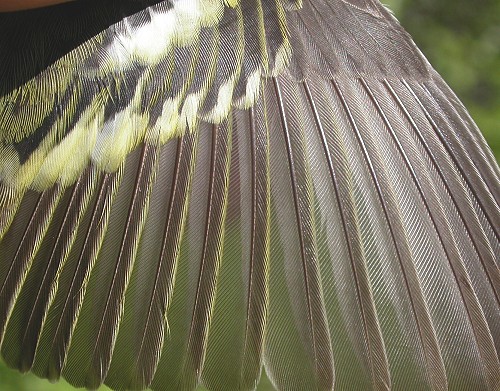
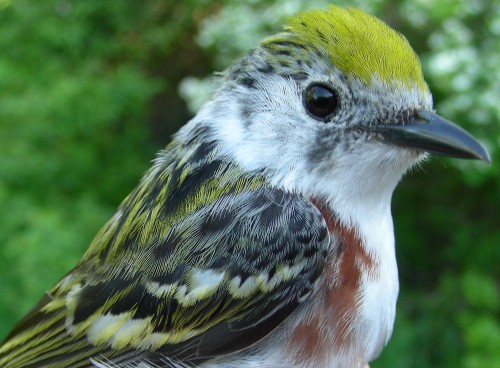
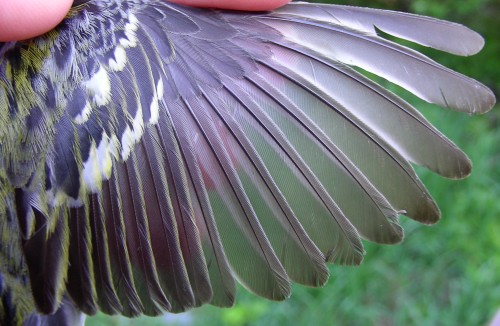
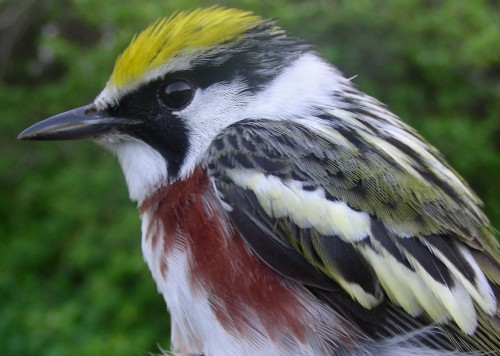
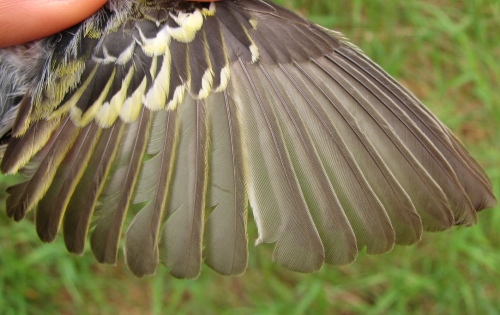
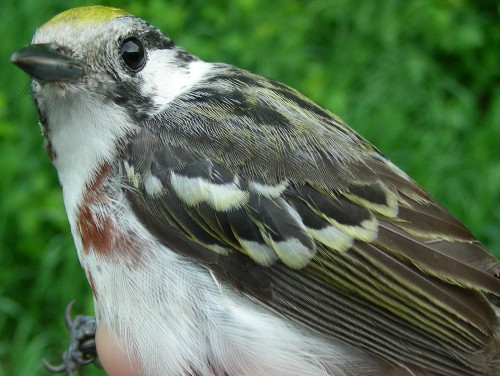
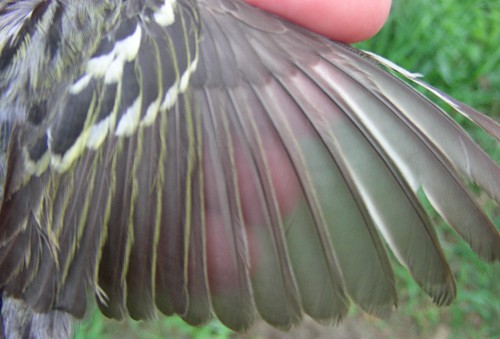
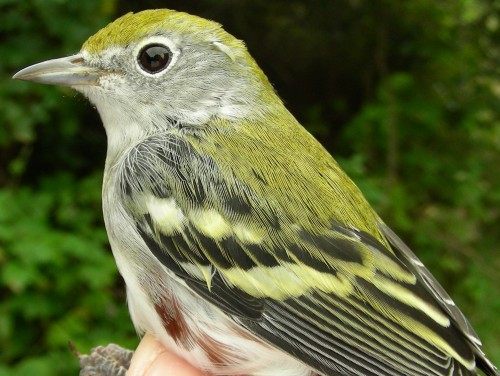
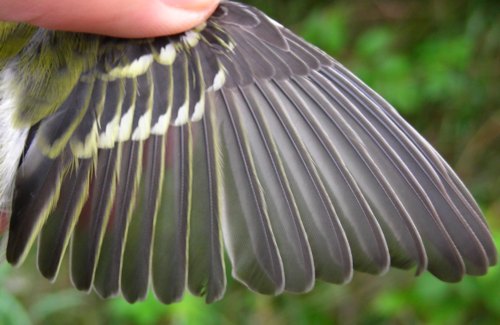
Ageing and sexing details: After-second-year males have extensive chestnut sides and a yellow crown. They typically also have a black mask, though in some cases such as the example shown, it can be faded. The wing of after-hatch-year males is for the most part uniformly dark, with contrast limited to the darker alternate plumage feathers in the greater coverts.
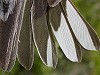
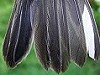
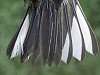
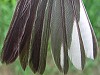
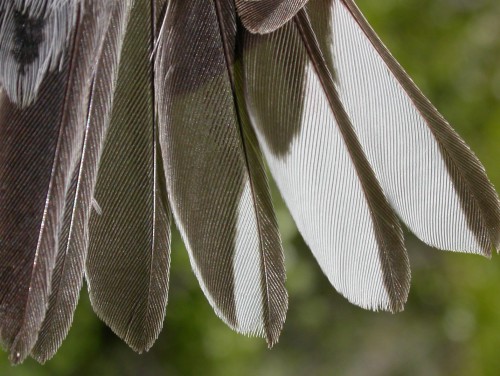
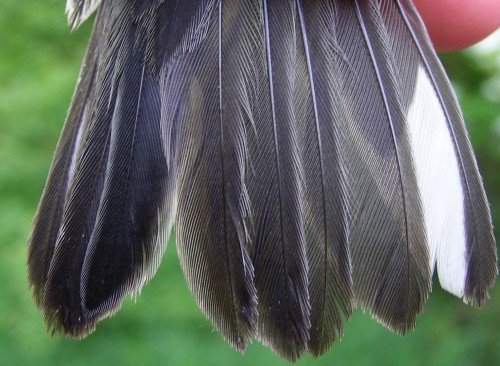
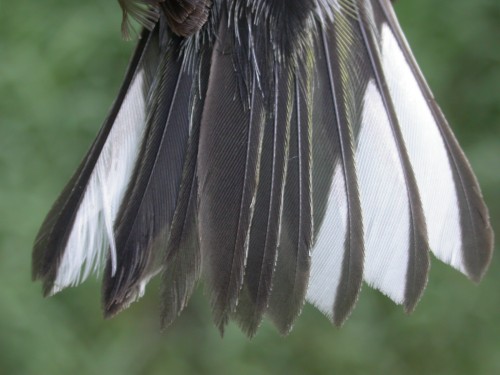
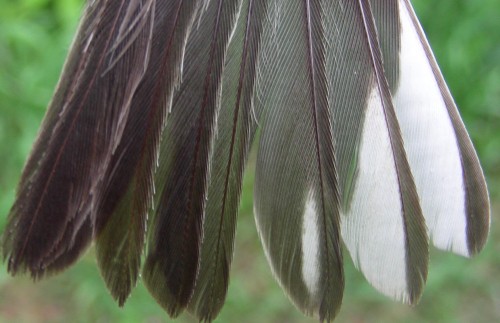
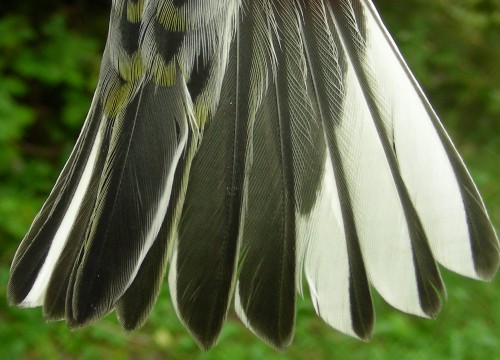
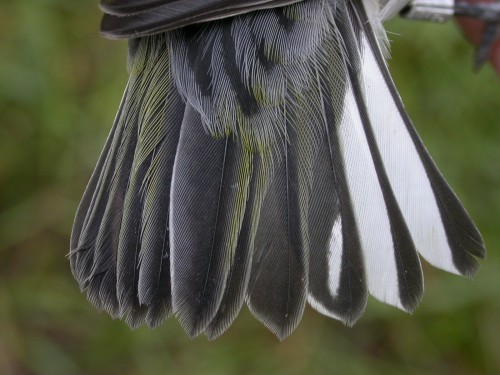
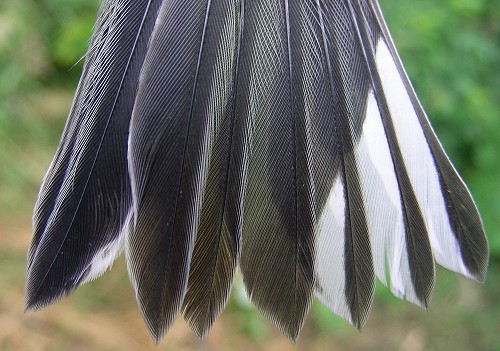
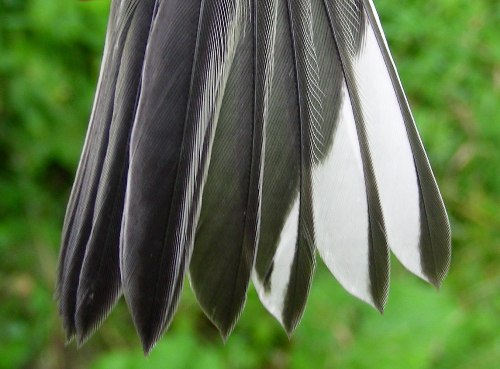
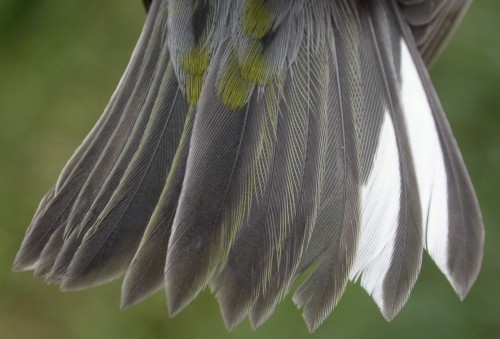
After-hatch-year Chestnut-sided Warblers have relatively broad and rounded rectrices; the extent of white is typically greater on males than on females.
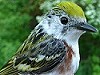
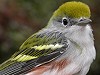
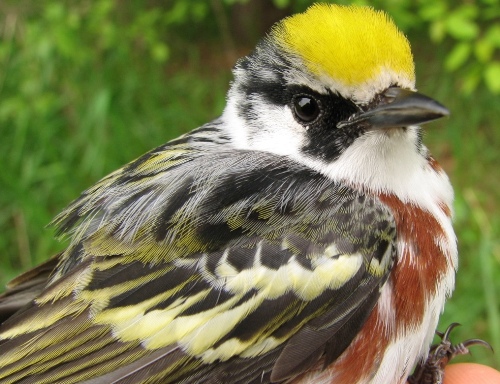
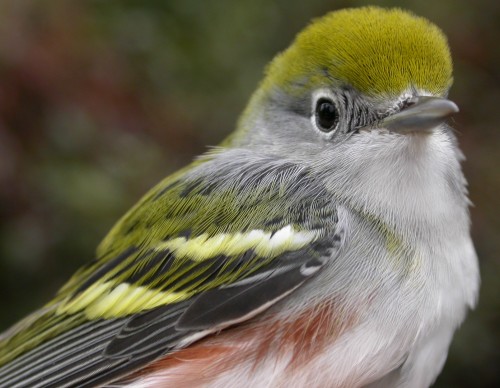
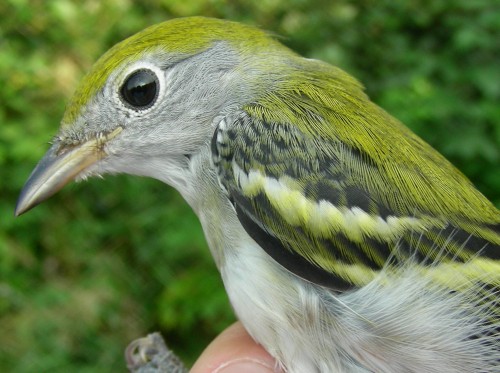
The combination of an indistinct grayish moustache and distinct chestnut streaking is strongly suggestive of an after-second-year female, but it is recommended to check the wings and tail for confirmation. The crown is typically more greenish than yellowish.
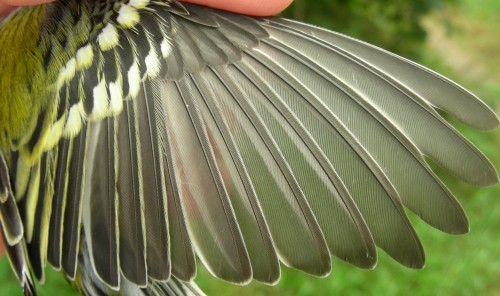
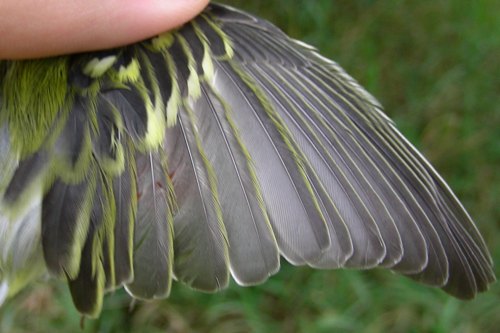
Note that while the primary coverts are slightly paler than the greater coverts, they are nonetheless quite dark, fresh, and rounded. Also, the primaries, secondaries and primary coverts do not differ appreciably in wear.
The outer rectrices on after-second-year birds are quite broad and rounded at the tip; the extent of white tends to be less on females than on males.
The black moustache and moderate extent of chestnut markings suggest a second-year male, but this should be confirmed by looking at the wing and tail.
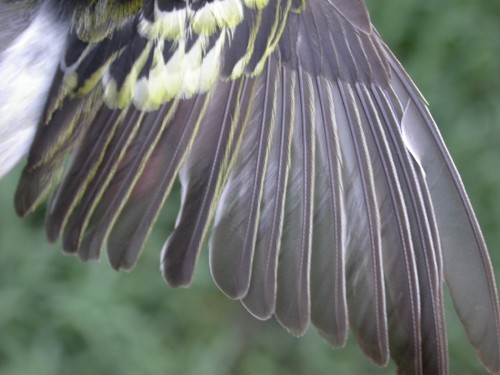
Note the distinct contrast between the dull and somewhat worn primary coverts, primaries, and secondaries, versus the much darker and fresher greater coverts. Note also the contrast sometimes visible on second-year birds between the fresh and dark greater coverts and the somewhat worn, unreplaced secondaries (the tattered tertials often being the most apparent).
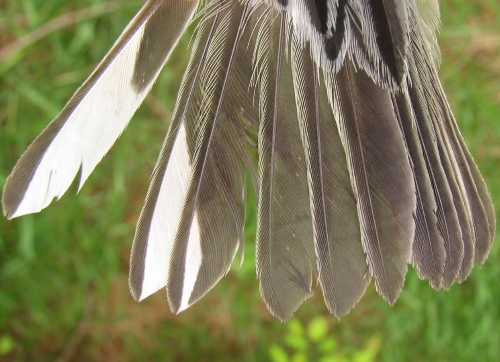
The rectrices on second-year birds are narrower and more pointed than those of after-second-year birds, and often show appreciably more wear (especially the central rectrices).
Second-year females are the palest in spring, with only small traces of chestnut, pale and indistinct grayish moustaches, and greenish caps.
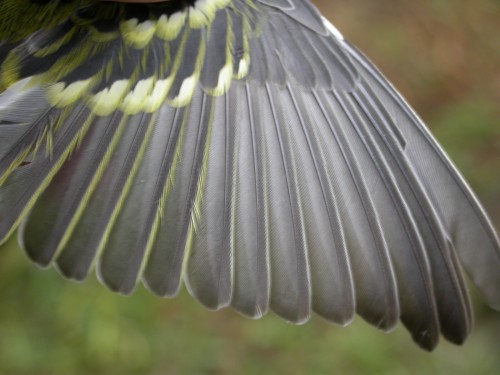
As with second-year males, second-year females show fresh greater coverts contrasting with a paler and more worn block of feathers comprising the primary coverts, primaries, and secondaries. The contrast can be particularly evident when comparing the often tattered tertials with the adjacent greater coverts.
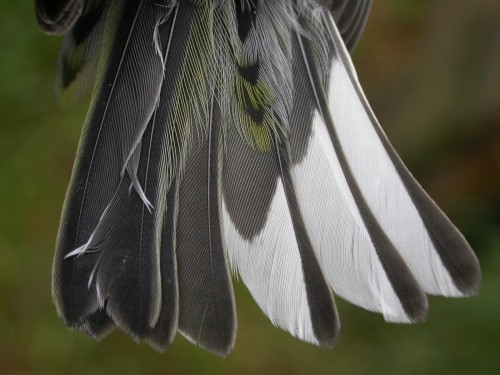
Rectrices of second-year warblers tend to be relatively narrower and more pointed than those of older birds. In the photo below, the outer rectrices do not show this typical shape, but the central rectrices are closer to the expected shape, and also show some of the wear expected on a second-year bird.
After-hatch-year males have the most distinct fall plumage, as they are the only age/sex class with moderately extensive chestnut streaking, as shown in the photo below. Another distinctly after-hatch-year feature visible in this photo is the bluish-gray edging on the black primary coverts.
The primary coverts are only slightly paler than the greater coverts, and are broad and rounded, with narrow bluish-gray edging.
The rectrices are broad and rounded on after-hatch-year birds; after-hatch-year males have the greatest amount of white.
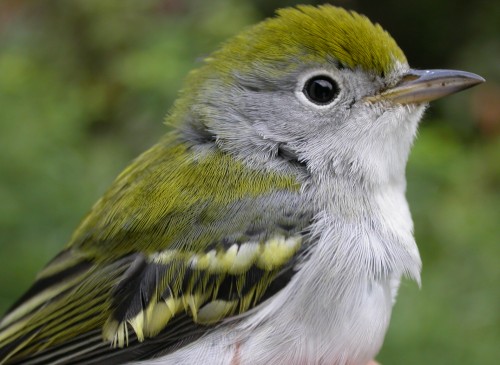
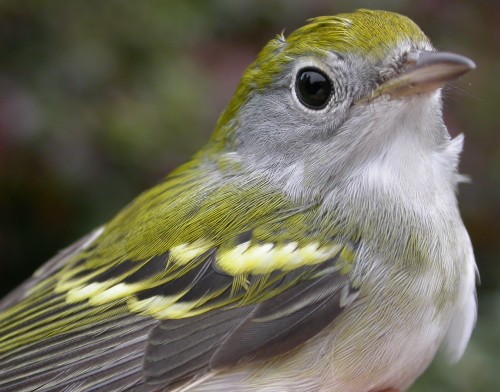
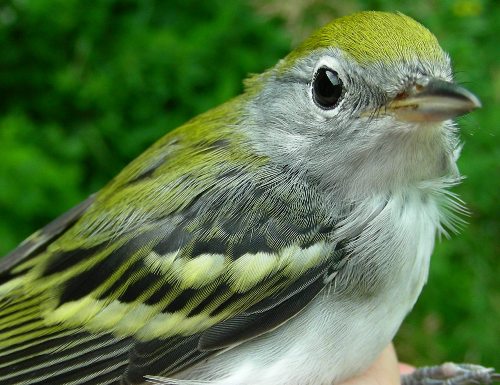
After-hatch-year females are relatively recognizable by virtue of their blackish primary coverts with bluish-gray edging, combined with minimal or absent chestnut streaking. However, they may be confused with hatch-year males and the open wing and tail should be checked to confirm age and sex.
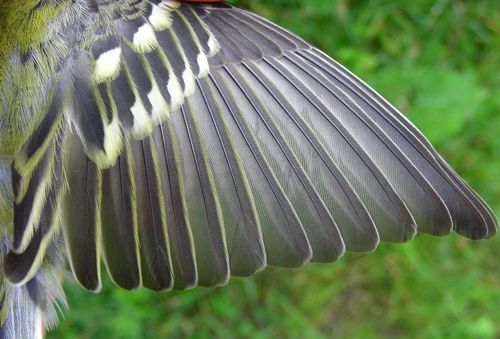
The primary coverts are only slightly paler than the greater coverts, and are broad and rounded, with narrow bluish-gray edging. in the second example below, the bird is just completing its prebasic moult, with the final two secondaries almost fully grown.
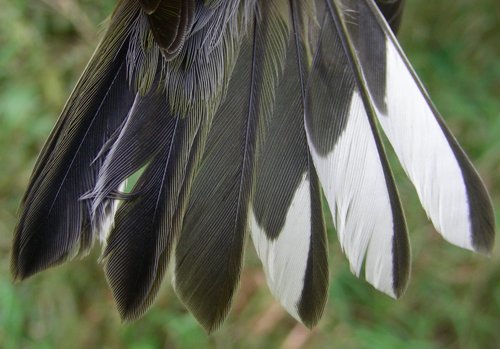
The rectrices are broad and rounded on after-hatch-year birds. Females tend to have less white on the tail than males, though the amount is variable as illustrated by the photos below.
Hatch-year males have little to no chestnut streaking, like after-hatch-year females, but tend to have somewhat paler and more poorly-marked primary coverts. However, as the second photo below (of a hatch-year male confirmed by skull condition) shows, the primary coverts may show some visible blue edging even on hatch-year birds, therefore looking at the open wing and tail is advised to be confident of age and sex.
The contrast between the primary coverts and greater coverts is somewhat greater than on after-hatch-year birds, and the primary coverts tend to have less blue edging.
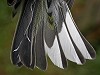
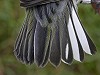
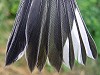
The rectrices of hatch-year birds are relatively narrow and tapered to a point.
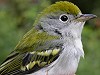
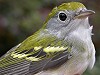
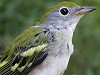
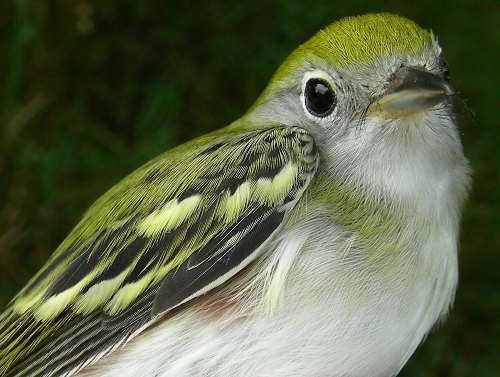
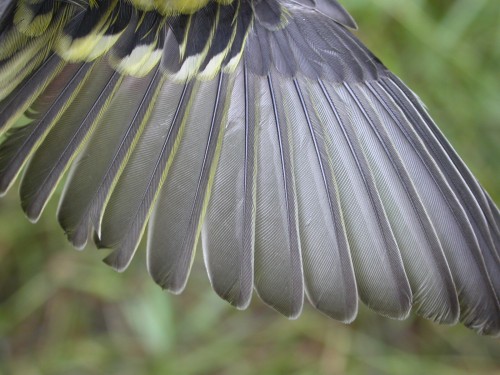
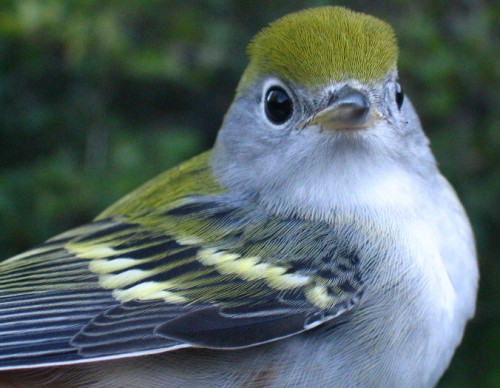
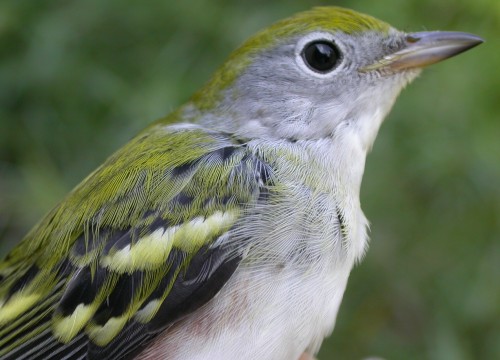
Hatch-year females are the palest of the age/sex classes in fall. They usually lack any chestnut markings, and the primary coverts on a perched bird appear grayish with minimal edging.
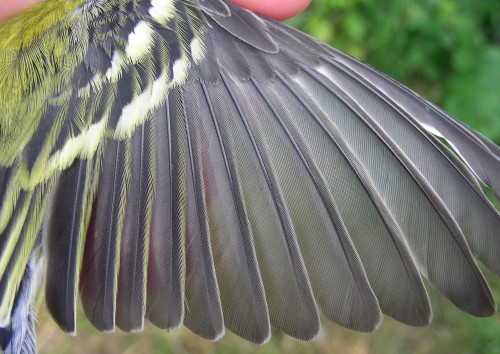
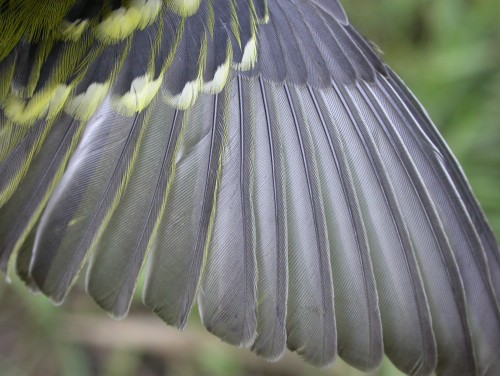
The contrast between the primary coverts and greater coverts is somewhat greater than on after-hatch-year birds, and the primary coverts tend to have little or no blue edging.
The rectrices of hatch-year birds are relatively narrow and tapered to a point.
|