Ageing and sexing details:
|
JAN - JUL: after-second-year
male |
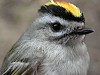
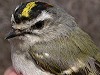
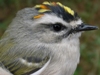
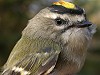
Golden-crowned Kinglets showing orange in the crown are readily identifiable as males, but beware that the orange feathers are often concealed. Ageing requires careful examination of the wing and tail, and in spring many individuals may have features that are too intermediate to allow differentiation of age and should be called AHY.
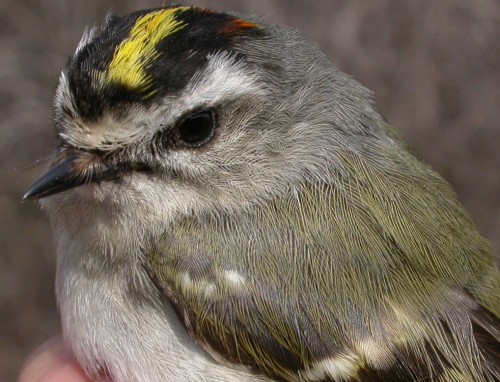
A male with just a hint of orange showing at the rear of the crown.
Photo by Marcel Gahbauer,
McGill Bird Observatory (QC), April 2006
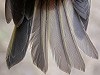
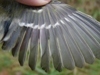
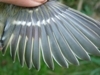
ASY kinglets lack molt limits on the wing and feathers tend to average somewhat broader and with more greenish edging than on SY birds, but note that the distinctions are subtle and often insufficient to determine age.
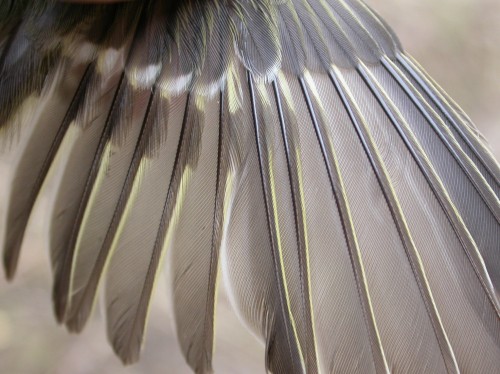
Note the broad and rounded primary coverts, with green edging.
Photo by Marcel Gahbauer,
McGill Bird Observatory (QC), April 2006
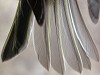
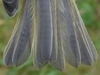
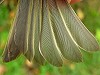
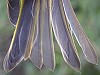
ASY kinglets tend to have rectrices that are more broad and rounded than those of SY birds, but there is a fair amount of variability and by spring the tail may be somewhat worn and difficult to assess reliably. If the wing characteristics are also unclear, such an individual should be considered AHY.
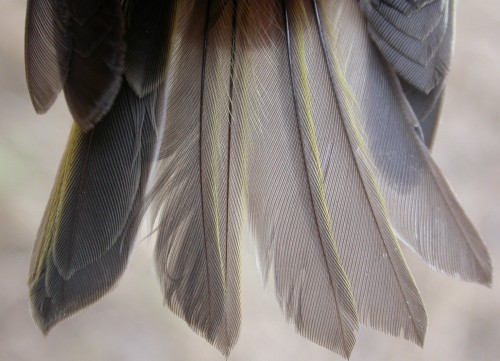
This tail is not particularly representative of ASY kinglets, as the rectrices are only
moderately broad, and actually quite pointed; an individual with such a tail should
be considered AHY unless the wing provides distinct clues for ageing.
Photo by Marcel Gahbauer,
McGill Bird Observatory (QC), April 2006
RETURN TO AGE/SEX
OVERVIEW
|
JAN - JUL: after-second-year
female |
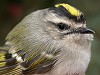
Females do not have any orange-red feathers in the crown, but bear in mind that even on males these are often not visible.
ASY kinglets lack molt limits on the wing and feathers tend to average somewhat broader and with more greenish edging than on SY birds, but note that the distinctions are subtle and often insufficient to determine age.
ASY kinglets tend to have rectrices that are more broad and rounded than those of SY birds, but there is a fair amount of variability and by spring the tail may be somewhat worn and difficult to assess reliably. If the wing characteristics are also unclear, such an individual should be considered AHY.
RETURN TO AGE/SEX
OVERVIEW
|
JAN - JUL: second-year
male |
As with ASY individuals, SY Golden-crowned Kinglets showing orange in the crown are readily identifiable as males, but beware that the orange feathers are often concealed. Ageing requires careful examination of the wing and tail, and in spring many individuals may have features that are too intermediate to allow differentiation of age and should be called AHY.
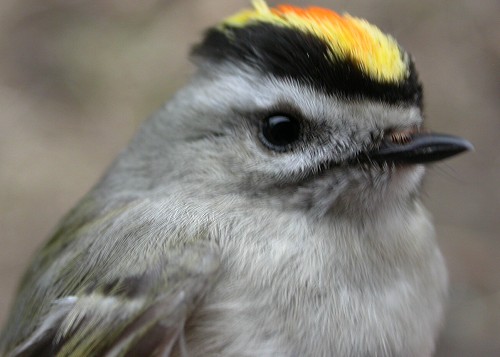
A male exposing its orange crown stripe quite well.
Photo by Marcel Gahbauer,
McGill Bird Observatory (QC), April 2006
Although molt limits typically occur on SY kinglets between the median and greater coverts, or sometimes among the inner greater coverts, these are generally indistinct and difficult to recognize with certainty. However, the wing overall tends to be somewhat duller than on ASY kinglets, on average shows somewhat more wear, and has less green edging, especially on the primary coverts and secondaries.
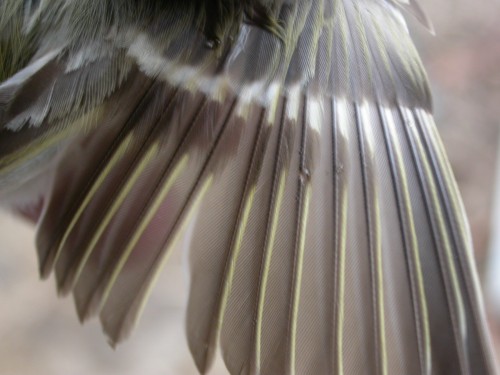
Photo by Marcel Gahbauer,
McGill Bird Observatory (QC), April 2006
SY kinglets generally retain their juvenile rectrices, which on average are narrower and more pointed than the basic feathers of ASY kinglets, and also tend to be somewhat more worn by spring.
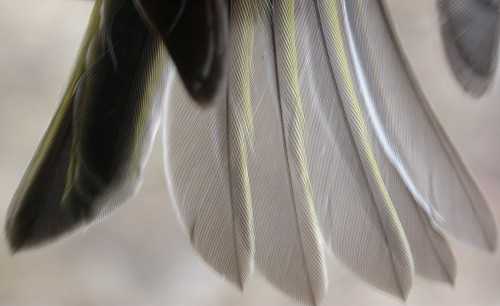
Photo by Marcel Gahbauer,
McGill Bird Observatory (QC), April 2006
RETURN TO AGE/SEX
OVERVIEW
|
JAN - JUL: second-year
female |
Females do not have any orange-red feathers in the crown, but bear in mind that even on males these are often not visible.
Although molt limits typically occur on SY kinglets between the median and greater coverts, or sometimes among the inner greater coverts, these are generally indistinct and difficult to recognize with certainty. However, the wing overall tends to be somewhat duller than on ASY kinglets, on average shows somewhat more wear, and has less green edging, especially on the primary coverts and secondaries.
SY kinglets generally retain their juvenile rectrices, which on average are narrower and more pointed than the basic feathers of ASY kinglets, and also tend to be somewhat more worn by spring.
RETURN TO AGE/SEX
OVERVIEW
|
JUL - DEC: after-hatch-year
male |
As in spring, males with can be readily identified if orange crown feathers are visible, but these are often concealed. Ageing requires a good view of the wing and tail, or checking for skull pneumatization (until early October).
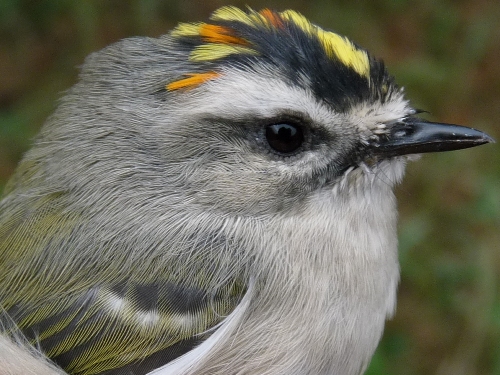
A male showing just a few orange crown feathers.
Photo by Marcel Gahbauer,
McGill Bird Observatory (QC), September 2005
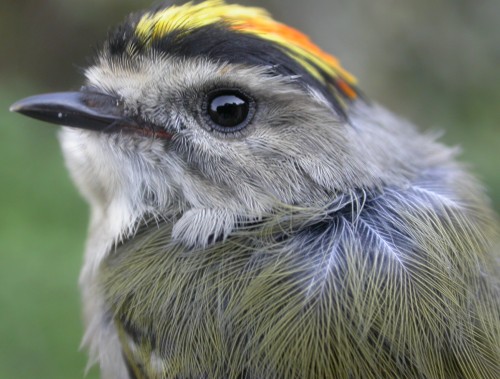
A male with a somewhat more extensive patch of orange visible.
Photo by Marcel Gahbauer,
McGill Bird Observatory (QC), September 2005\
AHY kinglets have a uniformly fresh wing, with broad primary coverts featuring distinct greenish edging.
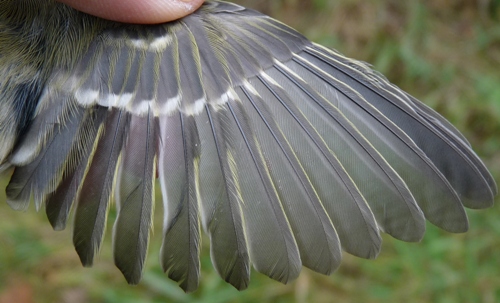
A typical AHY wing, with distinctly broad and rounded primary coverts.
Photo by Marcel Gahbauer,
McGill Bird Observatory (QC), September 2005
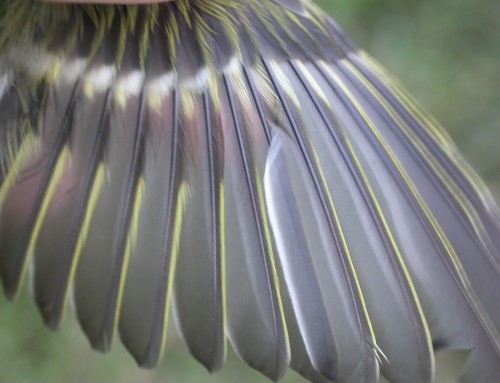
Although a bit blurry, this close-up highlights the prominent green edging on
feathers across the entire wing.
Photo by Marcel Gahbauer,
McGill Bird Observatory (QC), September 2005
AHY kinglets typically have broad and rounded rectrices; those that do are readily aged by this feature, but note that there are many intermediates that require confirmation by wing or skull.
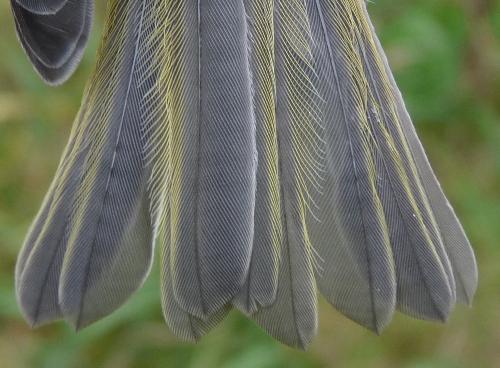
Although some of the rectrices have a slight point at the tip, they are generally much
broader and less tapered toward the end than typical of HY kinglets.
Photo by Marcel Gahbauer,
McGill Bird Observatory (QC), September 2005
RETURN TO AGE/SEX
OVERVIEW
|
JUL - DEC: after-hatch-year
female |
Females do not have any orange-red feathers in the crown, but bear in mind that on males the orange feathers are often concealed..
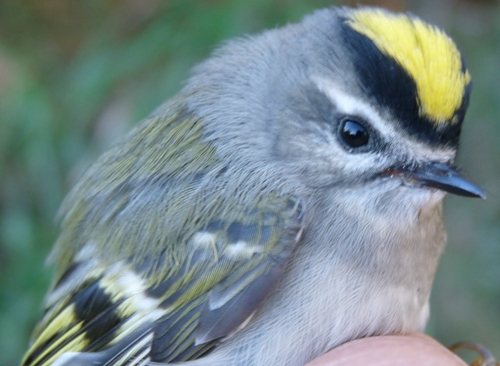
A female with a partly raised crest, making obvious the lack of orange feathers in the centre.
Photo by Marcel Gahbauer,
McGill Bird Observatory (QC),October 2010
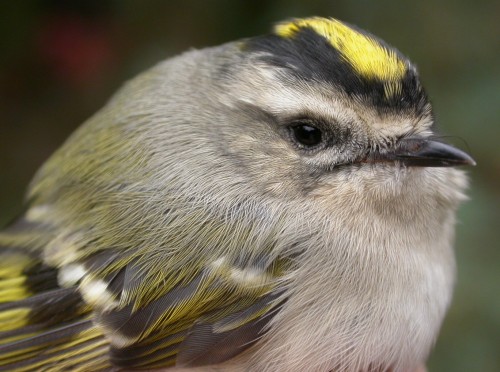
A more typical view with a narrow yellow crown stripe; from this view it would not be possible
to conclude whether this is a female or a male.
Photo by Marcel Gahbauer,
McGill Bird Observatory (QC),October 2005
AHY kinglets have a uniformly fresh wing, with broad primary coverts featuring distinct greenish edging.
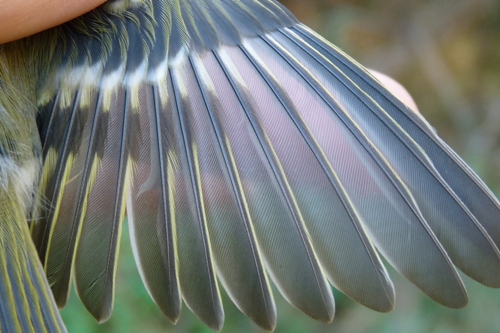
This close-up highlights the broad and rounded primary coverts.
Photo by Marcel Gahbauer,
McGill Bird Observatory (QC),October 2010
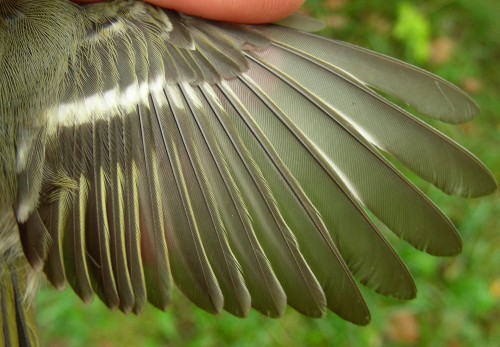
Again, note the broad and rounded primary coverts, and also the very uniform appearance
to the entire wing.
Photo by Marie-Anne
Hudson, McGill Bird Observatory (QC), October 2007
AHY kinglets typically have broad and rounded rectrices; those that do are readily aged by this feature, but note that there are many intermediates that require confirmation by wing or skull.
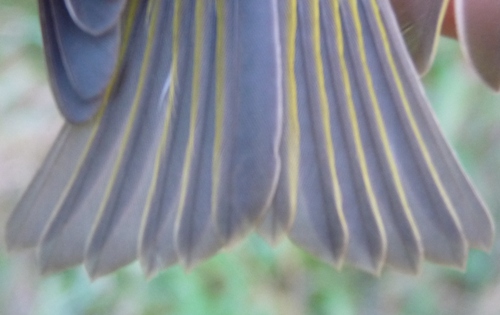
A somewhat intermediate example, with feathers that are relatively broad but a bit pointed
at the tip; with such a tail, age should be determined only if confirmed by wing or skull.
Photo by Marcel Gahbauer,
McGill Bird Observatory (QC),October 2010
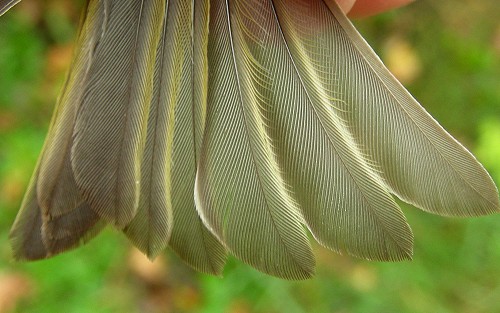
A more distinct AHY tail, with broad and rounded outer rectrices.
Photo by Marie-Anne
Hudson, McGill Bird Observatory (QC), October 2007
RETURN TO AGE/SEX
OVERVIEW
|
JUL - DEC: hatch-year
male |
As with AHY males, HY males with can be readily identified if orange crown feathers are visible, but these are often concealed. Again, ageing usually requires a good look at the wing and tail, though until pneumatization completes (as early as the beginning of October), the most reliable confirmation for HY birds is the presence of an incomplete skull.
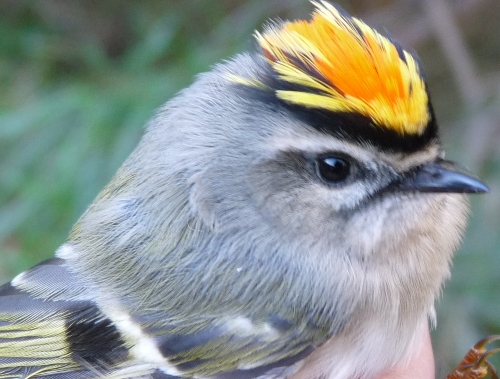
A male with a raised crest showing a substantial amount of orange in the centre of the crown.
Photo by Marcel Gahbauer,
McGill Bird Observatory (QC), October 2010
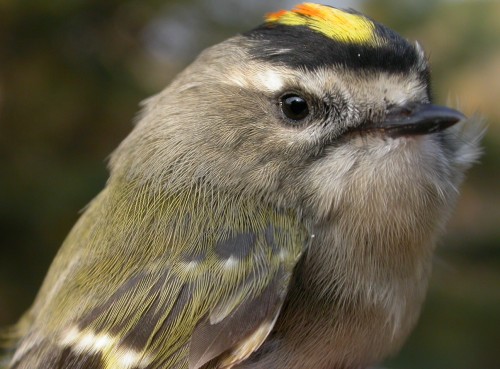
A male with a more limited amount of orange showing on the crown.
Photo by Marcel Gahbauer,
McGill Bird Observatory (QC), September 2005
Molt limits in HY kinglets typically occur between the median coverts and greater coverts, or sometimes among the inner greater coverts. Sometimes these are apparent when the replaced feathers are fresh, but more often the distinction is too subtle to be reliable. Juvenile primary coverts on HY kinglets are on average somewhat narrower and more pointed than the basic feathers of AHY birds, but beware that this distinction can be more difficult to see in fall when feathers are fresh; similarly, by spring the minimal green edging to the juvenile primary coverts has often worn off, helping distinguish them from basic feathers, but when fresh in fall they may look quite similar. Therefore since most HY wings in fall are only subtly different from AHY wings, tail is the best plumage feature to use in most cases, and skull development should be checked in most cases.
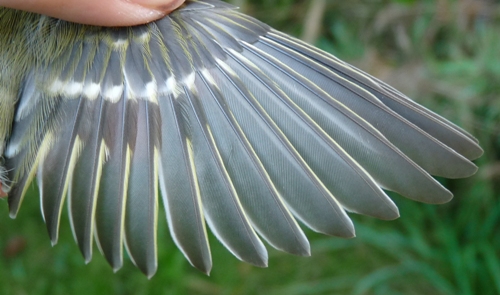
Although no molt limits are visible, the primary coverts are comparatively narrow and
pointed, but admittedly this is a subtle distinction, and age should not be determined
by a wing like this unless confirmed by at least one of tail and skull.
Photo by Marcel Gahbauer,
McGill Bird Observatory (QC), October 2010
HY kinglets retain juvenile rectrices that are typically narrower and more pointed than those of AHY kinglets. This is often the most reliable plumage clue for ageing, but beware that a fair proportion of kinglets have tails with an intermediate shape, and should be aged only if skull development provides a definitive answer.
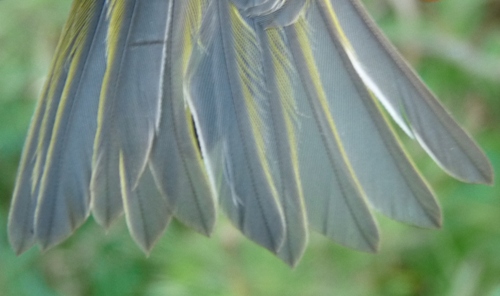
This tail is fairly typical of an HY kinglet, with relatively narrow and somewhat tapered outer
rectrices, and already showing a bit of wear, compared to typical AHY tails.
Photo by Marcel Gahbauer,
McGill Bird Observatory (QC), October 2010
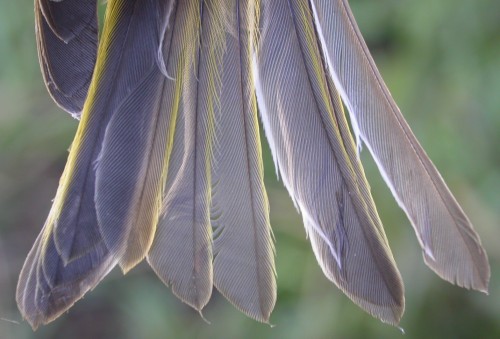
Another example showing the typical shape and a bit of wear.
Photo by Marcel Gahbauer,
McGill Bird Observatory (QC), September 2005
RETURN TO AGE/SEX
OVERVIEW
|
JUL - DEC: hatch-year
female |
Females do not have any orange-red feathers in the crown, but as with other age classes, beware that the orange feathers of males may be concealed..
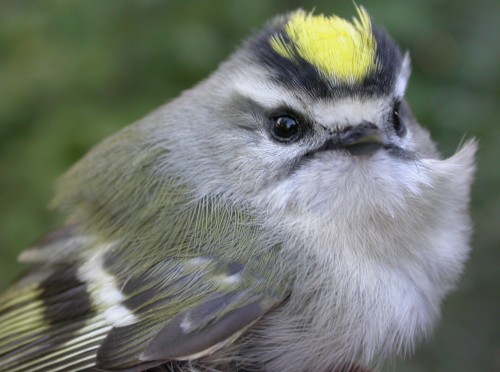
An HY female with her crest partially raised, revealing a lack of orange feathers in the centre.
Photo by Marcel Gahbauer,
McGill Bird Observatory (QC), October 2005
Molt limits in HY kinglets typically occur between the median coverts and greater coverts, or sometimes among the inner greater coverts. Sometimes these are apparent when the replaced feathers are fresh, but more often the distinction is too subtle to be reliable. Juvenile primary coverts on HY kinglets are on average somewhat narrower and more pointed than the basic feathers of AHY birds, but beware that this distinction can be more difficult to see in fall when feathers are fresh; similarly, by spring the minimal green edging to the juvenile primary coverts has often worn off, helping distinguish them from basic feathers, but when fresh in fall they may look quite similar. Therefore since most HY wings in fall are only subtly different from AHY wings, tail is the best plumage feature to use in most cases, and skull development should be checked in most cases.
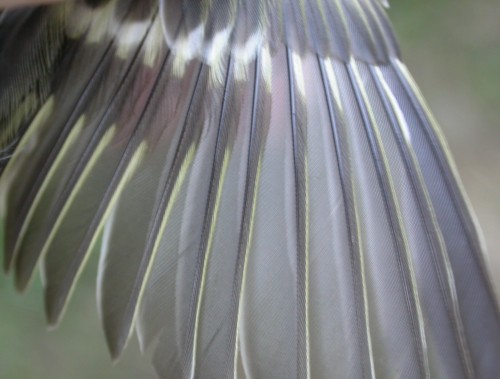
A close-up showing the relatively narrow and somewhat pale primary coverts; as with the
male example, the overall appearance of this wing is not sufficiently distinct to determine
age and would need to be supplemented with a view of the tail and/or skull development.
Photo by Marcel Gahbauer,
McGill Bird Observatory (QC), October 2005
HY kinglets retain juvenile rectrices that are typically narrower and more pointed than those of AHY kinglets. This is often the most reliable plumage clue for ageing, but beware that a fair proportion of kinglets have tails with an intermediate shape, and should be aged only if skull development provides a definitive answer.
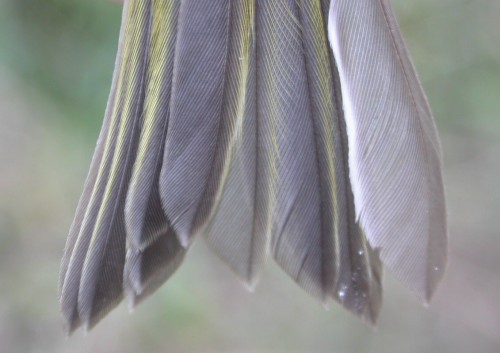
This tail matches the wing shown in the previous section, and provides strong evidence for
this being a HY kinglet due to the narrow and very pointed rectrices.
Photo by Marcel Gahbauer,
McGill Bird Observatory (QC), October 2005
RETURN TO AGE/SEX
OVERVIEW
JUL - AUG: juvenile unknown |
Juveniles are easily recognizable by the absence of yellow or red on the crown, and usually retain a prominent fleshy gape.
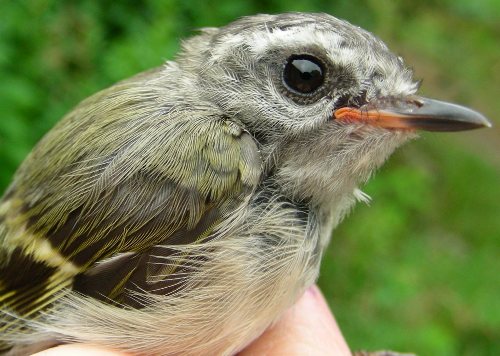
Photo by Marie-Anne Hudson, McGill Bird Observatory (QC), August 2008
The wing of juvenile kinglets is usually dark and uniform, but provides no additional information beyond the overall appearance of the bird.
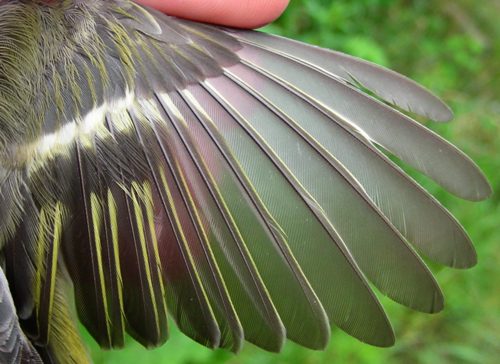
Photo by Marie-Anne Hudson, McGill Bird Observatory (QC), August 2008
Juvenile rectrices are relatively narrow and pointed, though when fresh may have a somewhat intermediate appearance between what is considered typical for HY and AHY kinglets.
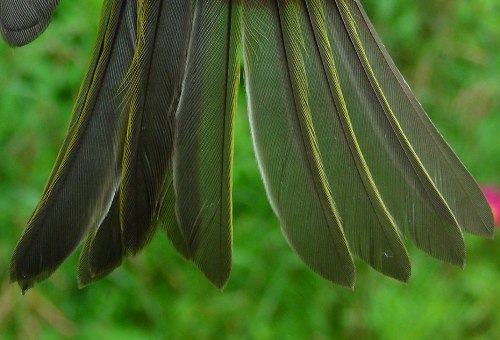
Photo by Marie-Anne Hudson, McGill Bird Observatory (QC), August 2008
RETURN TO AGE/SEX
OVERVIEW