|
|
McGILL BIRD OBSERVATORY |
|||||||||||||||||||||||||||||||||||||||||||||||||||
NOTE:
This species account has been moved to Piranga to allow for improved comparison
among examples.
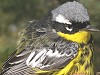
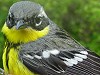
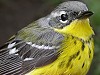
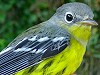
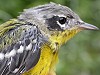
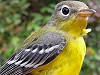
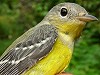
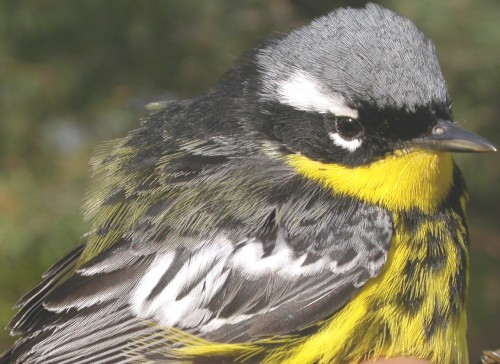
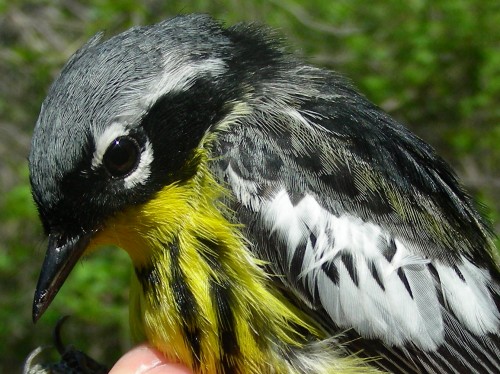
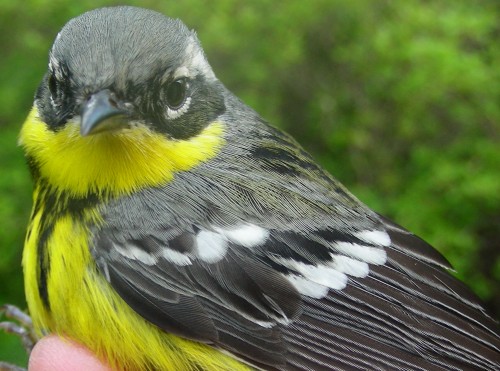
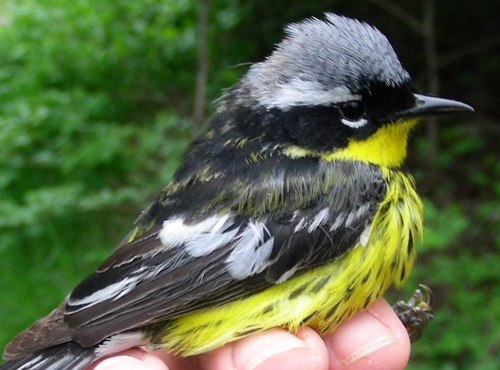
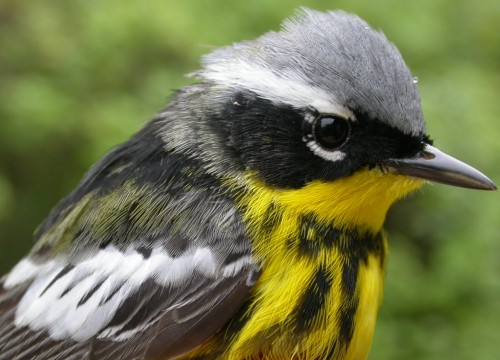
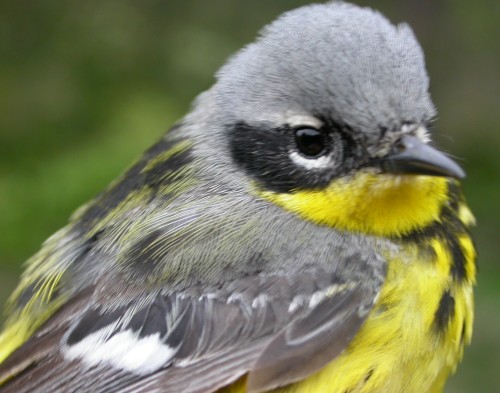
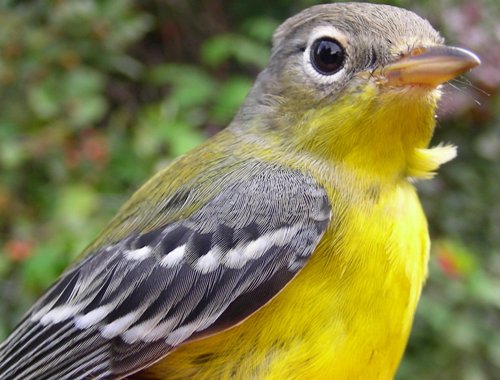
Ageing and sexing details: Spring males have a prominent black mask; ASY males also tend to have much more black on the back than SY males, but it is advisable to confirm age by looking at the wing and/or tail.
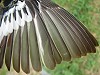
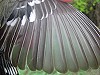
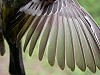
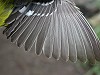
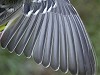
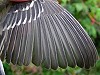
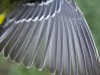
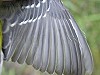
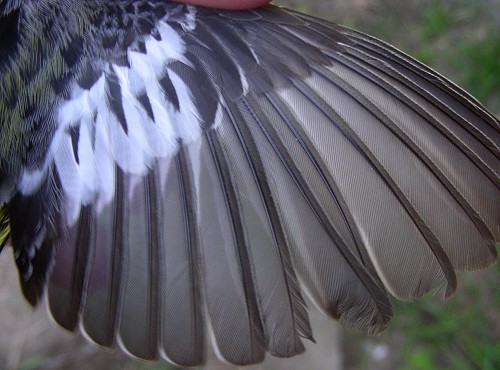
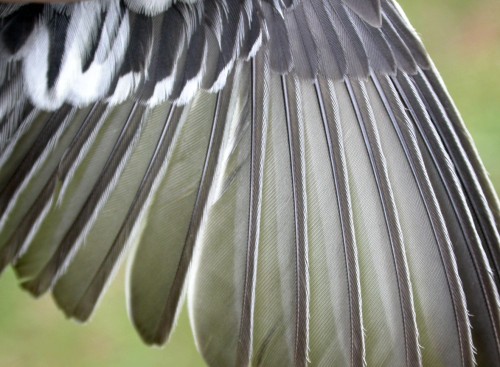
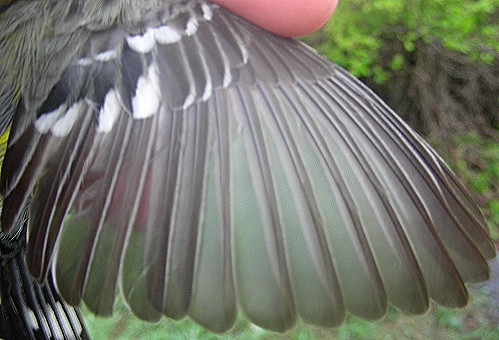
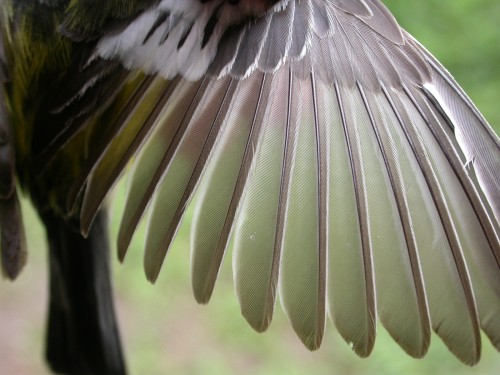
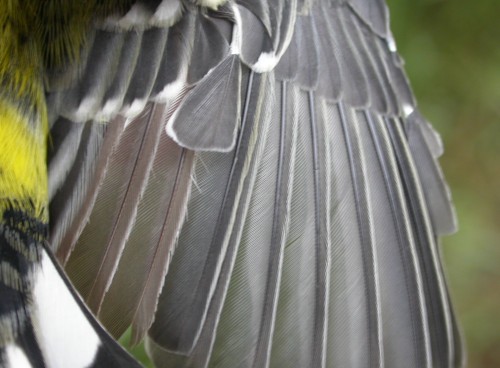
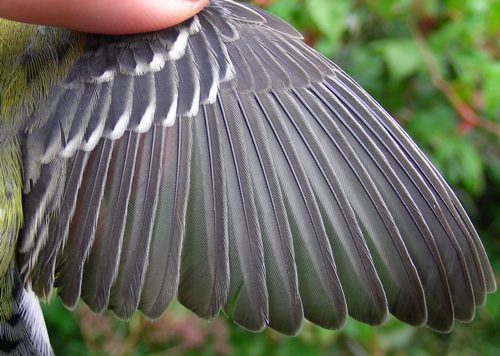
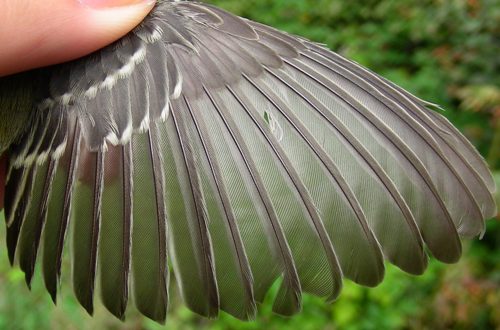
The photo below shows a typical after-second-year male wing, with blackish primary coverts contrasting little with the greater coverts.
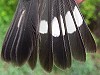
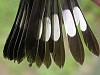
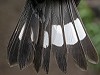
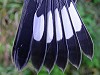
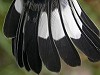
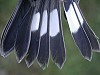
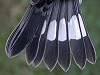
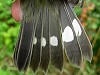
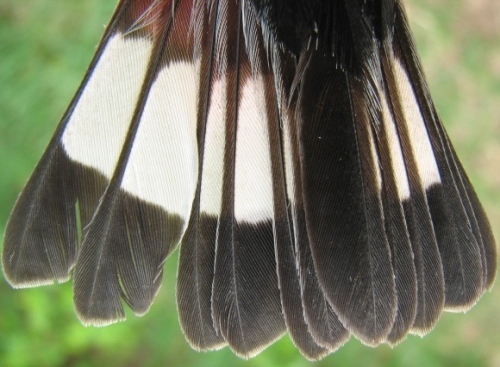
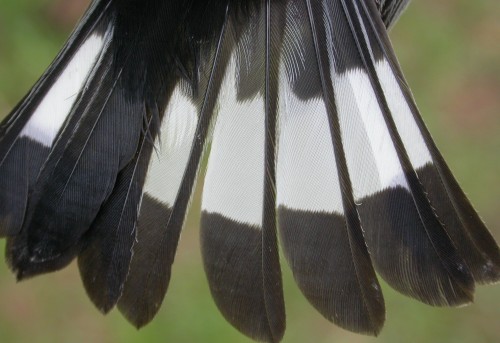
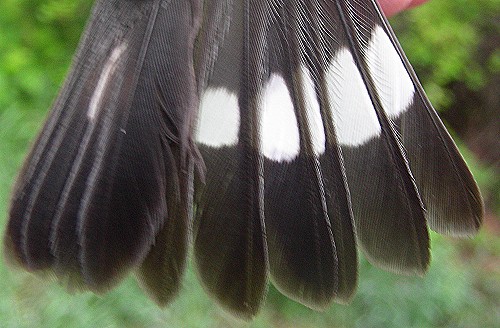
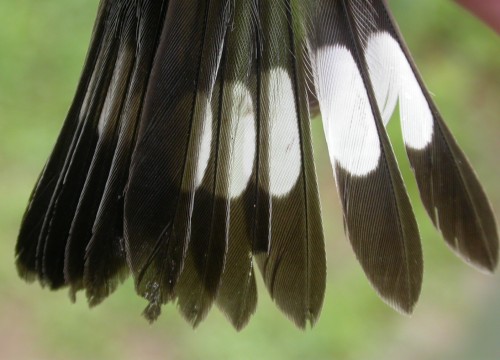
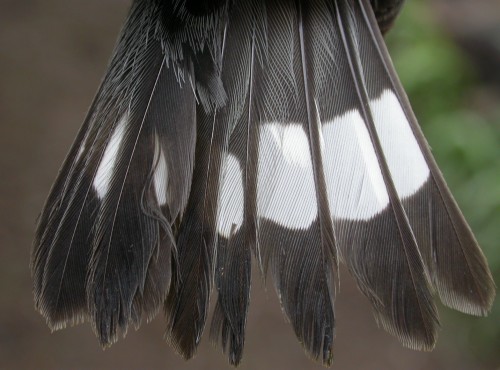
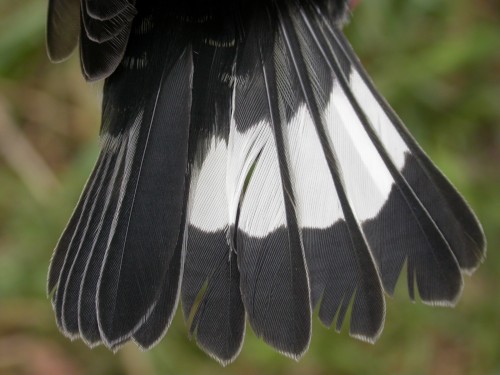
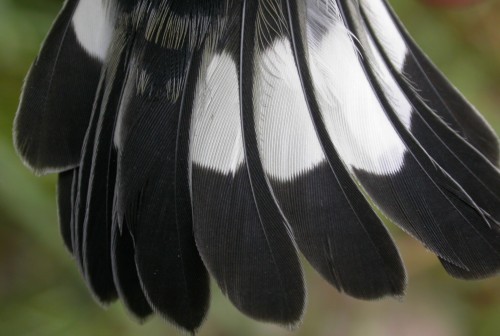
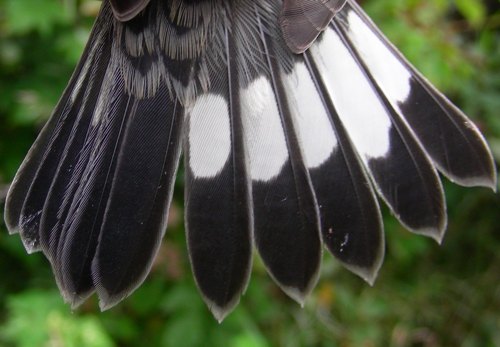
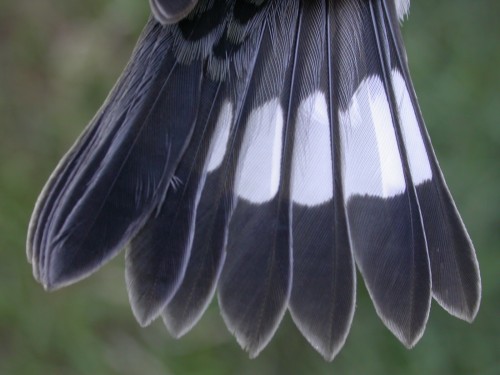
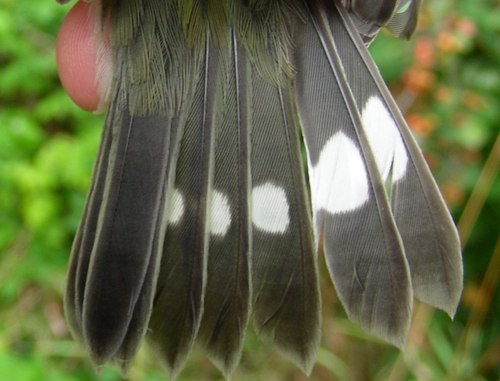
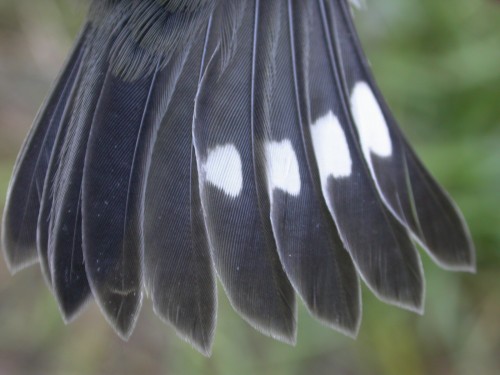
These are typical after-second-year male tails, with broad rectrices that are rounded at the tip, and an extensive white patch on r2 almost as large as that on the outer four rectrices.
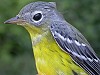
Female Magnolia Warblers in spring have a gray to blackish mask, distinctly paler than that of males. Age is best confirmed by looking at the wings.
While there may be moult limits among the greater coverts reflecting the extent of the prealternate moult, the rest of the wing is similar in colour and wear on after-second-year females.
Rectrices are generally fairly broad and rounded, with a moderate amount of white on r2.
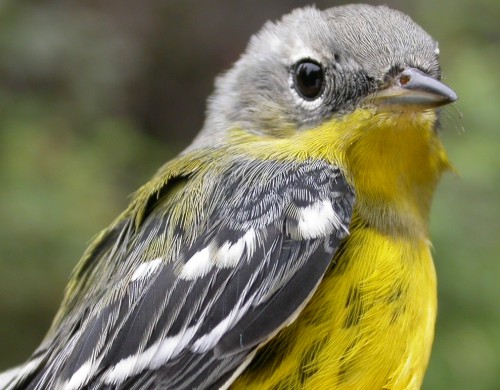
Second-year males have a black mask just like after-second-year males, but tend to have somewhat less black on the back. Nonetheless, the wing and/or tail should be checked to confirm age. Sometimes contrasts between the retained brownish juvenile feathers and replaced black feathers can be seen on the wing when perched, as in the two examples below.
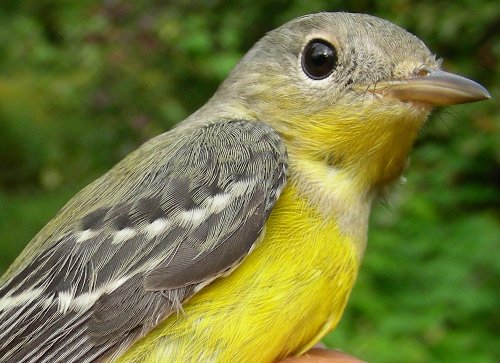
Note in both photos below the considerable contrast between the brownish primary coverts and the black greater coverts, as well as the narrow and pointed shape of the outer primary coverts. The extent of replacement of the greater coverts is somewhat variable, as reflected by the second photo in which the outer greater coverts are faded and worn; nonetheless the primary coverts remain diagnostic, especially when compared to the inner greater coverts.
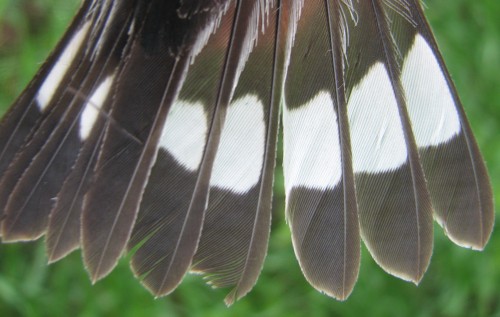
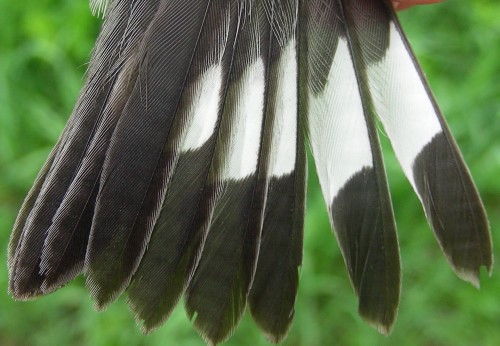
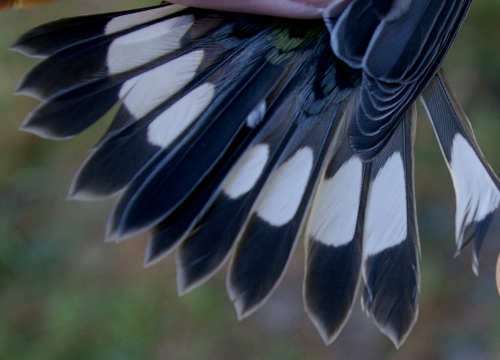
The photo below shows a fairly typical second-year male tail, with relatively narrow and pointed rectrices, and a moderately large white patch on r2 that is only a bit smaller than the patches on the outer four rectrices. The second photo illustrates that shape can be somewhat less reliable for this species than some other warblers.
Second-year females lack a distinct facial mask and have less spotting on the breast than males. Sometimes second-year females can be recognized when perched by their brownish primary coverts, but the contrast is more subtle on them than on males, and closer examination of the wing and tail is recommended.
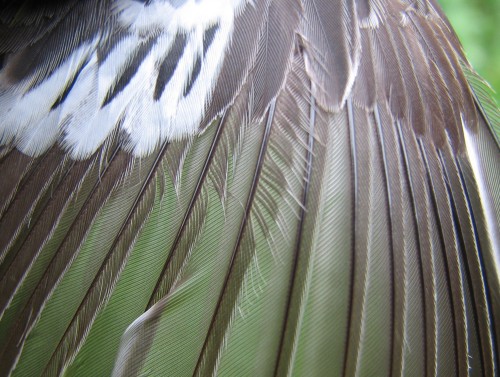
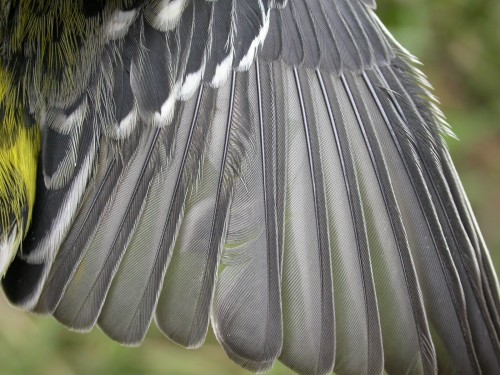
This pattern in the photo below is fairly typical of a second-year female wing, with dark gray to blackish greater coverts noticeably darker than the grayish-brown primary coverts, the outer ones of which are narrow and pointed (the primary coverts are often somewhat more brownish, as in the second photo). Unreplaced and somewhat worn tertials (as in the second photo) are also a good indicator of second-year birds of either sex.
The rectrices are relatively narrow and pointed toward the tip, though not as much so as on some other small passerines. However, note that on r3 the white spot is often reduced and on r2 it is still smaller or entirely absent.
After-hatch-year birds are recognizable by their uniformly dark wings; males have a bolder overall plumage than females, but wing and tail should be examined to be confident of sex in fall.
This is a typical after-hatch-year male wing, with black primary coverts contrasting little with the greater coverts, and solid black tertials with prominent white edging.
This is a typical after-hatch-year male tail, with broad rectrices that are rounded at the tip, and an extensive white patch on r2 almost as large as that on the outer four rectrices.
In summer and early fall, some after-hatch-year Magnolia Warblers can be aged as second-year if they have retain juvenal feathers, which are particularly faded and worn by this time. Such a bird can often be identified as such even in the field - for example, in the photo below, some pale brown unreplaced secondaries are visible.
The presence of unreplaced juvenal feathers on the wing is much easier to see on the photos below. In the upper photo, the outer secondaries are growing in, replacing the very faded and worn juvenal inner secondaries. The bird in the lower photo was caught a bit earlier in the moult cycle, with the outermost primary coverts and primaries still unreplaced juvenal feathers, and only the outermost secondary replaced so far.
The tail is likely to be of little value in identifying a Magnolia Warbler as second-year, as the individuals that have been caught in moult at MBO have replaced their tail prior to completing their wing moult.
After-hatch-year birds are recognizable by their uniformly dark wings; females have a somewhat paler overall plumage than females (more grayish than blackish), but wing and tail should be examined to be confident of sex in fall.
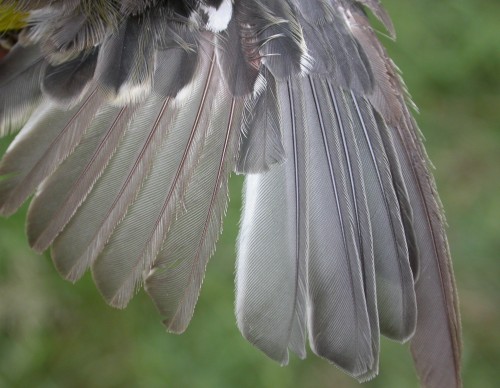
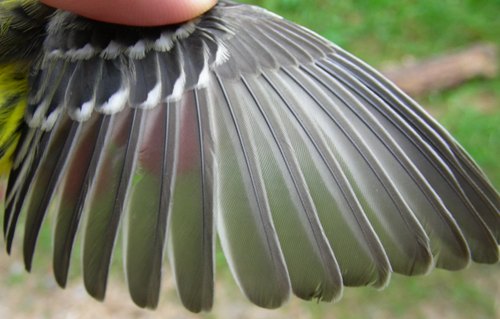
On after-hatch-year females, the primary coverts may be a slightly lighter shade of dark gray than the greater coverts, but they are uniform in wear, and the outer primary coverts are broad and rounded.
The rectrices are fairly broad until near the tip and generally somewhat rounded, although some after-hatch-year birds do show a bit of a point as in the example below; wing features are more reliable. The rectrices tend to be not quite as black as on males.
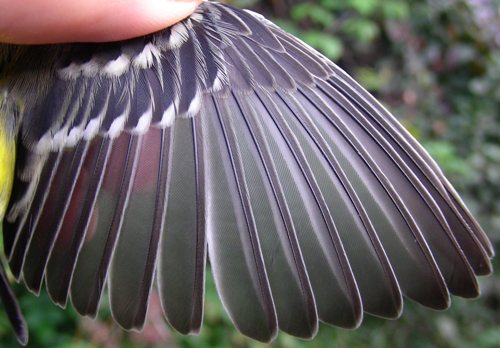
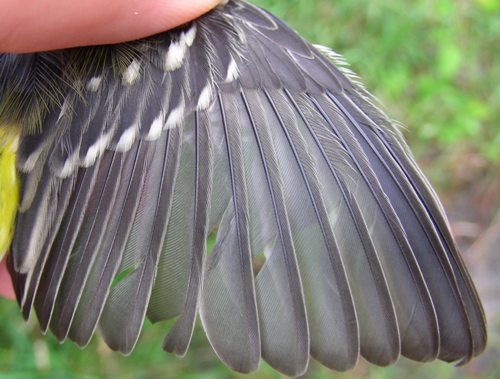
Hatch-year birds may show a contrast between primary coverts and greater coverts when perched, but more often the open wing and tail need to be examined to assess age and sex.
On hatch-year Magnolia Warblers, the primary coverts are a brownish-gray, uniform with the primaries, but contrasting with the noticeably darker and fresher greater coverts. Sex can often not be determined, but males tend to be somewhat darker, and in combination with "male-type" tails it is possible that a significant proportion can be correctly sexed.
The tail may be particularly useful in separating hatch-year males and females. Hatch-year Magnolia Warblers tend to have relatively narrow rectrices that taper toward a point, but those with particularly dark rectrices and a white spot on r2 at least 2/3 the size of that on r3 are very likely to be males; with smaller white patches sex is questionable.
Hatch-year birds may show a contrast between primary coverts and greater coverts when perched, but more often the open wing and tail need to be examined to assess age and sex. Females tend to be paler overall than males, and typically have little or no streaking on the flanks.
On hatch-year Magnolia Warblers, the primary coverts are a brownish-gray, uniform with the primaries, but contrasting with the noticeably darker and fresher greater coverts. Sex can often not be determined, but females tend to be somewhat paler, and in combination with "female-type" tails it is possible that a significant proportion can be correctly sexed.
The tail may be particularly useful in separating hatch-year males and females. Hatch-year Magnolia Warblers tend to have relatively narrow rectrices that taper toward a point, but those with very small spots on r3 and r2 (as in the photo below) or entirely lacking white on r2 (as in the second photo) are almost certainly females. Note too that even on the outer rectrices the white spots are much smaller than on the hatch-year males shown above, and that the rectrices tend to be grayish rather than blackish. However, some hatch-year Magnolia Warblers have tails with intermediate characteristics and are not reliably sexed.
|