|
|
McGILL BIRD OBSERVATORY |
||||||||||||||||||||||||||||||||||||||||||||||
NOTE: This species account has been moved to Piranga to allow for improved comparison among examples.
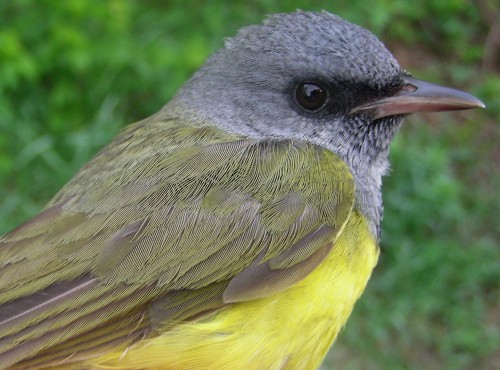
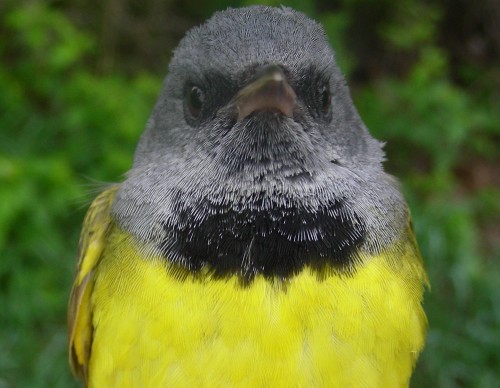
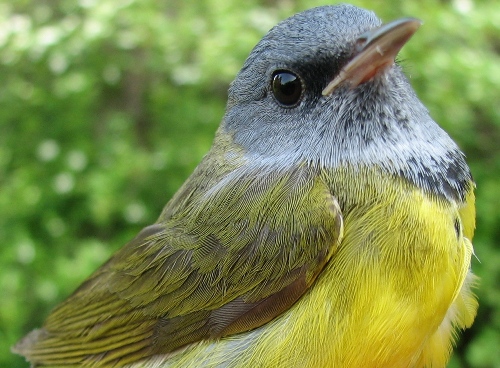
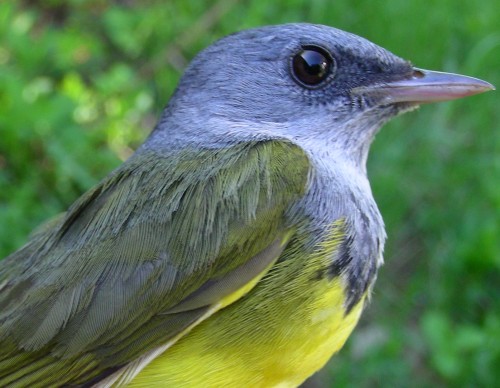
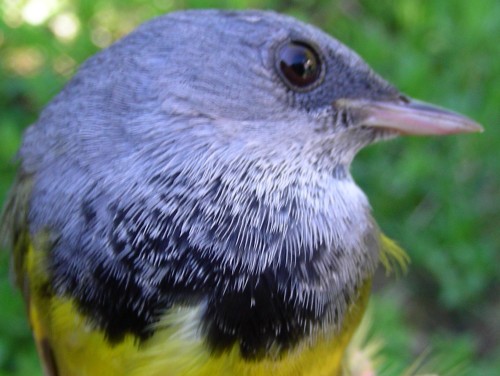
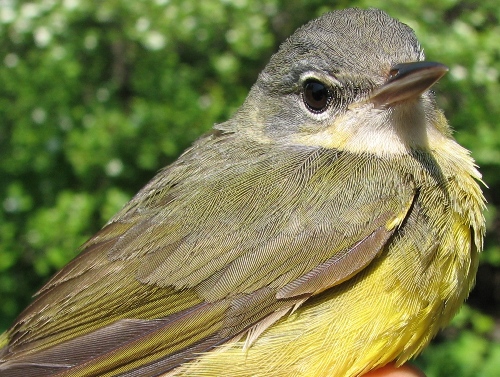
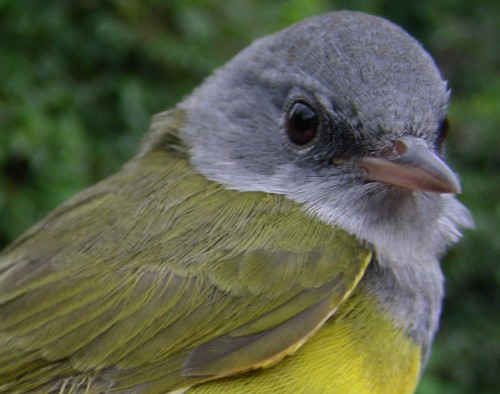
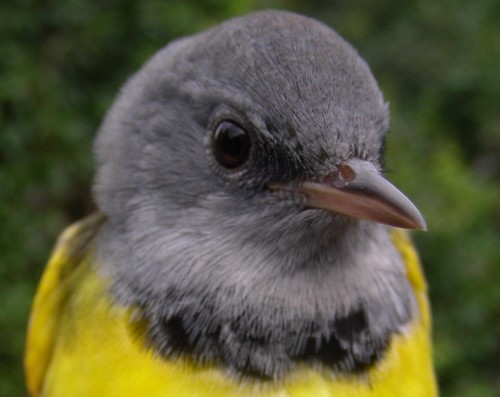
Ageing and sexing details: Male Mourning Warblers can be easily recognized in spring by their black lores and black throat patches, though note that these may be visible only from the front (the two photos below are of the same bird). Age is usually difficult to determine without looking more closely at the plumage, especially the tail.
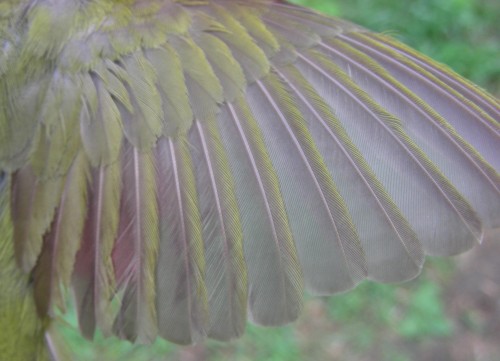
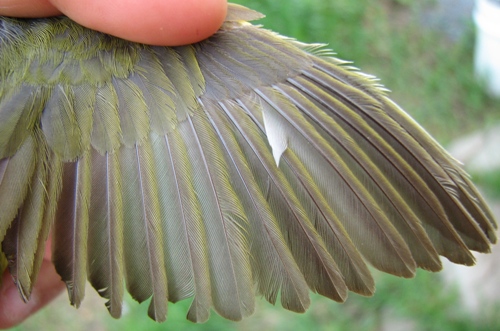
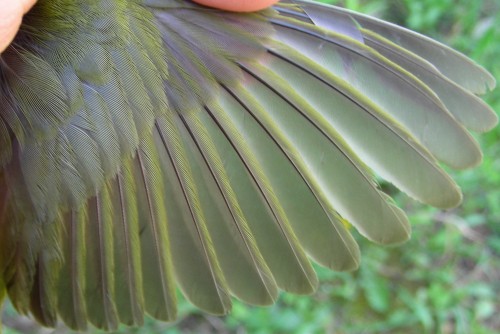
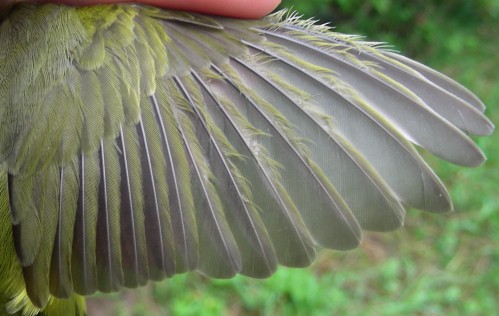
After-second-year Mourning Warblers have uniform wings, but beware that even second-year birds may show only very subtle moult limits.
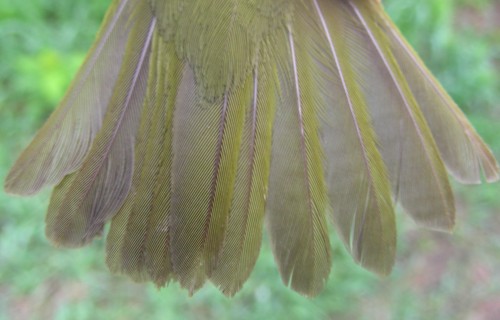
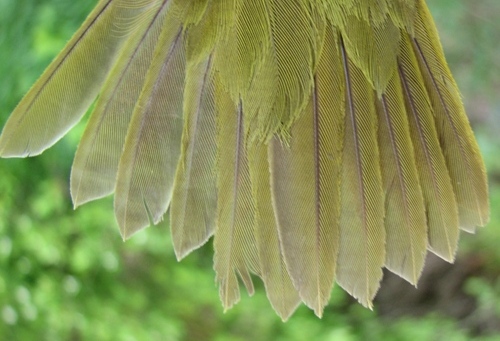
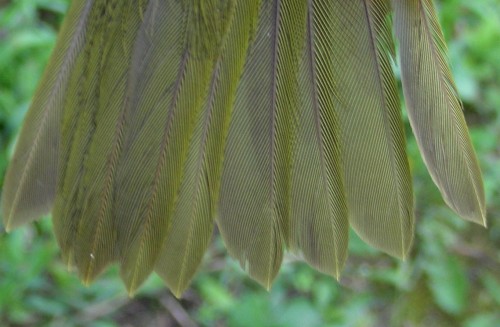
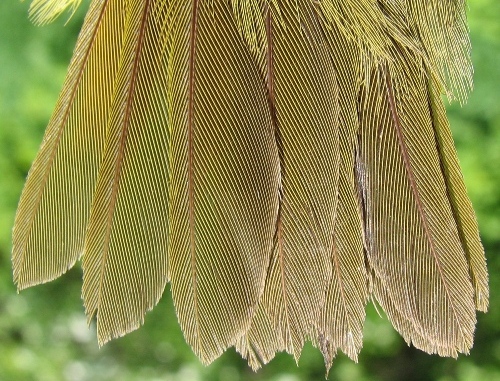
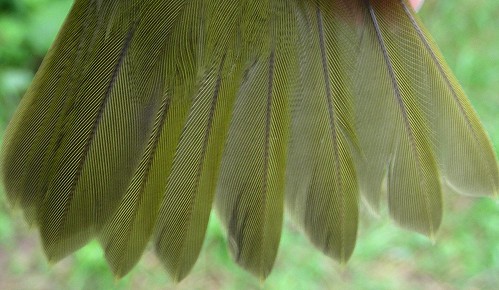
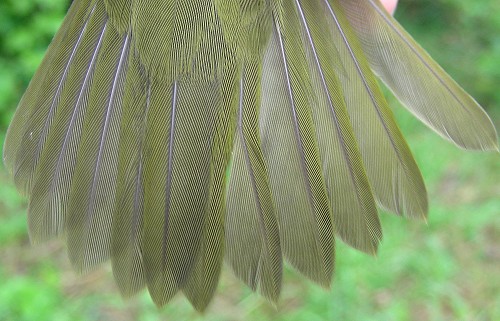
The tail is one of the best ageing criteria for Mourning Warblers, with after-second-year bird typically having broad rectrices with relatively rounded tips, as in the photo below.
Male Mourning Warblers can be easily recognized in spring by their black lores and black throat patches. The throat patches tend to be somewhat less extensive on second-year males compared to after-second-year males, but age should not be based on this alone, especially as the size of the throat patch may appear very different depending on the angle from which it is viewed.
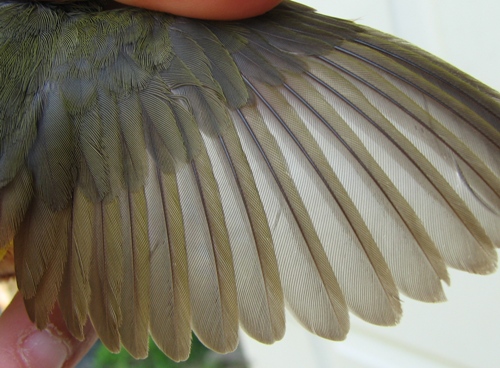
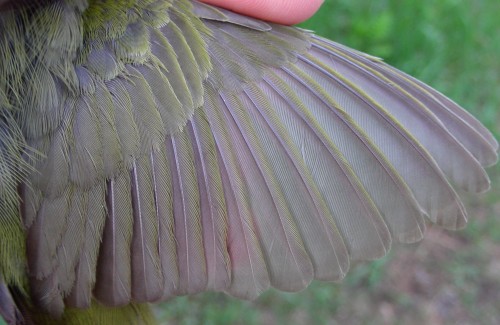
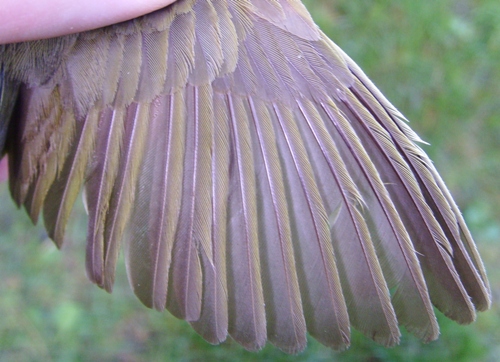
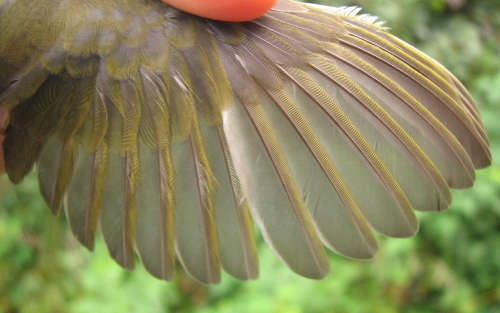
Second-year Mourning Warblers may show subtle moult limits on the wing, such as the contrast between the duller primary coverts and distinctly green-edged greater coverts in the first photo below, but note that this is not always clearly evident, as in the second photo.
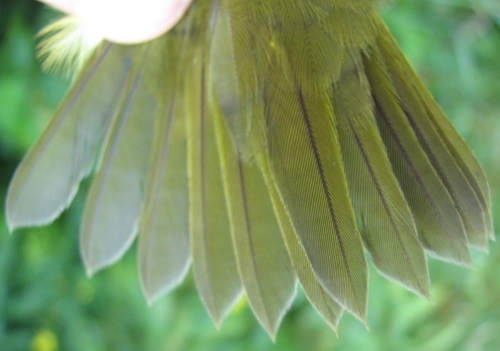
The rectrices of second-year Mourning Warblers typicaly are relatively narrow and pointed.
Females have partial white eye rings and lack black in the throat and usually have a limited extent of white or gray on the throat and upper breast; age is best determined by looking more closely at the plumage, especially the tail.
Second-year Mourning Warblers may show moult limits, usually between the greater coverts and primary coverts, but these are often subtle.
Rectrices on second-year Mourning Warblers are typically narrow and pointed; in the example below, this is exemplified best by the central feathers.
After-hatch-year males are easily recognizable in fall, as they are the only age-sex class with black lores. They also lack eye rings and have at least some black on the lower throat / upper breast, though this may be visible only from the front (e.g. the two photos below are of the same bird).
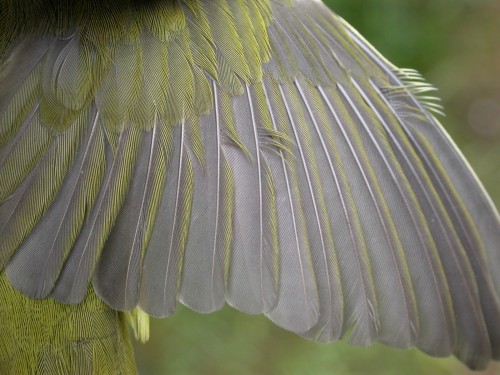
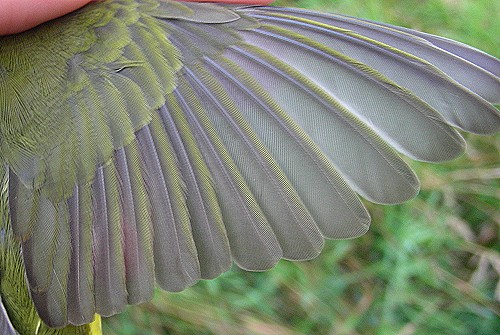
The wing of after-hatch-year Mourning Warblers is relatively uniform in colour and wear, but the moult limits on hatch-year individuals tend to be subtle, therefore the wing is of limited value for ageing.
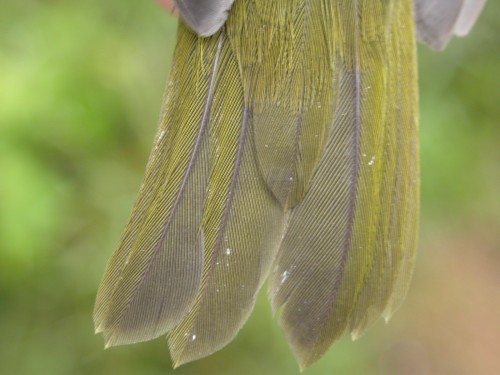
Rectrices are broad and often relatively rounded at the tip.
After-hatch-year females are easily recognizable when they have a distinctly white throat as in the photo below, but in cases where the head and throat are gray, they are at greater risk of being confused with hatch-year individuals. However, the contrast between the head and back is usually much more distinct on after-hatch-year birds.
After-hatch-year Mourning Warblers have wings uniform in colour and wear, but beware that even on hatch-year individuals, moult limits may be subtle and difficult to detect.
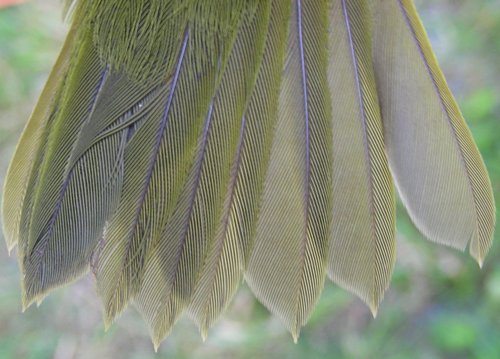
Rectrices are relatively broad and often rounded toward the tip; in this example the moult is in progress.
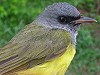
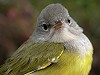
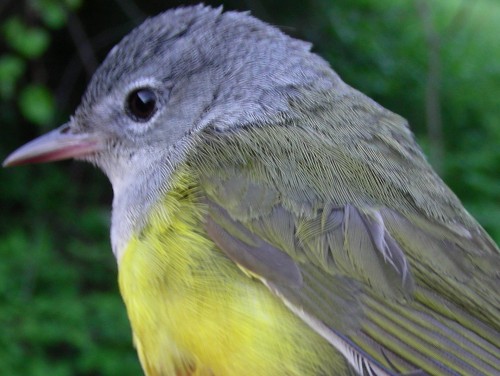
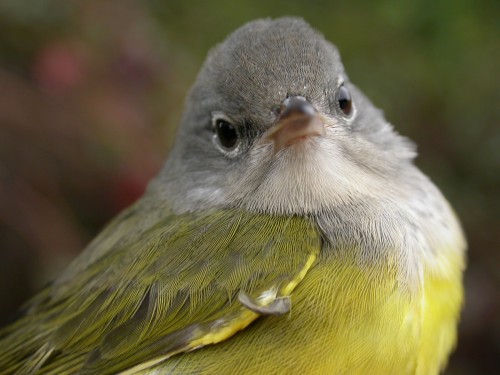
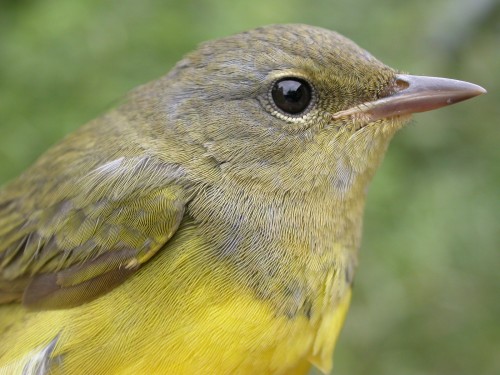
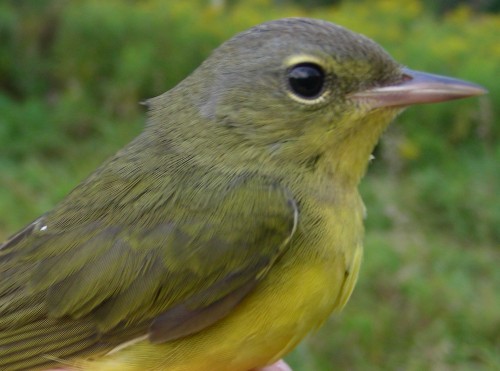
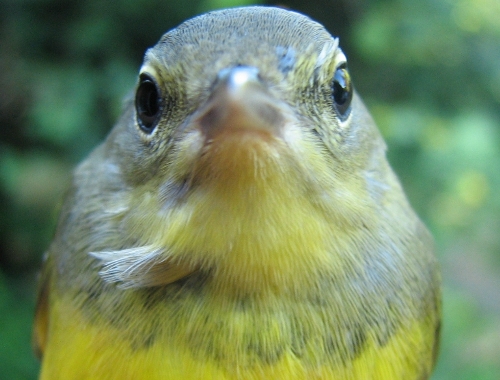
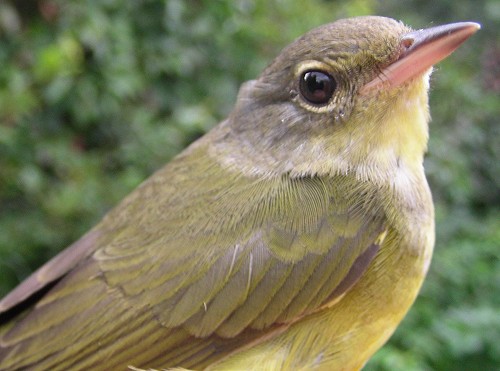
Hatch-year Mourning Warblers have an olive-gray head that is relatively uniform with the back. There is usually a partial yellowish-white eye ring. The presence of scattered black flecks on the lower throat / upper breast is indicative of a male, but note that some males may not show any black in fall, in which case they should generally be classified as sex unknown.
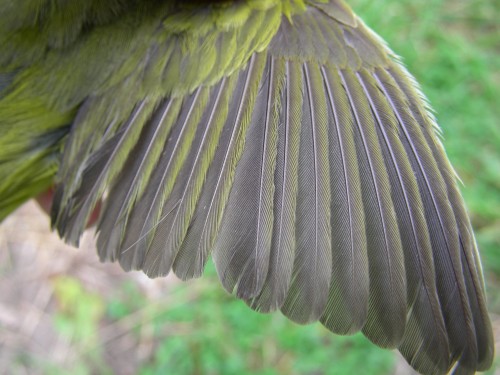
Hatch-year Mourning Warblers typically have a moult limit between juvenile primary coverts and replaced greater coverts, but the difference in appearance tends to be subtle, and it is difficult to use this criteroin as a reliable basis for ageing.
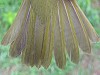
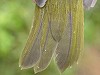
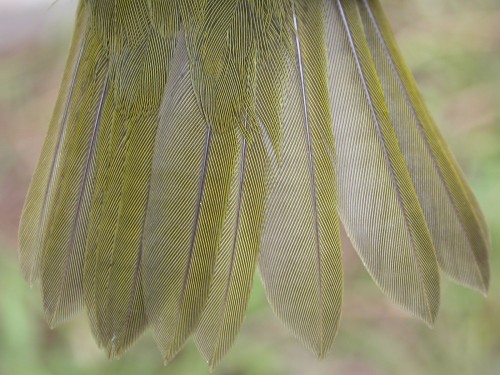
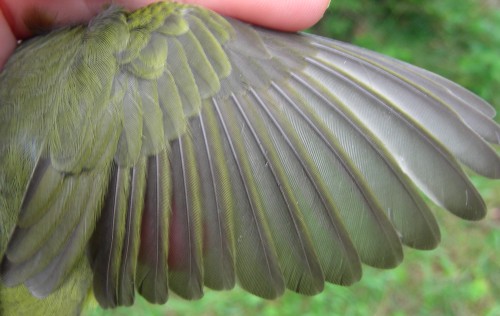
Hatch-year Mourning Warblers tend to have relatively narrow and distinctly pointed rectrices
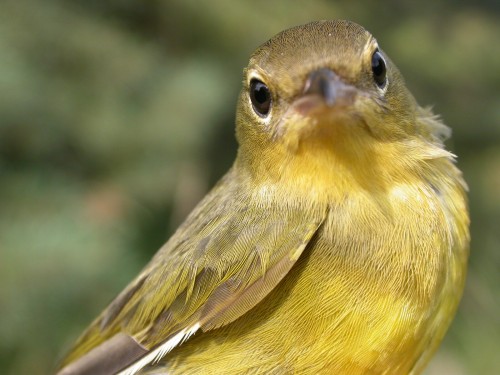
Hatch-year females have an olive-gray head showing little contrast with the back, but tend to have a more yellow throat than males, and lack any black in the throat. Some males lacking black may have a similar appearance, therefore hatch-year birds with such an appearance should generally be considered sex unknown, rather than necessarily female.
Hatch-year Mourning Warblers typically have a moult limit between juvenile primary coverts and replaced greater coverts, but the difference in appearance tends to be subtle, and it is difficult to use this criteroin as a reliable basis for ageing.
Hatch-year Mourning Warblers have relatively narrow and pointed rectrices, but note that differences in shape and wear are not yet as distinct as they tend to be by spring, therefore overall body plumage is often the best indicator of age and sex in fall.
|