|
|
McGILL BIRD OBSERVATORY |
|||||||||||||||||||||||||||||||||||||||||||||||||
NOTE:
This species account has been moved to Piranga to allow for improved comparison
among examples.
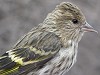
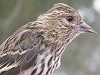
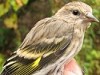
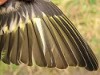
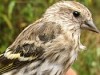
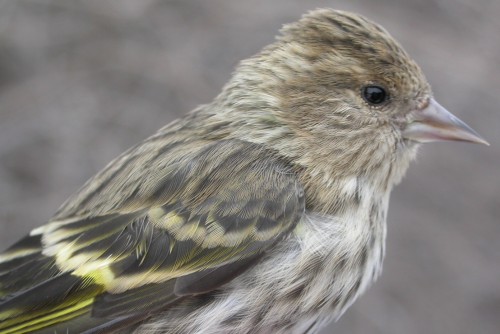
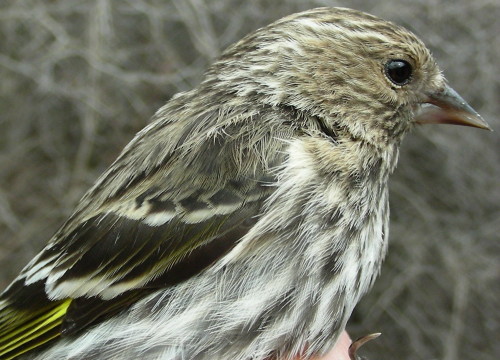
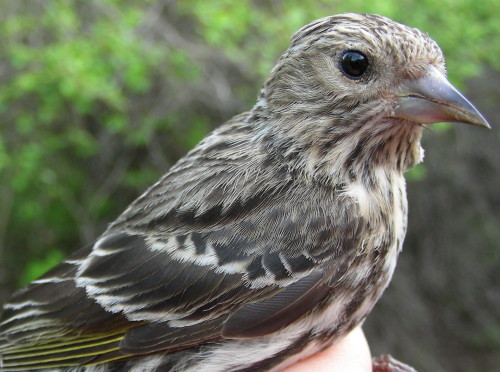
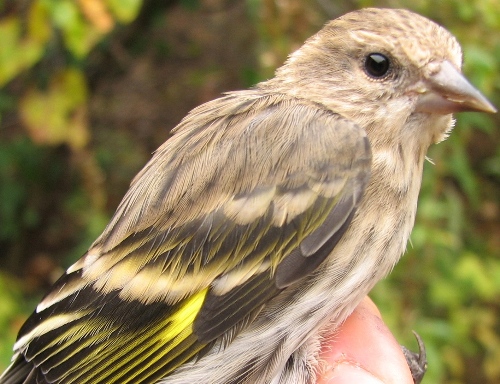
Ageing and sexing details: After-second-year Pine Siskins typically show distinct yellow patches on the wings even when perched; those with particularly extensive yellow are generally males.
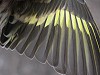
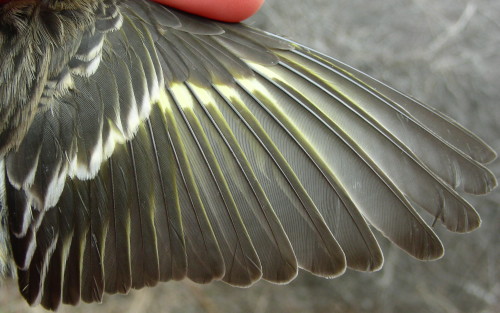
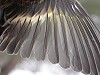
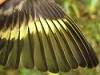
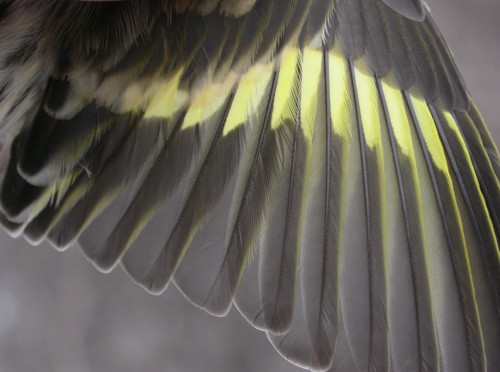
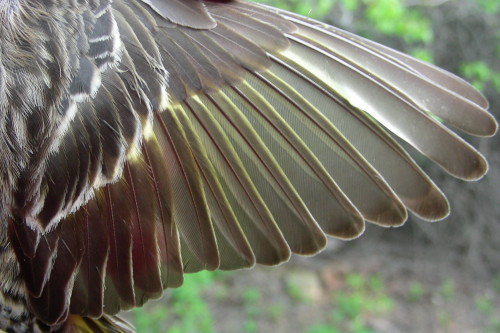
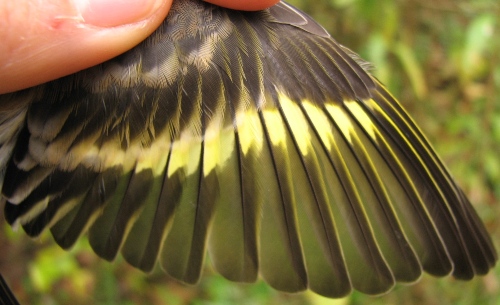
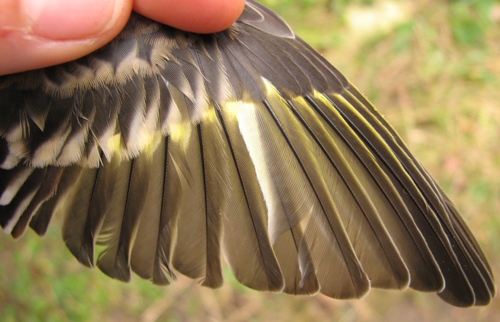
The uniformly broad, rounded, and dark primary coverts indicate this is an after-second-year siskin; the particularly extensive yellow patches on the primaries suggest that it is very likely a male.
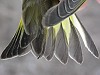
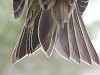
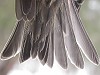
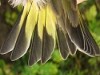
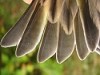
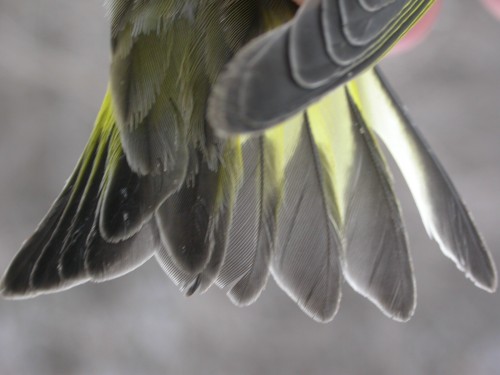
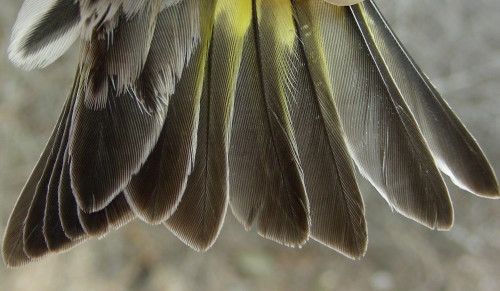
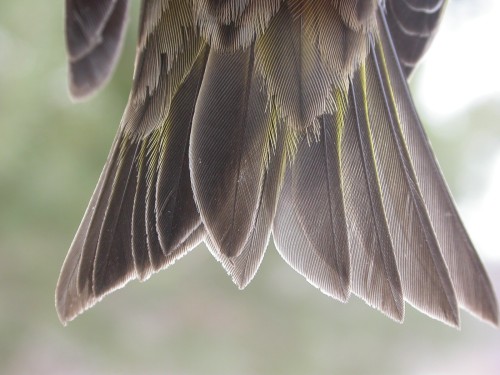
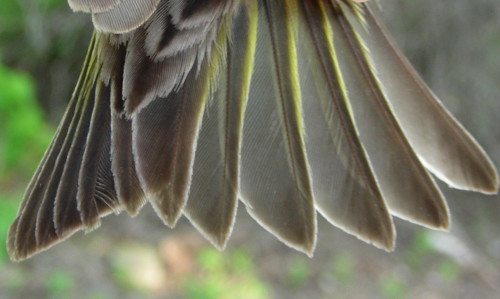
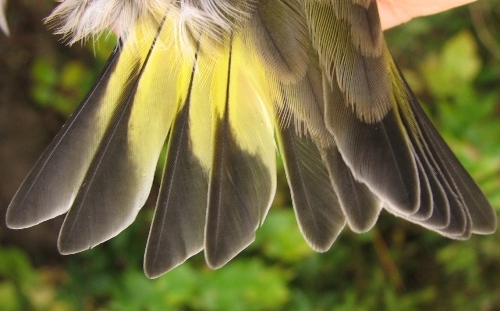
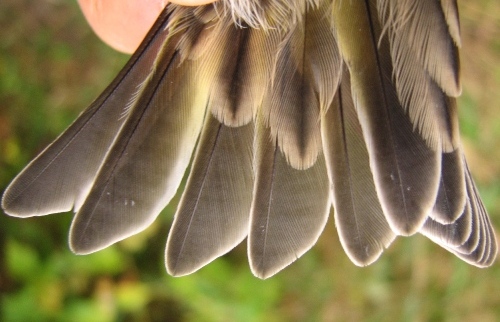
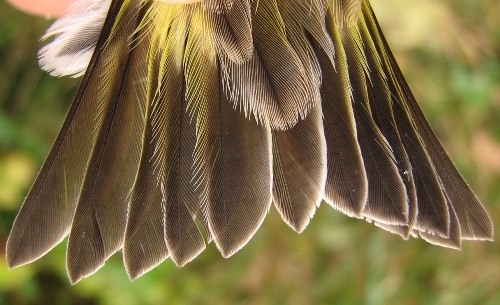
The relatively broad rectrices suggest that this is an after-second-year siskin; the particularly extensive yellow patches are usually present only on males.
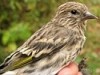
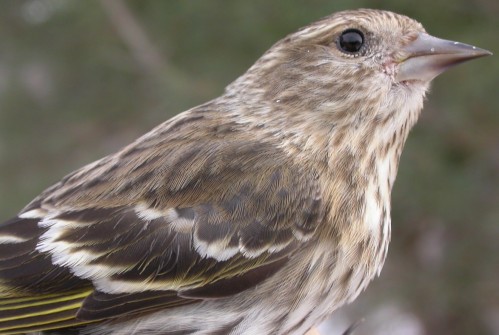
Female after-second-year Pine Siskins typically show some yellow on the wings, but it may not always be visible when perched.
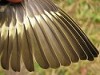
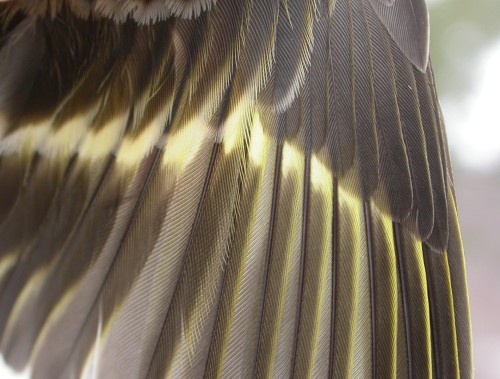
The uniformly broad, rounded, and dark primary coverts indicate this is an after-second-year siskin; the moderately sized yellow patches on the primaries suggest that it is likely a female, but sex should be confirmed by brood patch if possible.
The relatively bround and rounded outer rectrices indicate that this is an after-second-year siskin; the limited extent of yellow on most rectrices suggests that it is a female.
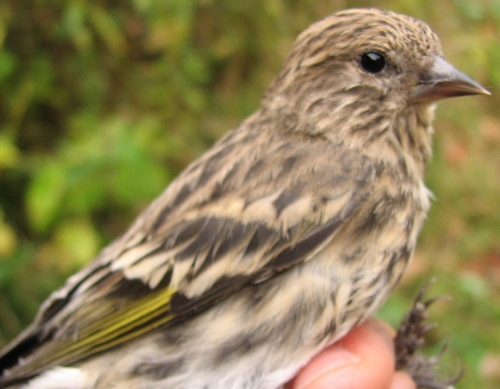
Second-year siskins show little to no yellow when perched, although some along the edges of the primaries may show on males.
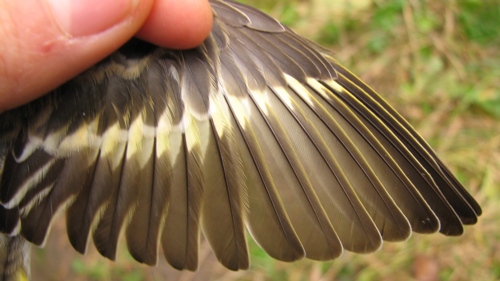
The outer primary coverts of second-year siskins are typically narrower and more pointed than those of after-second-year individuals, but as the photo below illustrates, this distinction is much more subtle than for many other species. Note that there is only a small amount of yellow showing on the primaries beyond the primary coverts.
The outer rectrices of second-year siskins are typically more narrow and pointed than those of after-second-year siskins.
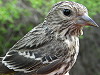
Second-year female siskins typically show littlle or no yellow when perched.
Outer primary coverts of second-year siskins tend to be somewhat narrower, but the distinction is subtle in this species since coverts are always quite broad. Molt limits may occur between the primary coverts and greater coverts, or among the median and greater coverts. Generally there is little if any yellow visible on the primaries of second-year females.
The outer rectrices of second-year siskins are typically relatively narrow and pointed, and showing a bit more wear than those of after-second-year birds. However, differences tend to be fairly minor, and it is best to consider both tail and wing characteristics to determine age.
After-hatch-year male Pine Siskins typically show distinct yellow patches on the wings even when perched.
The extensive patches of yellow on the primaries extending beyond the primary coverts are typical only of after-hatch-year males.
The combination of broad and relatively rounded rectrices and the extensive patches of yellow are good indicators of an after-hatch-year male.
Female after-hatch-year Pine Siskins typically show some yellow on the wings, but it may not always be visible when perched; a good view of the open wing and/or rectrices is required to be confident of age and sex.
On after-hatch-year females there is usually a small (e.g. photo below) to moderate amount of yellow showing on the primaries beyond the end of the primary coverts. The uniformly dark and rounded primary coverts (showing little contrast with the primaries or greater coverts) separate after-hatch-year females from hatch-year individuals.
Broad and rounded rectrices support the identification of this as an after-hatch-year siskin, but should not be relied upon as the sole criterion for ageing, as some hatch-year birds may appear similar.
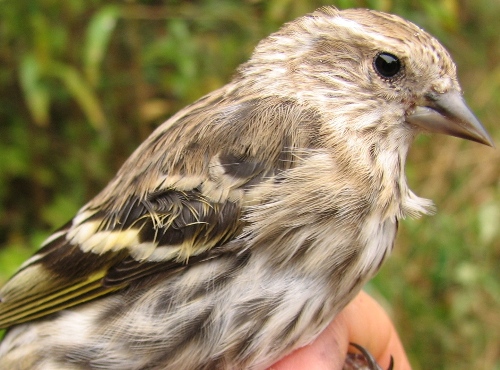
Hatch-year male Pine Siskins may show a small amount of yellow on the wings when perched, but a view of the open wing is required to be confident about age and sex.
Note the slightly narrower and more pointed primary coverts on this hatch-year wing, compared to after-hatch-year birds. Also, the primary coverts are visibly paler than the adjacent greater coverts. Among hatch-year birds, the extent of yellow on the primaries can be used to separate sexes in extreme cases; the individual below is near the upper end of the range and is therefore very likely a male.
The rectrices of hatch-year siskins are typically at least a bit more narrow and pointed than those of after-hatch-year birds. Males may have some traces of yellow on the tail, as in the photo below, while females generally have entirely brown tails.
|