|
|
McGILL BIRD OBSERVATORY |
|||||||||||||||||||||||||||
NOTE:
This species account has been moved to Piranga to allow for improved comparison
among examples.
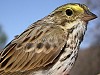
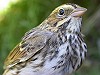
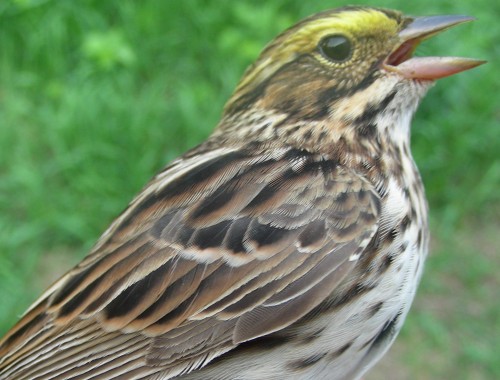
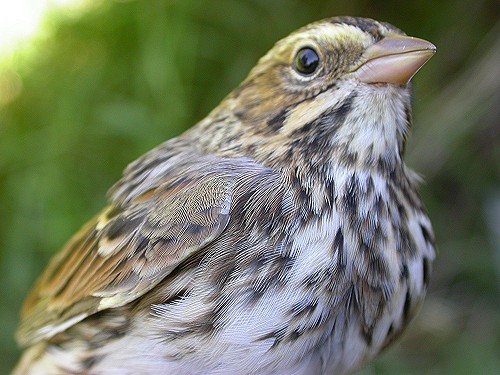
Ageing and sexing details: Body plumage provides no useful information about age or sex of Savannah Sparrows, though occasionally the condition of wing feathers can be visible on a perched bird. Sex can be determined only during the breeding season by brood patch or cloacal protuberance.
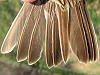
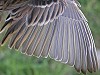
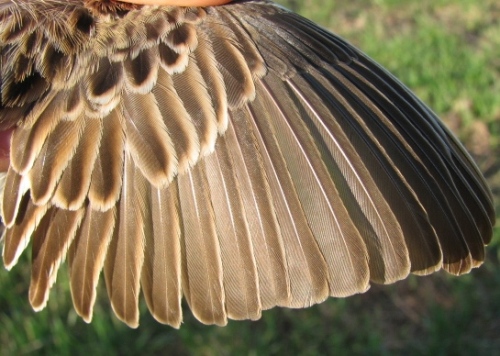
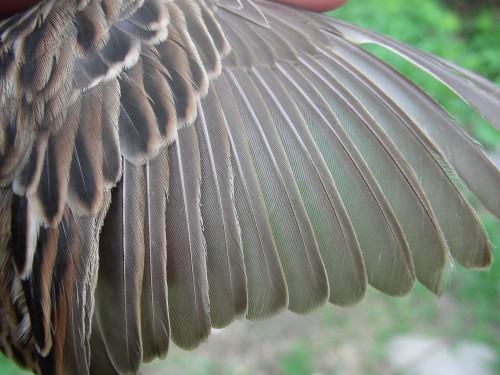
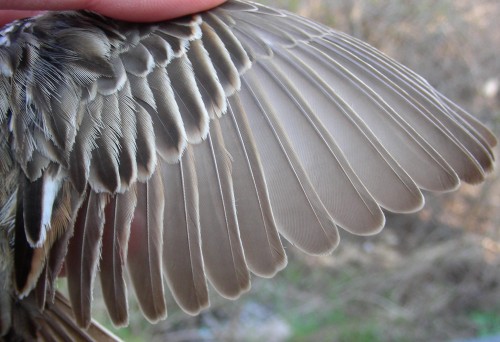
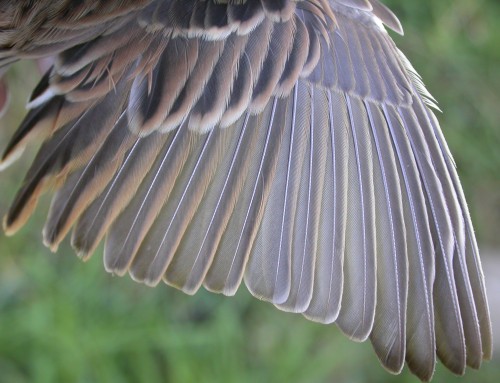
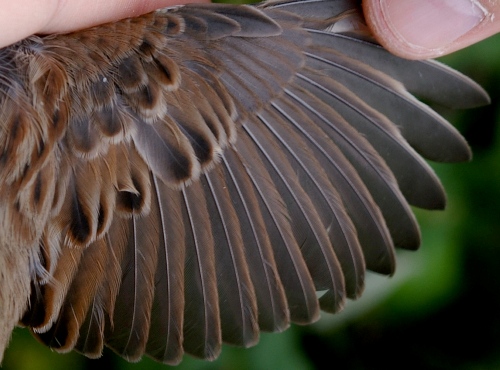
Primary coverts are dark brown on ASY birds, relatively uniform in colour and wear with the rest of the wing. They are usually broad and rounded, but differences between age classes are rather subtle in this species, so shape must be interpreted with caution.
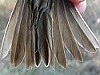
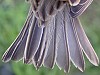
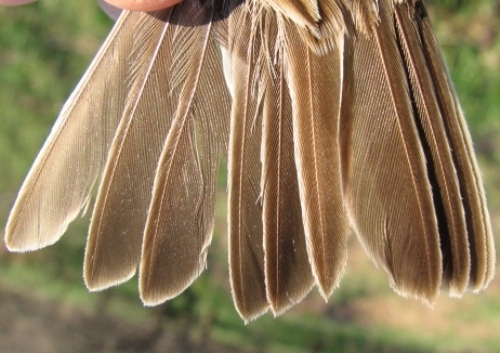
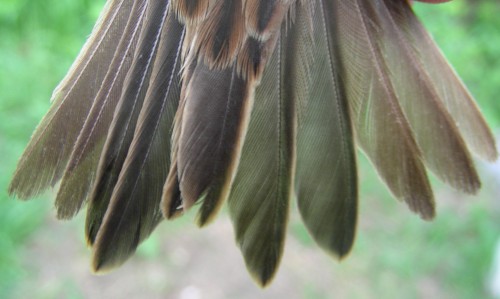
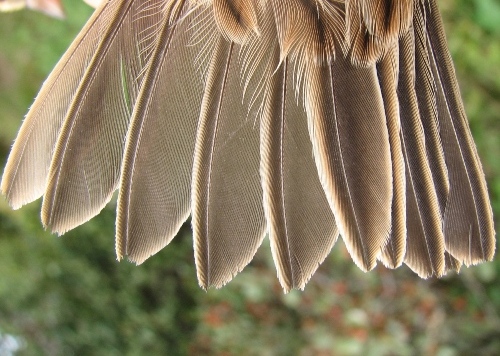
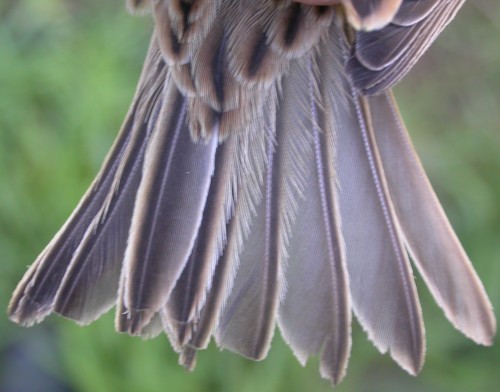
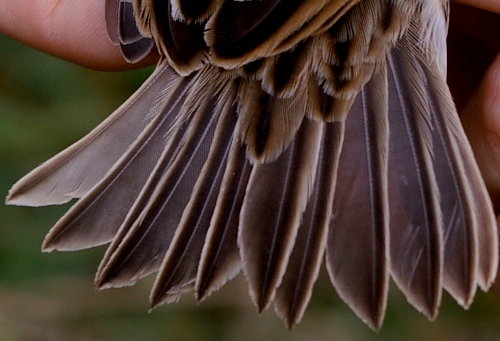
Tail shape is a good indicator of age for Savannah Sparrows, as SY birds have narrow and very tapered outer rectrices, while ASY birds have broader and relatively truncate rectrices. Note, however, that SY birds may occasionally replace their entire tail, and therefore broad and truncate rectrices should not be used as the only criterion for ageing a bird ASY.
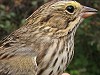
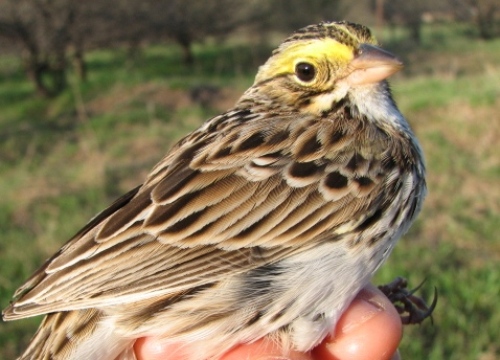
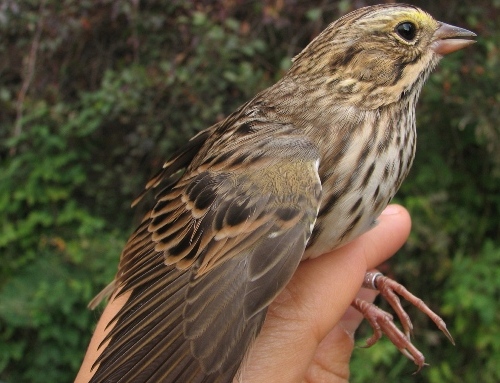
Body plumage provides no useful information about age or sex, although sometimes the condition of the wing feathers can be seen on a perched bird (as in the photo below). Sex can be determined only during the breeding season by brood patch or cloacal protuberance.
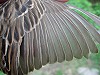
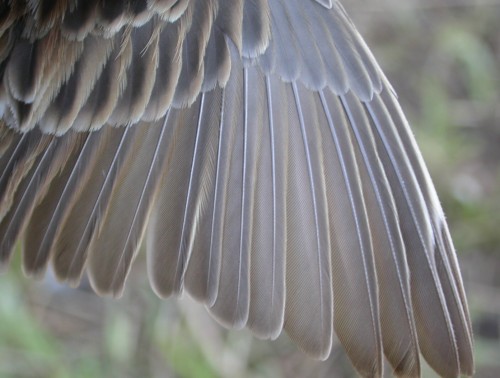
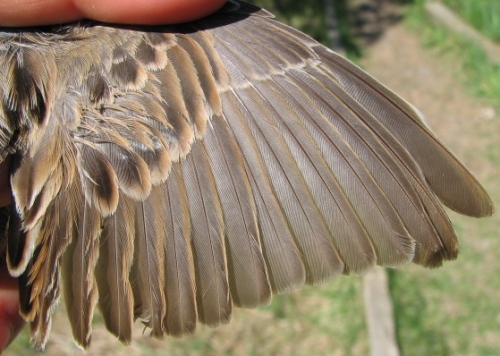
Primary coverts are dull brown on SY birds, and usually look relatively narrow, tapered, and abraded. The primary coverts are uniform in colour and wear with the primaries and secondaries, and these juvenile feathers as a block contrast with the darker and fresher formative greater coverts.
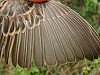
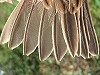
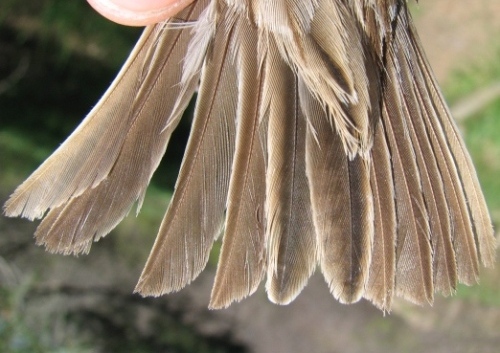
Tail shape is a good indicator of age for Savannah Sparrows, as SY birds usually have narrow and very tapered outer rectrices, while ASY birds have broader and relatively truncate rectrices. Note that in the first example below, the bird has replaced several of its central rectrices (r1 to r3 on both sides) while retaining the outermost juvenile rectrices (r4 to r6 on either side), while in the second photo only r1 has been replaced, and sometimes all rectrices are juvenile.
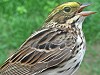
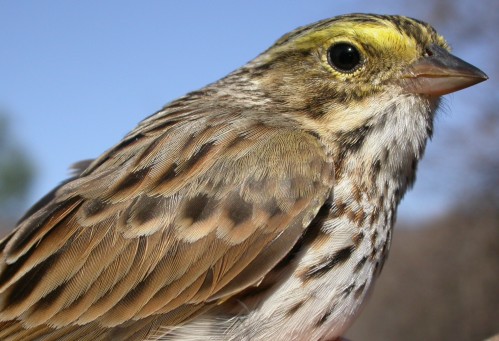
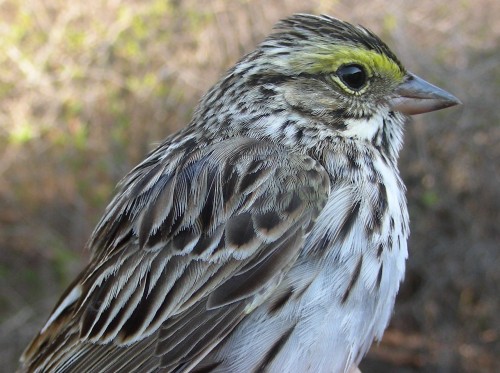
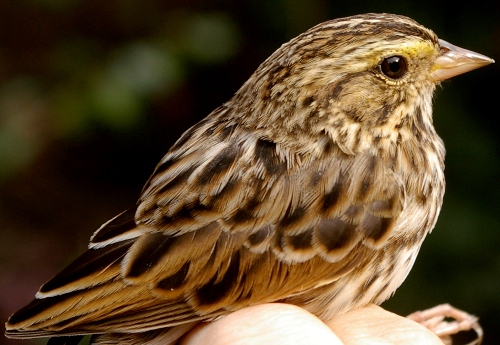
Body plumage provides no useful information about age or sex. Sex can be determined only during the breeding season by brood patch or cloacal protuberance. Note that there is considerable variation in Savannah Sparrow plumage, with the example below being a rather dark specimen.
Primary coverts are relatively dark brown on AHY birds, and relatively broad and rounded; note that even on after-hatch-year birds, the primary coverts are somewhat lighter in colour than the greater coverts.
Tail shape is a good indicator of age for Savannah Sparrows, as HY birds have narrow and very tapered outer rectrices, while AHY birds have broader and relatively truncate rectrices.
Body plumage provides no useful information about age, and sex cannot be determined for HY birds.
Primary coverts are dull brown on SY birds, and usually look relatively narrow and tapered.
Tail shape is a good indicator of age for Savannah Sparrows, as HY birds have narrow and very tapered outer rectrices, while AHY birds have broader and relatively truncate rectrices.
|