|
|
McGILL BIRD OBSERVATORY |
||||||||||||||||||||||||||||||||||||||
NOTE:
This species account has been moved to Piranga to allow for improved comparison
among examples.
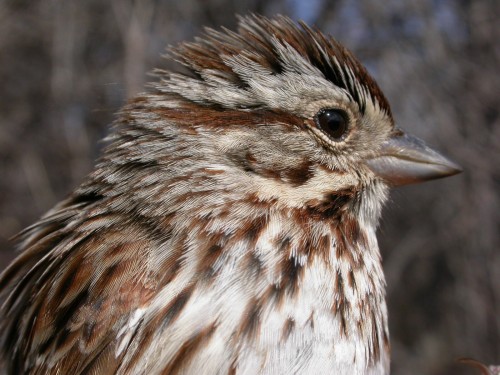
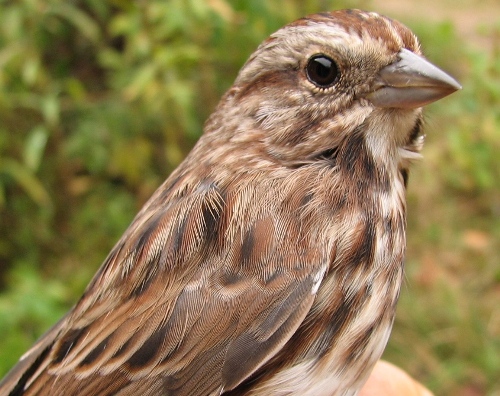
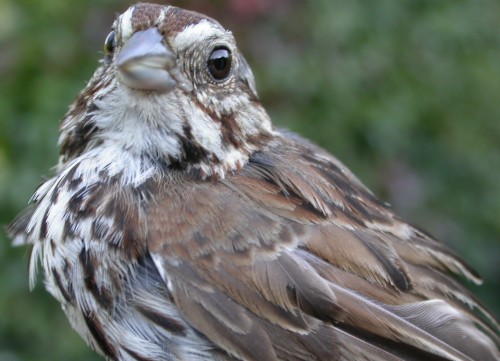
Ageing and sexing details: Body plumage does not provide any clues to age or sex in Song Sparrows. Sex can be determined only during the breeding season by brood patch or cloacal protuberance. The condition of the wing and tail can be assessed to determine age, although by spring the feathers have become worn enough that is often difficult to be certain, and many individuals are better called AHY.
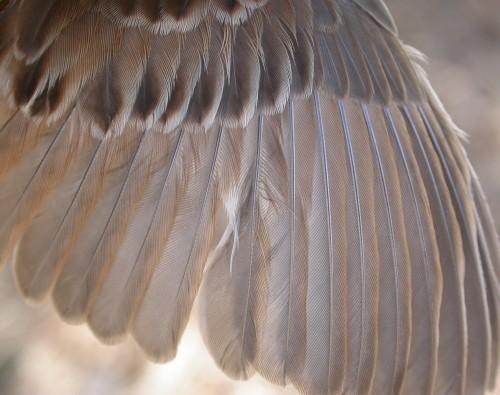
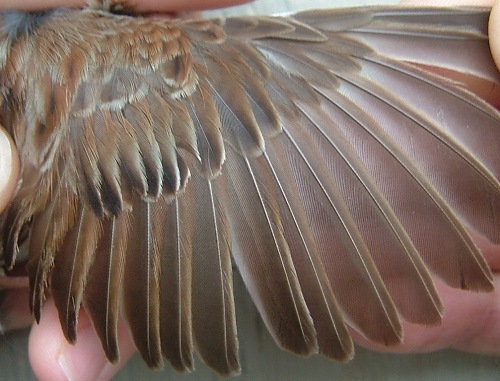
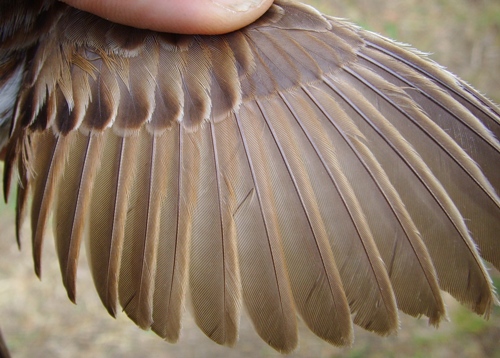
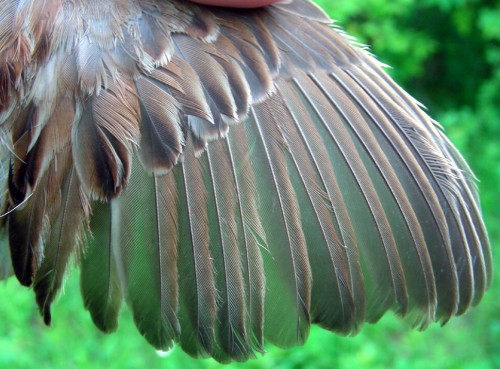
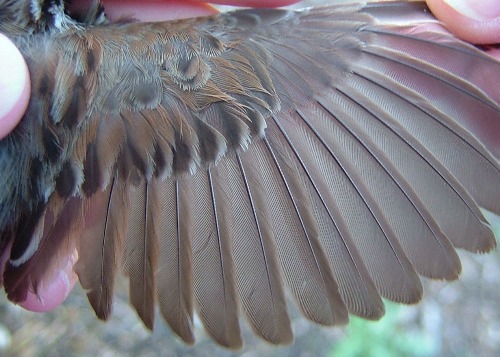
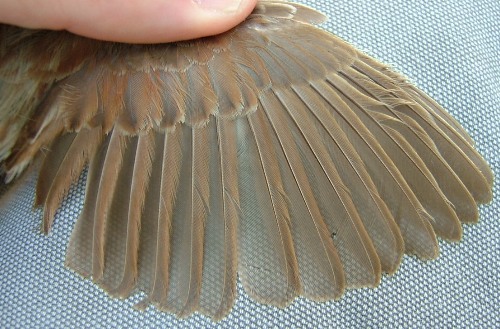
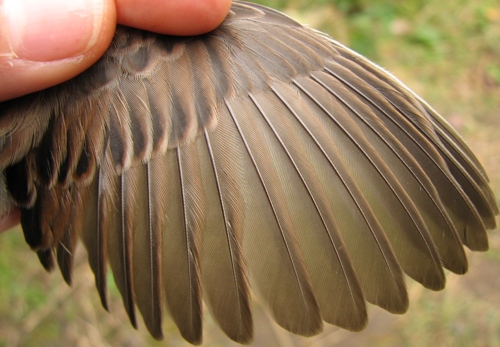
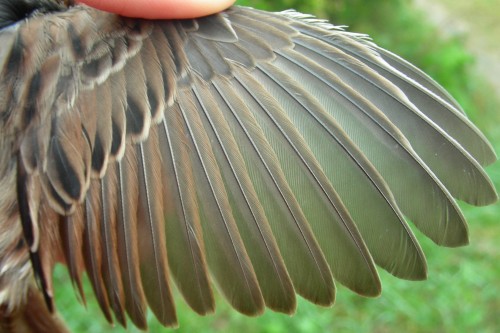
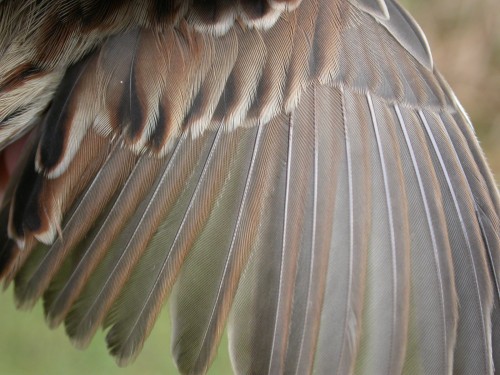
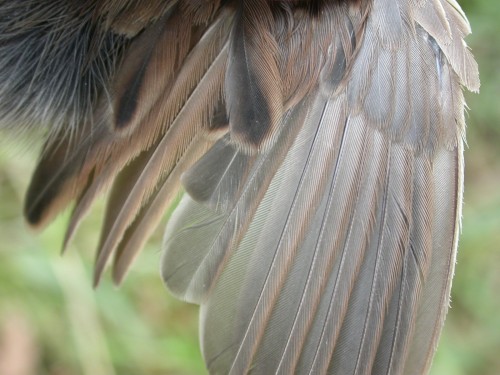
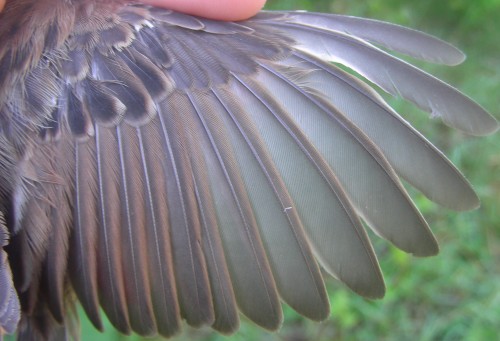
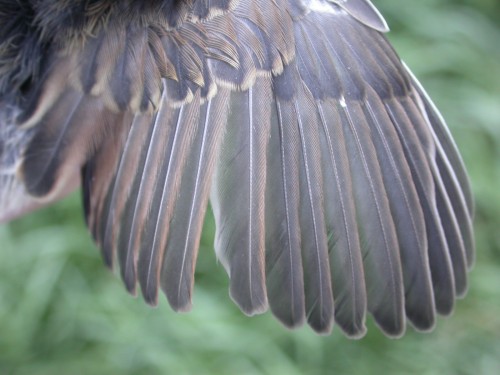
Primary coverts are somewhat broader and more rounded than on SY birds, but the distinction is slight. AHY/ASY birds also tend to have somewhat more pale brown edging along the primary coverts, but again this can be difficult to judge. Considering this and the potential for some HY birds to undergo a complete preformative molt, most should be called AHY unless they are have clear SY characteristics.
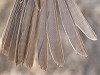
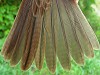
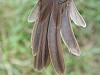
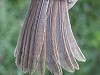
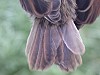
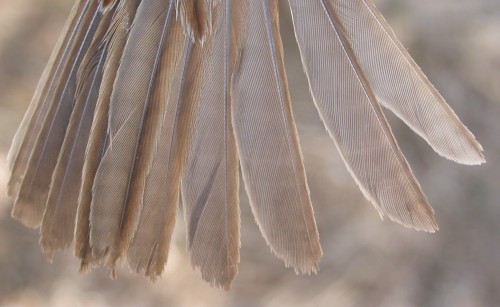
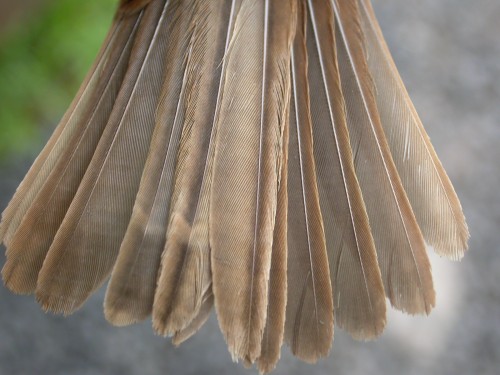
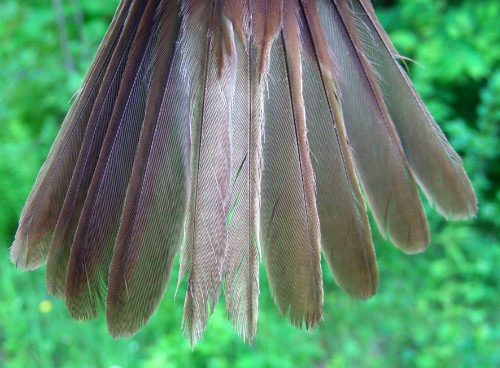
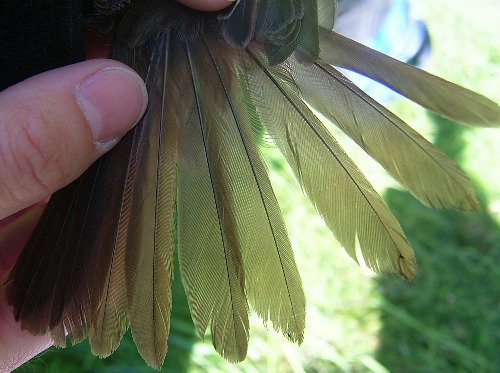
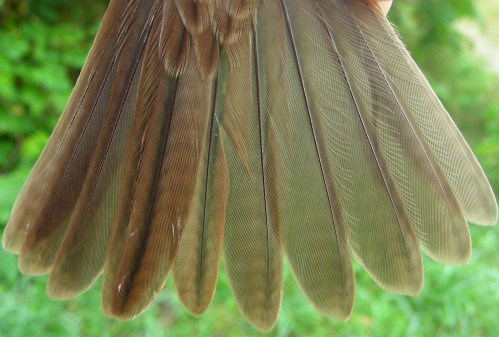
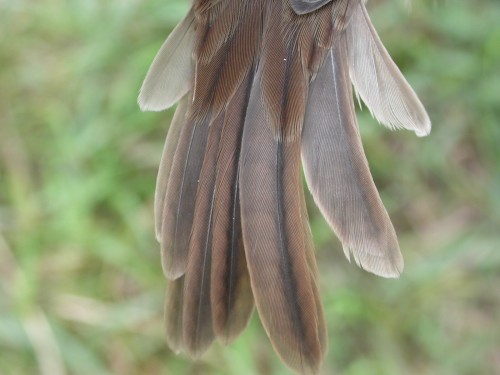
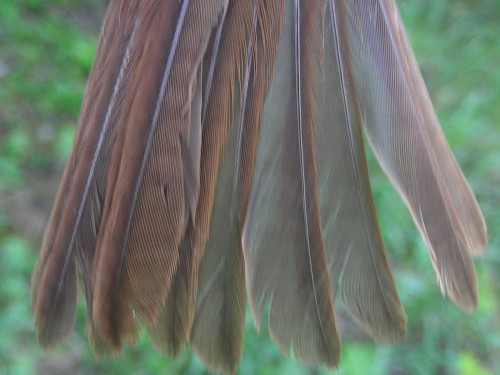
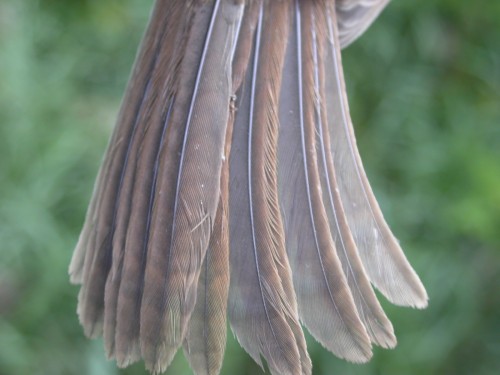
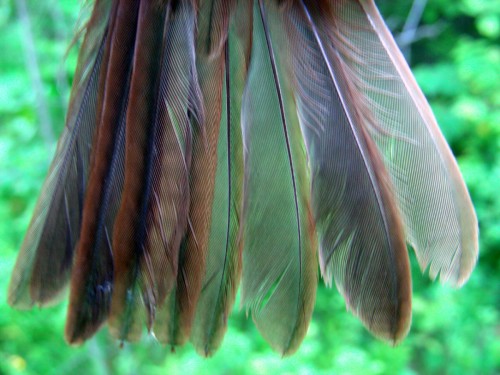
AHY/ASY birds generally have broader rectrices than SY birds, as shown in the second photo below. However, by spring the tips can be quite abraded, and the feathers often look quite tapered, as for SY birds, and thus tail shape should be used with caution for ageing, and in combination with the wing. Note too that the presence of growth bars across the tail is NOT useful, as the photo of a known ASY bird below illustrates.
Body plumage does not provide any clues to age or sex in Song Sparrows. Sex can be determined only during the breeding season by brood patch or cloacal protuberance, while the condition of the wing and tail can be assessed to determine age, although by spring the feathers have become worn enough that is often difficult to be certain, and many individuals are better called AHY.
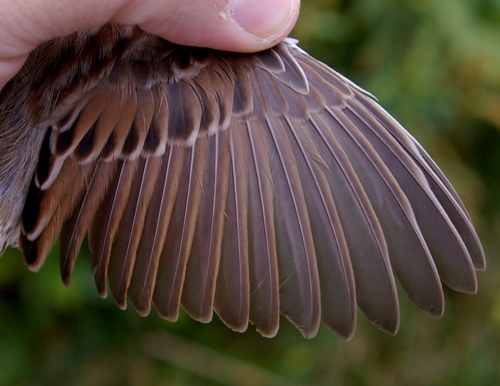
Primary coverts are somewhat narrower and more tapered than on ASY birds, but the distinction is slight. SY birds also tend to have somewhat less edging along the primary coverts, but again this can be difficult to judge, and as a result many birds in spring should be aged AHY, unless they are particularly distinct.
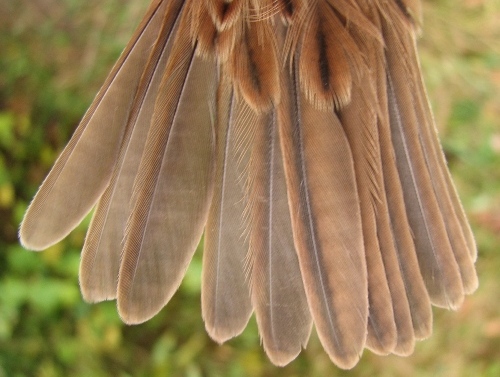
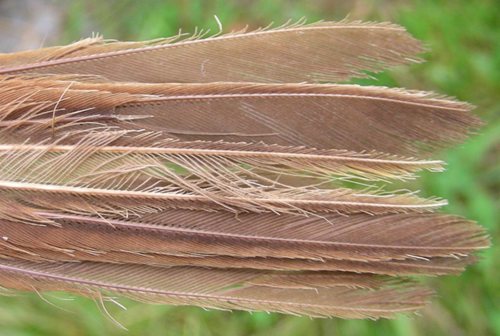
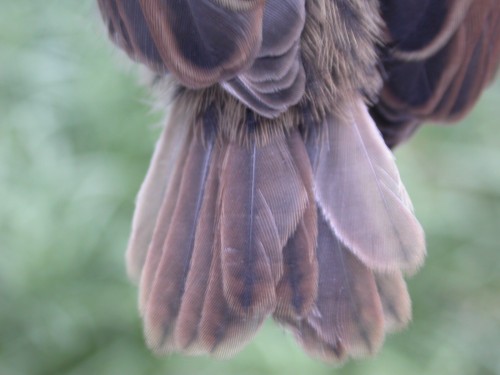
SY sparrows have relatively narrow and tapered rectrices that tend to become abraded rather quickly. However, as ASY tails can also be quite worn by spring, tail shape should be used with caution, and only in combination with wing molt to determine age. The tail is most useful for ageing in cases where there is a molt limit among the rectrices as in the example below (worn outer four juvenile rectrices contrasting with the fresher replaced central rectrices).
Body plumage does not provide any clues to age or sex in Song Sparrows. Sex can be determined only during the breeding season by brood patch or cloacal protuberance, while the condition of the wing and tail can be assessed to determine age.
Primary coverts are somewhat broader and more rounded than on SY birds, but the distinction is slight. ASY birds also tend to have somewhat more pale brown edging along the primary coverts.
AHY birds generally have broader and more rounded rectrices than HY birds; the second photo below is of a known AHY bird was taken as it was completing its moult.
In mid-late summer, it is occasionally possible to age some Song Sparrows as SY. As all AHY birds will be molting extensively at this time, the key is to look for retained juvenile feathers, which are very pale and contrast sharply with adjacent replaced feathers. The greater alula and outer primary coverts are likely to be particularly faded and abraded.
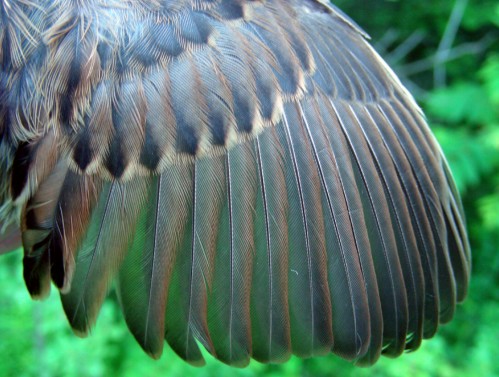
The photo below illustrates a wing in mid-moult, with three secondaries in the process of growing in, and all the inner ones still unreplaced. Note the very pale old outer primary covert and greater alula, as well as the unreplaced and worn outermost primary.
The tail is not helpful in diagnosing individuals as SY if it has already been replaced, as in the photo below. If instead the bird is seen just before replacing the tail, as in the second photo below, the extreme wear can be evident if juvenile rectrices have been retained to this point.
Body plumage does not provide any reliable clues to age or sex in Song Sparrows, though sometimes HY birds have a somewhat more buffy tinge to their underparts.
Primary coverts are somewhat narrower and more tapered than on ASY birds, but the distinction is slight. SY birds also tend to have somewhat less edging along the primary coverts, and when present, it is more beige than rusty brown.
HY sparrows have relatively narrow and tapered rectrices that tend to become abraded rather quickly.
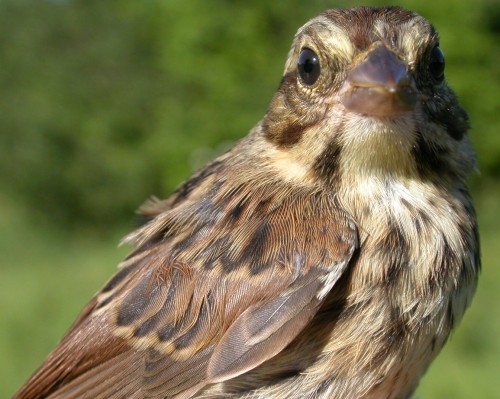
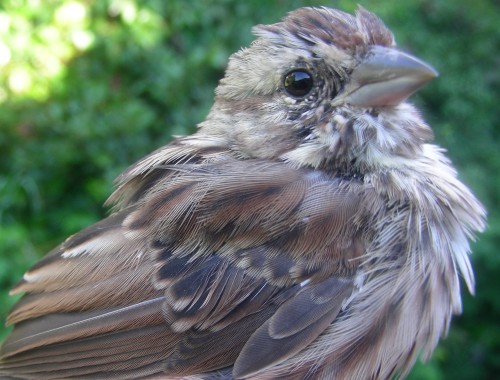
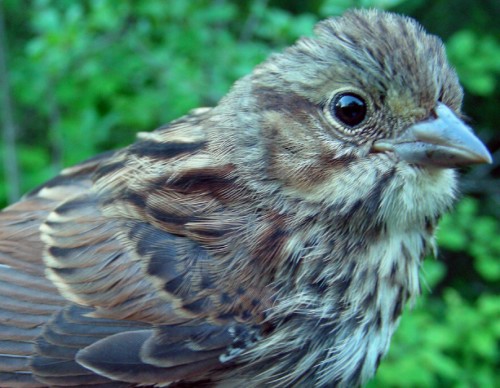
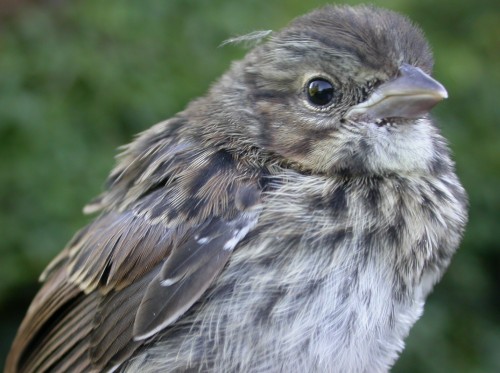
Juvenile Song Sparrows have sparse streaking on the upper breast, lacking the central breast spot of adults. The crown is also much less distinctly marked than older birds, and the remnants of the juvenile gape are often still visible at the base of the bill.
The wing is generally dull brown, with the primary coverts having minimal pale edging.
The photo below shows a very young Song Sparrow in the process of growing its tail; once completed it is similar to the HY tail shown above.
|