Ageing and sexing details:
JAN - JUL: after-second-year unknown |
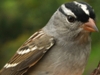
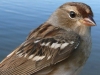
In most cases, ASY and SY White-crowned Sparrows are largely indistinguishable when perched, although some patterns better visible on the open wing may occasionally be seen with a good view. Sex can be identified only by brood patch or cloacal protuberance, and is therefore generally not possible to determine during migration.
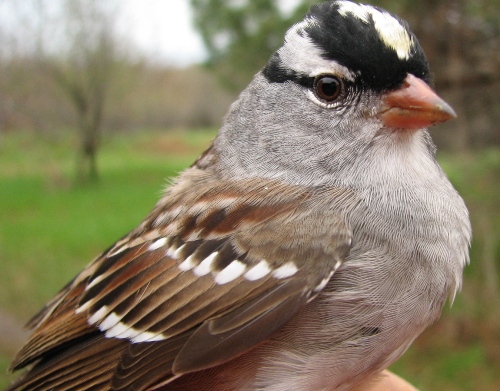
Photo by Barbara Frei, McGill Bird Observatory (QC), May 2008
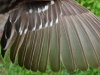
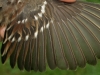
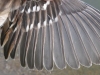
ASY White-crowned Sparrows have relatively broad and rounded primary coverts that are fairly uniform in colour and condition with the primaries, secondaries, and greater coverts.
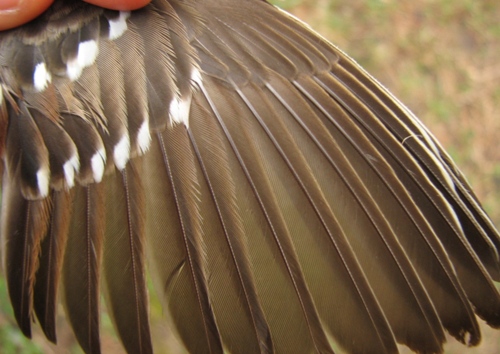
Photo by Barbara Frei, McGill Bird Observatory (QC), May 2008
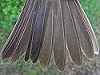
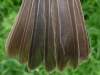
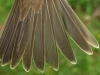
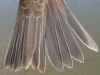
The rectrices of ASY White-crowned Sparrows tend to be somewhat broader and more rounded than on SY birds, but beware that the difference in shape is more subtle than in some other sparrows..
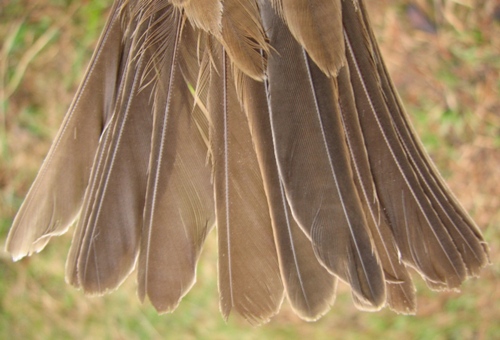
A typical ASY tail, showing relatively broad and rounded rectrices with a moderate amount
of wear. Note that the central rectrices are darker, having been replaced during the
prealternate molt, which is fairly common in both ASY and SY White-crowned Sparrows.
Photo by Barbara Frei, McGill Bird Observatory (QC), May 2008
RETURN TO AGE/SEX OVERVIEW
JAN - JUL: second-year unknown |
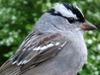
In most cases the overall body plumage is of no help in determining age in spring (a few brown/tan feathers at the back of the crown may be indicative of SY, but this requires further study).
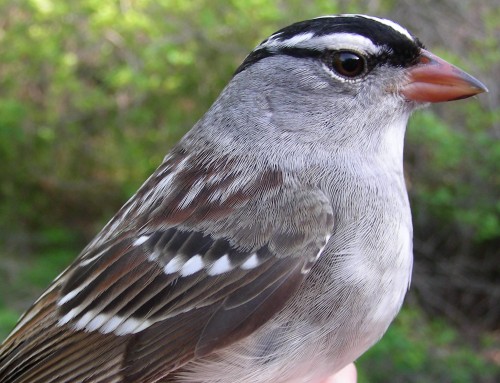
Photo by Marie-Anne Hudson, McGill Bird Observatory (QC), May 2008
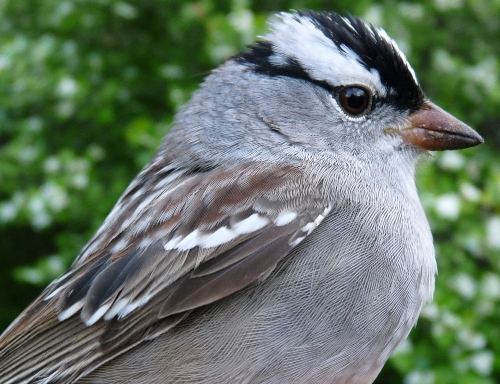
Note that when the crest is raised, the white line can appear much broader than in the
previous example, but this is not related to age or sex.
Photo by Marcel Gahbauer, McGill Bird Observatory (QC), May 2010
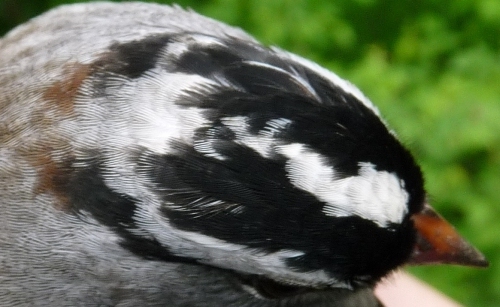
On some SY birds, a few brown feathers remain at the back of the crown.
Photo by Marcel Gahbauer,McGill Bird Observatory (QC), May 2010
In spring, the wing is the best way to determine age of White-crowned Sparrows, but beware that in some individuals the molt limits are subtle and difficult to recognize. Look for the primary coverts, primaries and secondaries to form a uniformly brown block, contrasting in colour and wear to the greater coverts and tertials, unlike the more uniform wing of ASY birds.
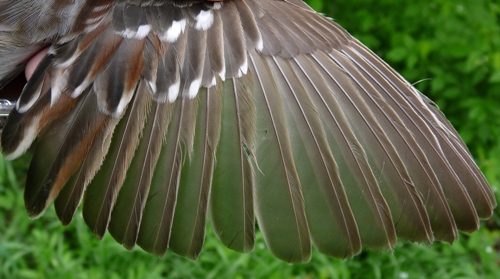
This is a particularly distinct SY wing, with the worn inner secondaries contrasting sharply with
the tertials, and the block of primary coverts, primaries, and secondaries pale overall.
Photo by Marcel Gahbauer, McGill Bird Observatory (QC), May 2010
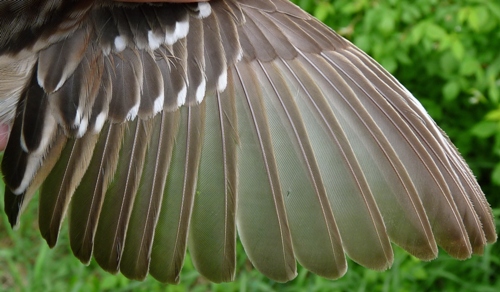
Compared to the example above, this wing shows less wear, but the block of pale
feathers is similar and still quite distinct.
Photo by Marcel Gahbauer, McGill Bird Observatory (QC), May 2010
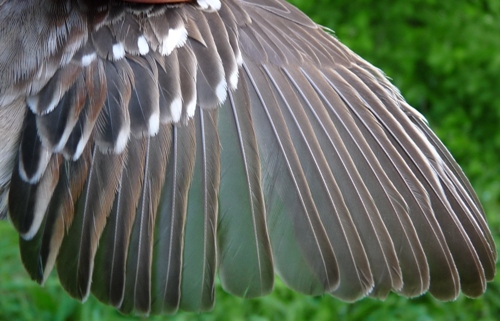
In this case the molt limit is much more subtle, and cases like this may best be considered
as AHY unless there are other features providing a clear indication of the bird's age (in the
case of this bird, the tail had distinctly juvenile feathers, allowing it to be called SY).
Photo by Marcel Gahbauer,McGill Bird Observatory (QC), May 2010
Although there is a fair amount of overlap in the shape of juvenile and adult rectrices in this species, the condition of juvenile feathers is usually worn enough by spring for the tail to provide good clues for ageing, as illustrated by a variety of scenarios below.
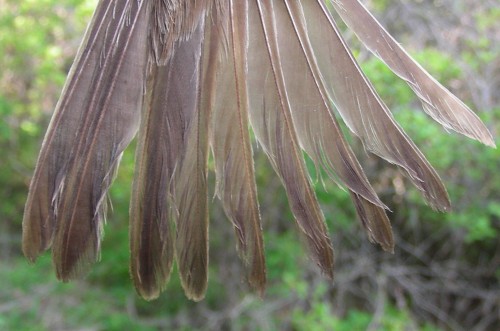
In this extreme case, all juvenile rectrices have been retained, and they are quite narrow and
worn, though the tapered shape is a bit exaggerated.
Photo by Marie-Anne Hudson, McGill Bird Observatory (QC), May 2008
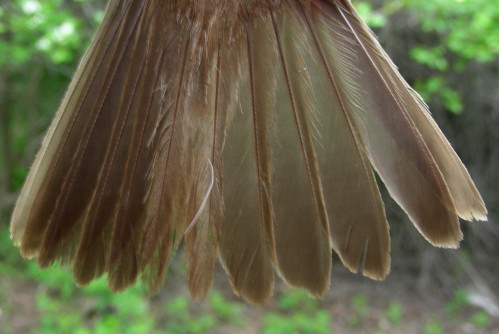
Another case in which all juvenile rectrices have been retained, in this case showing the
intermediate shape of outer rectrices often seen in this species at any age. However, the
extremely worn central rectrices are clearly juvenile feathers by their condition alone.
Photo by Marie-Anne Hudson, McGill Bird Observatory (QC), May 2009
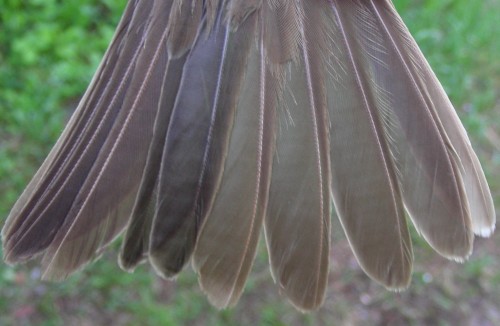
An example of a more common situation, with the central rectrices replaced during the
prealternate molt, and the remaining rectrices not sufficiently tapered or worn to reliably
determine age (however, this individual had a distinct molt limit on the wing).
Photo by Marie-Anne Hudson, McGill Bird Observatory (QC), May 2008
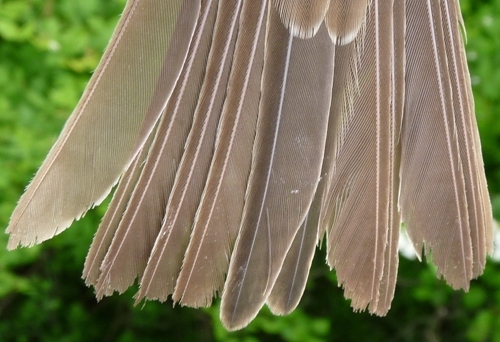
A similar pattern to the previous bird, except with the retained juvenile feathers showing
much more wear at the tips, contrasting more obviously with the new central rectrices.
Photo by Marcel Gahbauer,McGill Bird Observatory (QC), May 2010
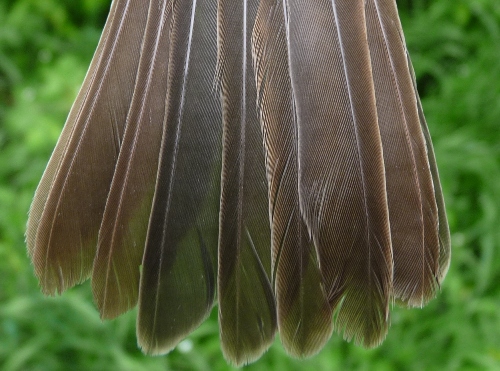
Another variant, with r1 and r2 both replaced in this case, contrasting with the paler and
more worn outer rectrices.
Photo by Marcel Gahbauer,McGill Bird Observatory (QC), May 2010
RETURN TO AGE/SEX OVERVIEW
JUL - DEC: after-hatch-year unknown |
In fall, the crown pattern alone is sufficient to correctly age White-crowned Sparrows, as any individual with a black/white pattern is an after-hatch-year bird. Note that the pattern varies by subspecies; all the individuals banded to date at MBO are of the Eastern race.

A typical AHY White-crowned Sparrow.
Photo by Simon Duval, McGill Bird Observatory (QC), September 2010
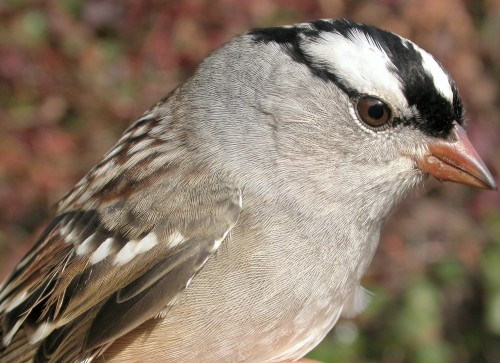
As noted in spring, the width of the white supercilium can appear variable, but it has no
relation to age or sex of individuals.
Photo by Marcel Gahbauer,McGill Bird Observatory (QC), October 2005
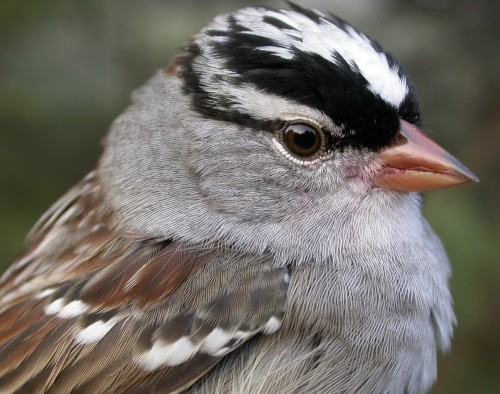
Note that in this case there appear to be a few brown feathers at the back of the crown,
suggesting that these may not necessarily be a reliable indicator of age.
Photo by Marcel Gahbauer,McGill Bird Observatory (QC), October 2005
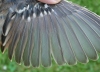
The primary coverts on AHY birds are fresh and dark, uniform in colour and wear with the greater coverts.
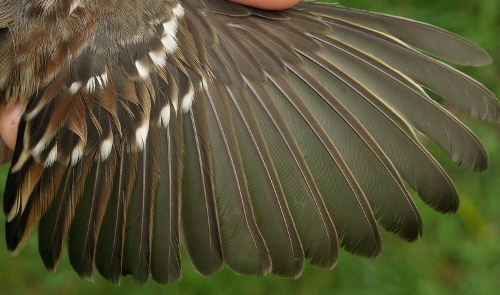
A typical AHY wing.
Photo by Simon Duval,McGill Bird Observatory (QC), September 2010
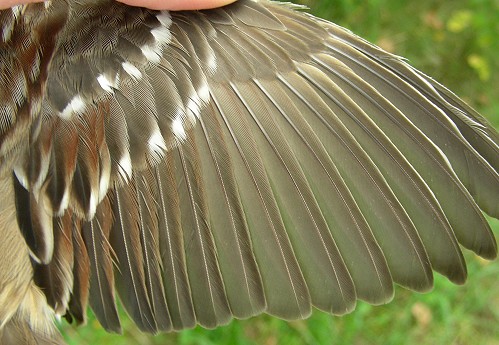
Sometimes the wing can have a paler appearance, but note that there is still a uniformity
to the overall colour tone and feather condition. Wing condition is rarely an issue in fall,
since ageing is easily accomplished by looking at the head pattern.
Photo by Marie-Anne Hudson, McGill Bird Observatory (QC), October 2007
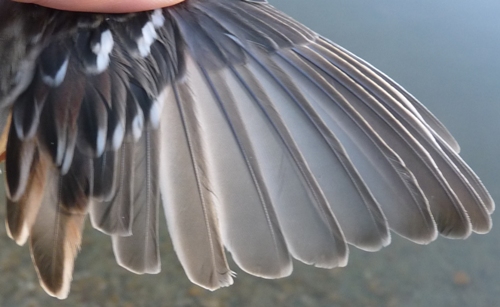
An AHY individual in the late stages of prebasic molt.
Photo by Marcel Gahbauer,Cypress Hill Provincial Park (AB), August 2010
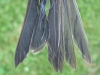
The rectrices of AHY birds average slightly broader and rounder than those of HY birds, but there is considerable overlap between the age classes; fortunately tail shape is of little importance in fall since ageing can be accomplished simply using head plumage.
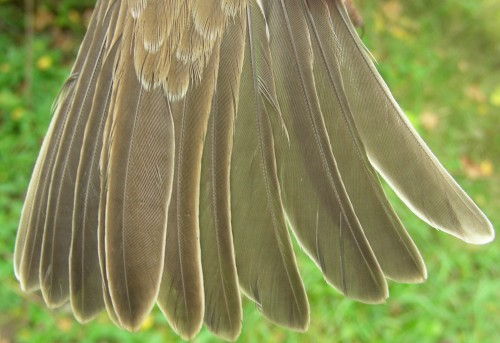
A relatively typical AHY tail, with somewhat broad and rounded rectrices. The central
rectrices are slightly paler than the others, likely due to greater exposure.
Photo by Marcel Gahbauer,McGill Bird Observatory (QC), October 2005
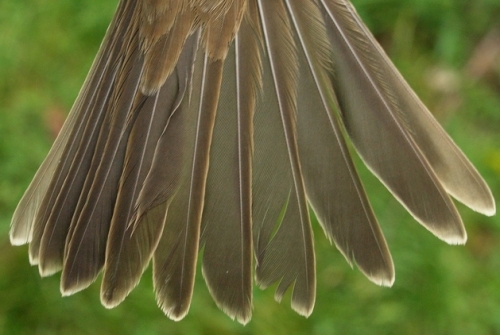
An example of relatively narrow and pointed rectrices on an AHY individual that are closer to
the typical shape expected on an HY bird.
Photo by Simon Duval,McGill Bird Observatory (QC), September 2010
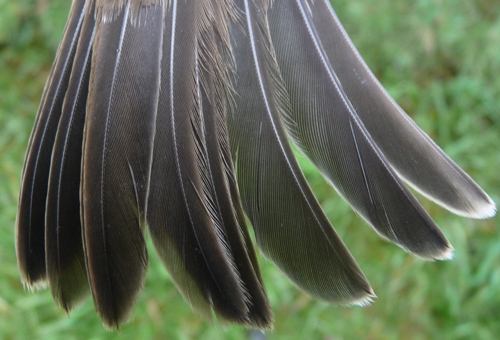
Somewhat darker rectrices, illustrating the variability among individuals in this regard. The
shape of the rectrices is intermediate, and could easily be found on either HY or AHY birds.
Photo by Marcel Gahbauer,McGill Bird Observatory (QC), October 2009
RETURN TO AGE/SEX OVERVIEW
JUL - DEC: hatch-year unknown |
In fall, the crown pattern alone is sufficient to correctly age White-crowned Sparrows, as any individual with a brown/tan pattern is a hatch-year bird.
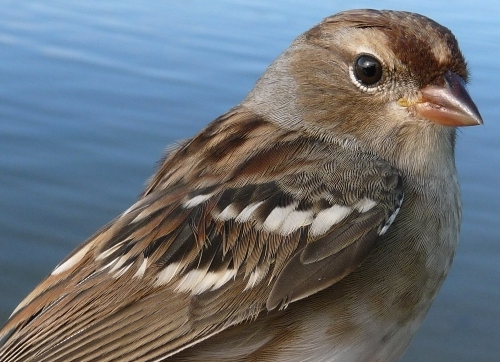
A typical HY appearance.
Photo by Marcel Gahbauer,Cypress Hills Provincial Park (AB), August 2010
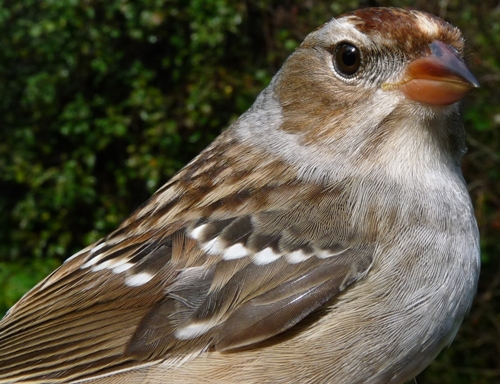
Some HY birds already start to show flecks of white and black in the crown in fall.
Photo by Marcel Gahbauer,McGill Bird Observatory (QC), October 2009
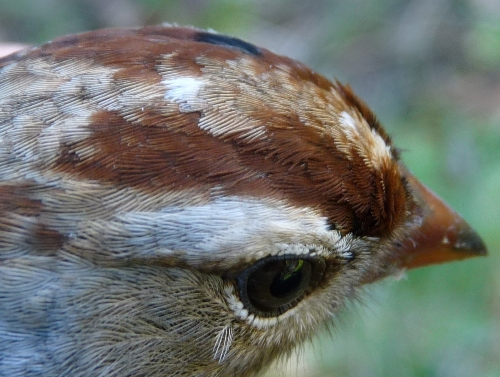
A top view of the bird above, showing a few isolated white and black crown feathers.
Photo by Marcel Gahbauer,McGill Bird Observatory (QC), October 2009
Although the contrast is usually much more subtle in fall than spring, the molt limit between the greater coverts vs. the primary coverts, primaries, and secondaries can usually be seen on HY birds.
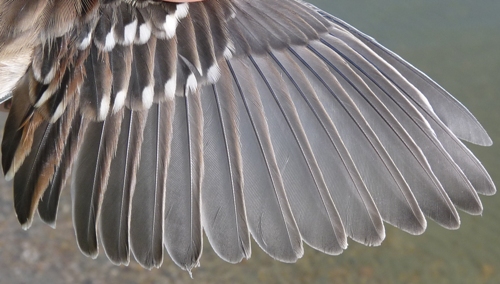
A relatively young sparrow, likely having just finished its preformative molt, but already
showing a contrast between the juvenile primary coverts, primaries, and secondaries, and
the formative greater coverts.
Photo by Marcel Gahbauer,Cypress Hills Provincial Park (AB), August 2010
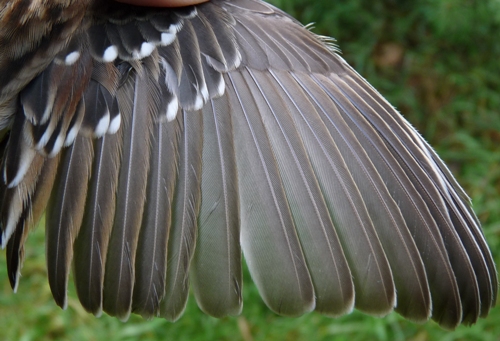
A second example from a bit later in fall, showing a similar pattern.
Photo by Marcel Gahbauer,McGill Bird Observatory (QC), October 2009
On average, juvenile rectrices are somewhat narrower and more pointed, but there is overlap between HY and AHY birds. There is no need to refer to the tail in fall when crown pattern is a reliable indicator of age; however, doing so as a matter of routine will help provide experience regarding the limited within-species variation between HY/SY and AHY/ASY birds.
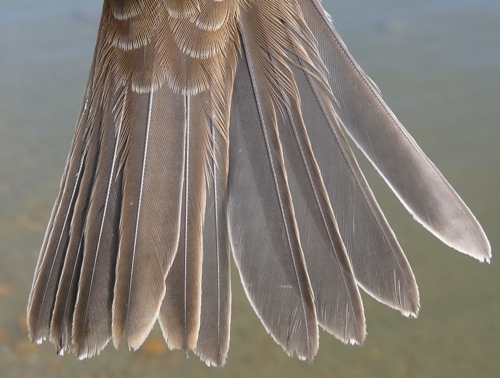
A fairly typical HY tail, with somewhat tapered outer rectrices. Note that as in one of the AHY
photos, the central rectrices are paler than the others due to greater sun exposure.
Photo by Marcel Gahbauer,Cypress Hills Provincial Park (AB), August 2010
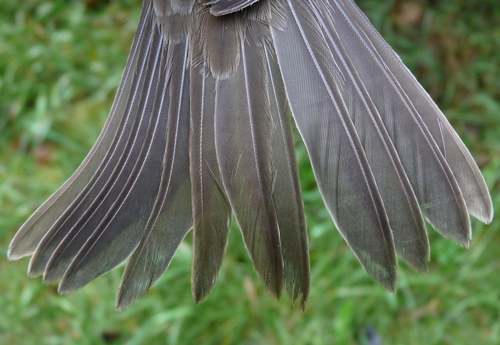
An example of unusually narrow and tapered rectrices that fit the more typical juvenile shape.
Photo by Marcel Gahbauer,McGill Bird Observatory (QC), October 2009
RETURN TO AGE/SEX OVERVIEW
JUL - AUG: juvenile unknown |
In fall, the crown pattern alone is sufficient to correctly age White-crowned Sparrows, as any individual with a brown/tan pattern is a hatch-year bird.
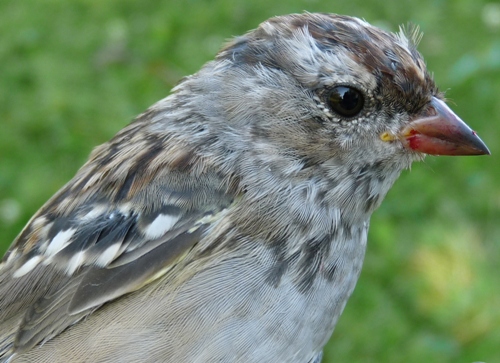
Juveniles have some streaking on the breast, like most sparrows, but the large reddish
bill is diagnostic, and hints of the crown pattern are already evident at this age.
Photo by Marcel Gahbauer,Cypress Hills Provincial Park (AB), August 2010
Although the contrast is subtle, this photo shows that the primary coverts (along with the primaries and secondaries) tend to be slightly paler and duller than the greater coverts, which have been replaced in the preformative molt.
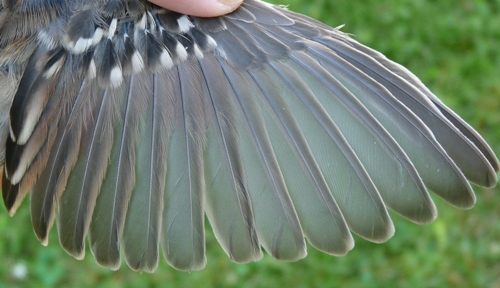
This photo illustrates the greater coverts being replaced as part of the preformative molt.
Photo by Marcel Gahbauer,Cypress Hills Provincial Park (AB), August 2010
The rectrices are relatively narrow and pointed at the tip, and generally showing some wear; as rectrix shape varies less in White-crowned Sparrow than many other sparrows, there is no need to refer to it in fall when crown pattern is a reliable indicator of age; however, doing so as a matter of routine will help provide experience regarding the limited within-species variation between HY/SY and AHY/ASY birds.
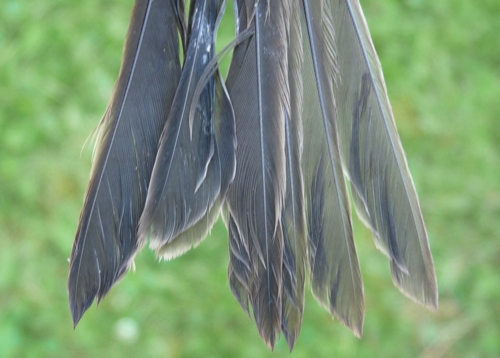
In this example, the juvenile rectrices are quite narrow and pointed as expected; it appears
that two rectrices are being prematurely replaced, and the new feathers are somewhat broader.
Photo by Marcel Gahbauer,Cypress Hills Provincial Park (AB), August 2010
RETURN TO AGE/SEX OVERVIEW