|
|
McGILL BIRD OBSERVATORY |
||||||||||||||||||||||||||||||||||||||||||||||
NOTE:
This species account has been moved to Piranga to allow for improved comparison
among examples.
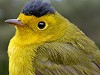
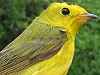
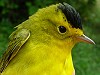
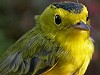
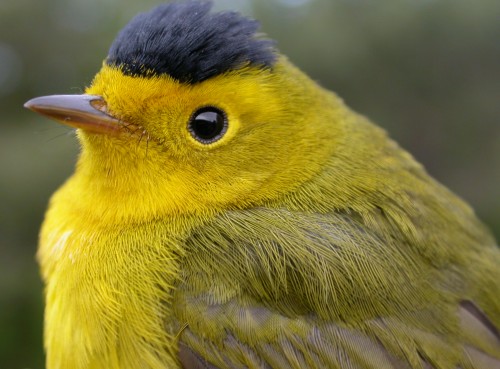
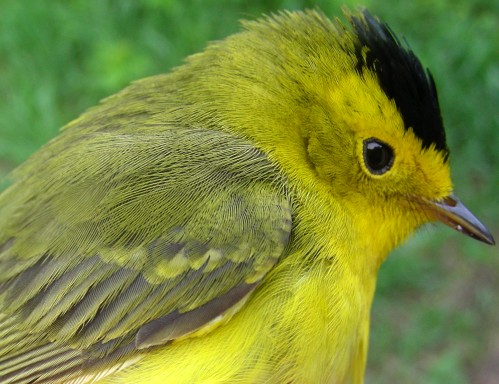
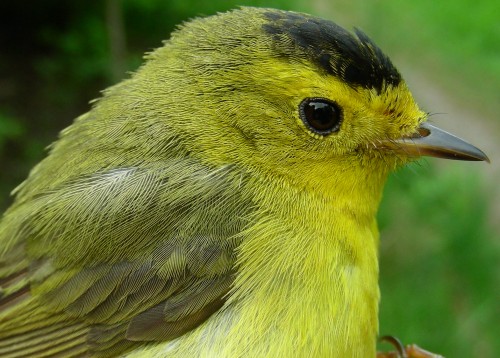
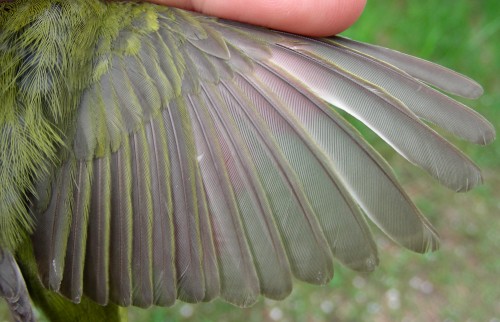
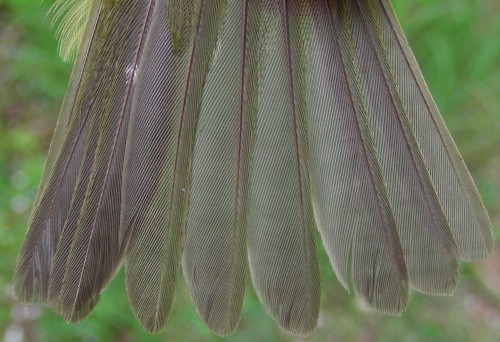
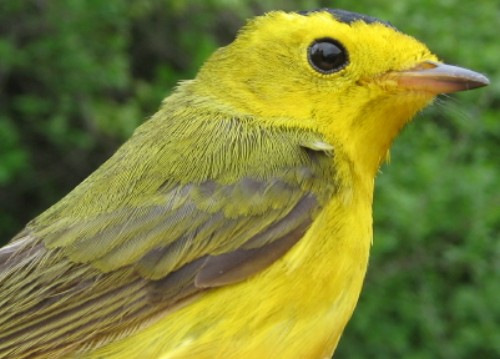
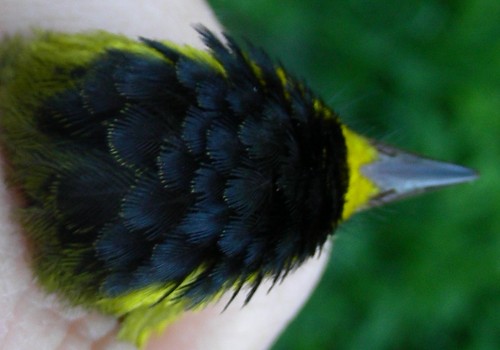
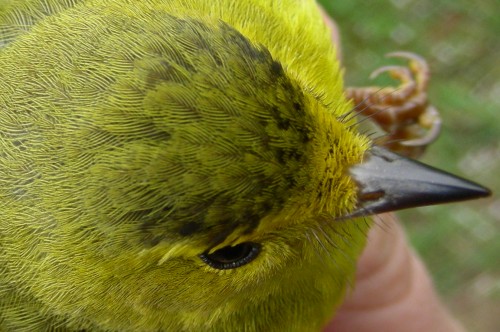
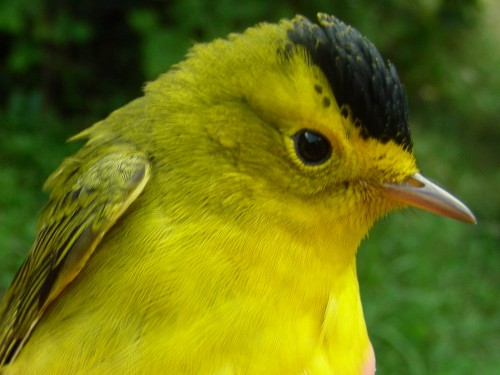
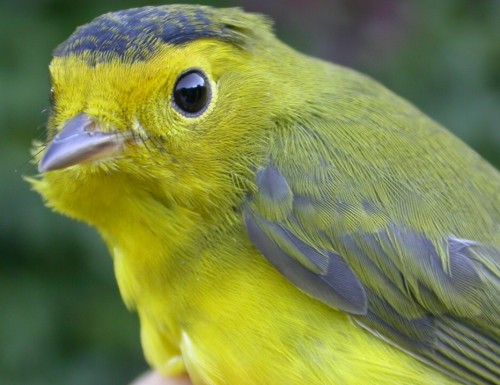
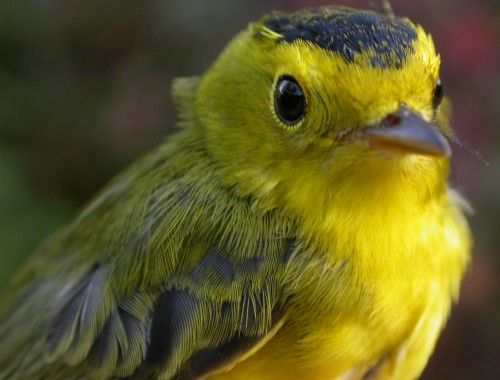
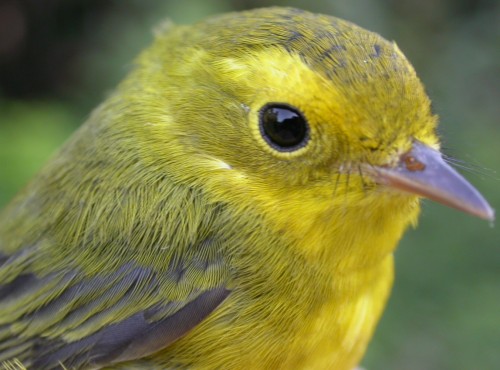
Ageing and sexing details: The solid black cap and golden throat shown in the photos below is indicative of an after-second-year male, but to confirm age and sex it is advisable to consider the wing and tail too.
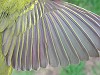
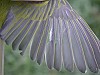
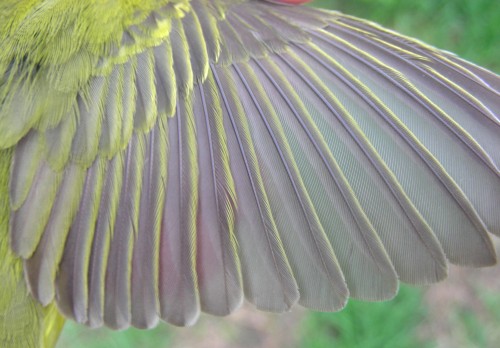
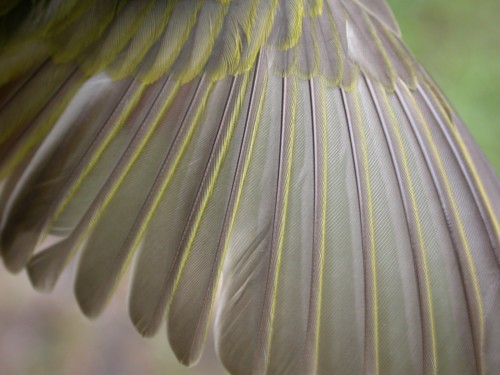
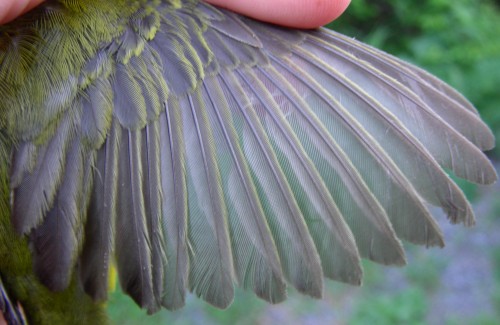
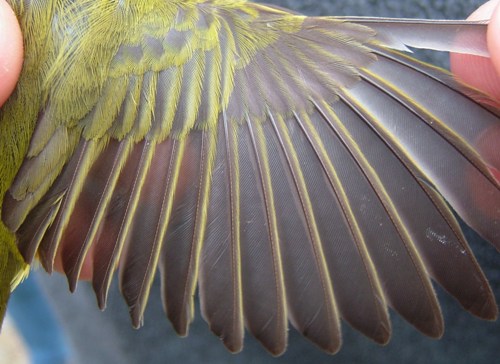
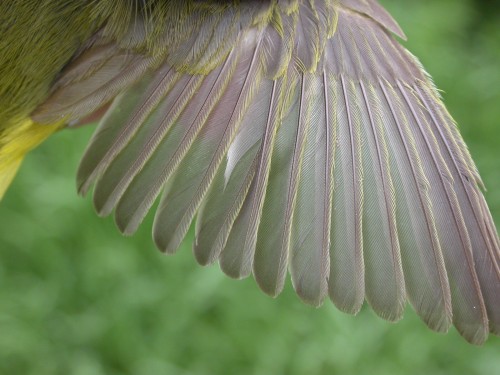
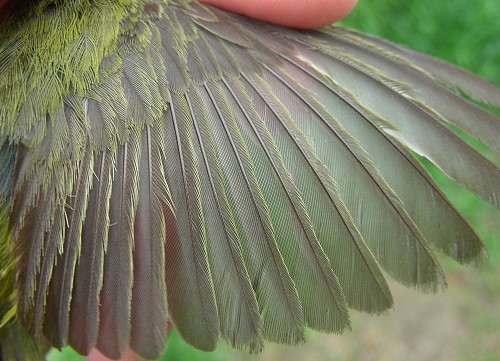
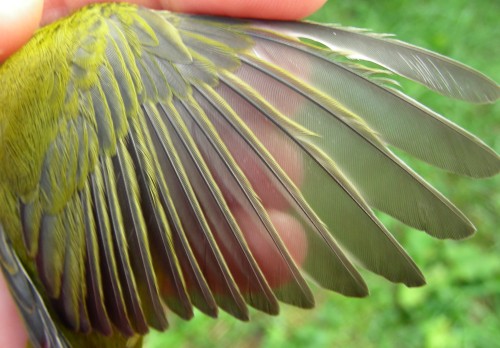
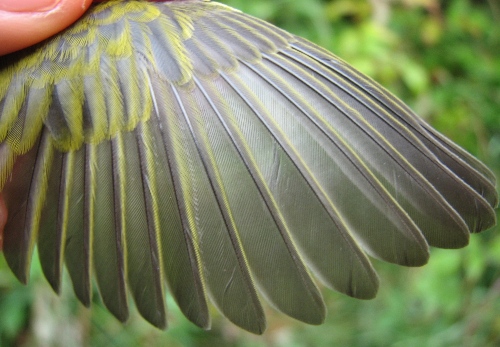
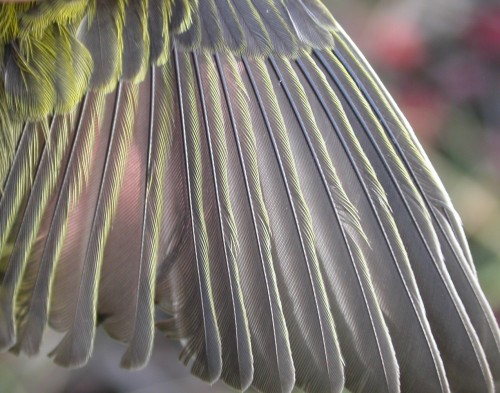
After-second-year birds have greenish edging on the primary coverts, but it is often fairly dull and narrow.
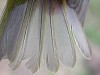
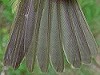
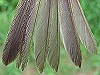
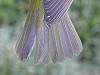
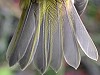
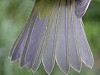
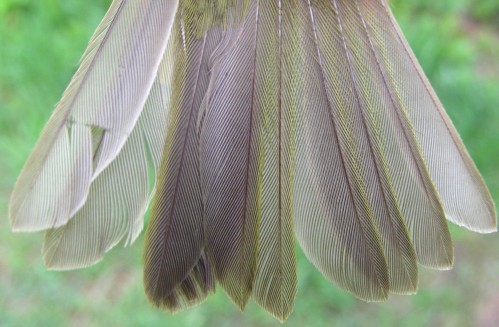
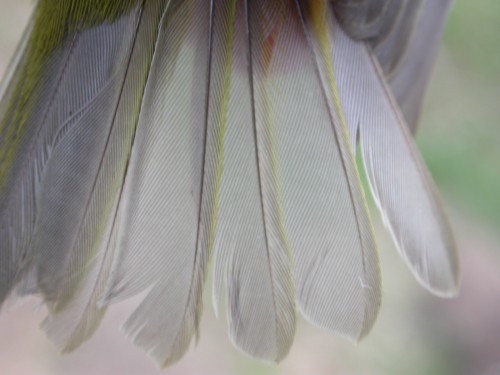
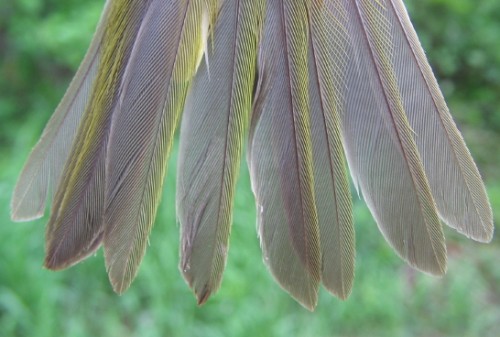
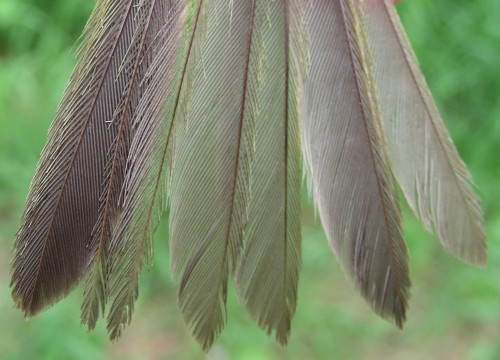
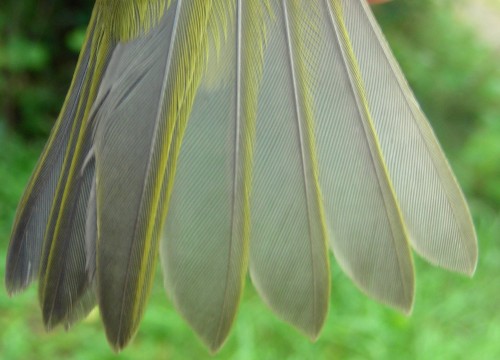
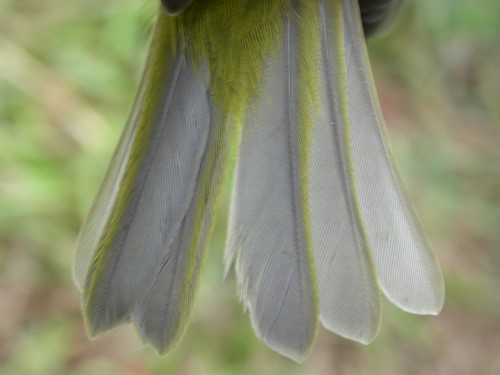
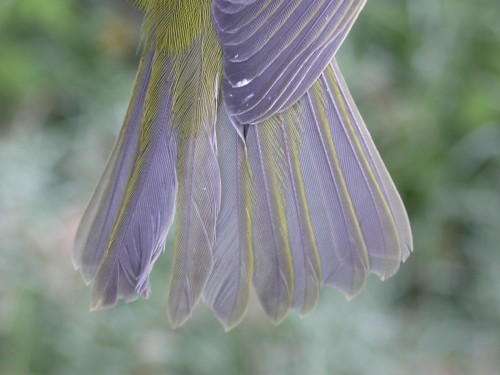
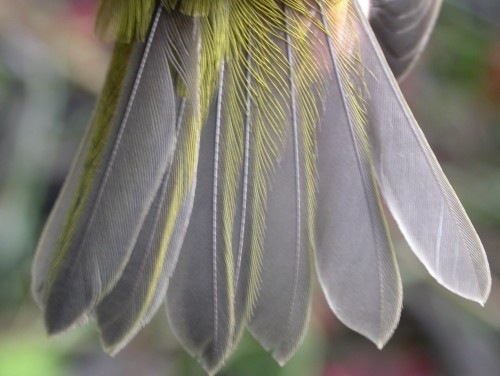
The rectrices are broad and fairly rounded on after-second-year Wilson's Warblers.
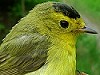
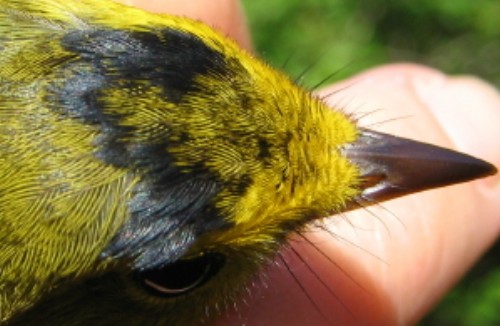
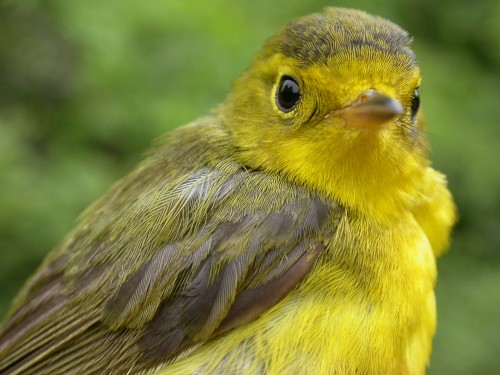
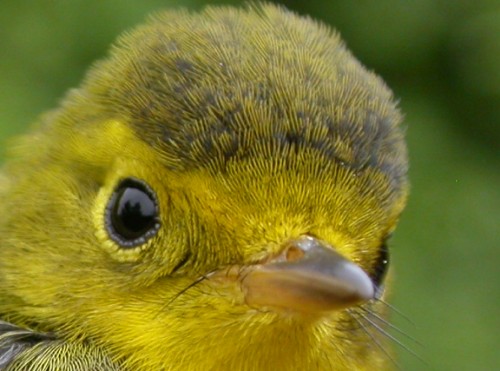
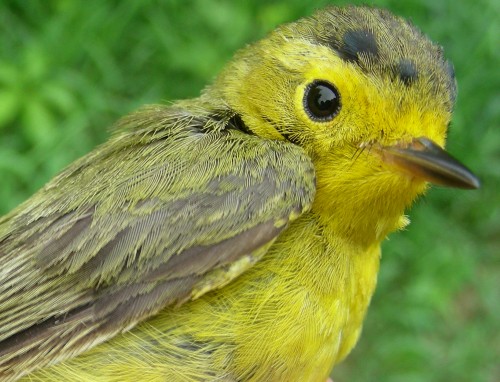
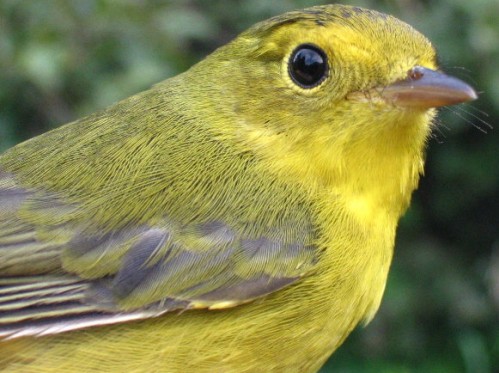
The extent of black on the crown is intermediate for after-second-year females and second-year males (generally more restricted for females); wing and tail need to be examined to determine age and sex, though typically females have a duller yellow throat.
After-second-year Wilson's Warblers have green edging on the primary coverts; using them to determine age, the crown can then be used to identify sex.
The outer rectrices are usually relatively broad and often fairly rounded, though not always; wing is more reliable.
The extent of black on the crown is intermediate for after-second-year females and second-year males (generally more extensive for females); wing and tail need to be examined to determine age and sex, though males tend to have a richer golden tone to the throat.
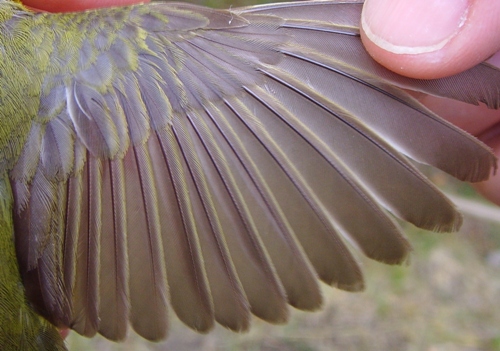
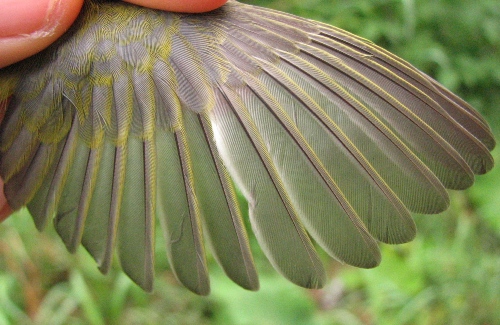
The primary coverts lack edging and are brownish, contrasting with the greater coverts; the primaries and secondaries may be quite pale and worn by spring, as int he first photo below.
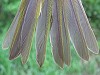
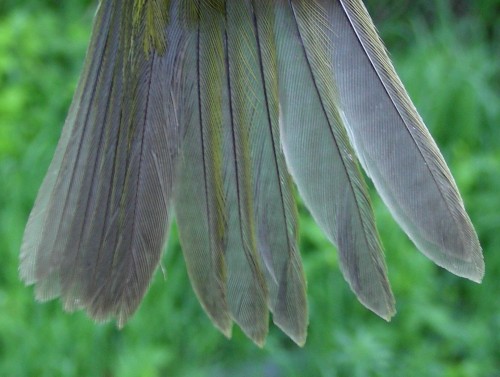
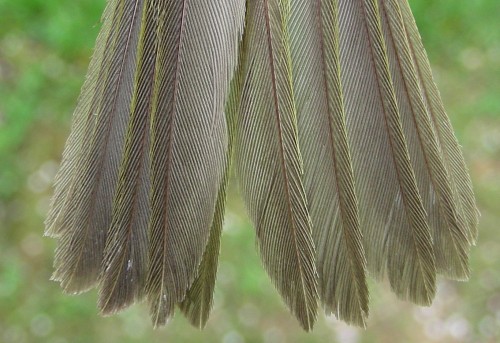
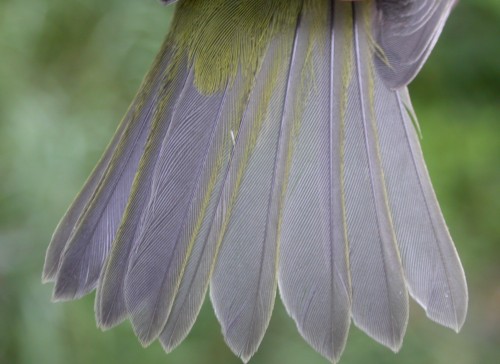
The rectrices tend to be relatively narrow and pointed, but in general their shape is much less reliable than the wing characteristics.
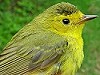
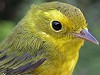
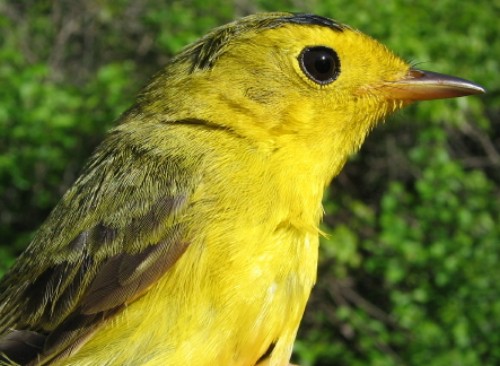
Individuals with minimal black on the crown, such as in the photos below, are almost always second-year females, but the wing should be checked to confirm age.
The primary coverts lack edging and are brownish, contrasting with the greater coverts, and the primaries and secondaries may be quite pale and worn.
The rectrices tend to be relatively narrow and pointed, but in general their shape is much less reliable than the wing characteristics. Note, however, that the central rectrices may be extremely worn by spring in SY birds, much more so than would be expected in ASY birds. This is especially evident in the first photo below, but absence of such wear should not be taken as indicative of ASY.
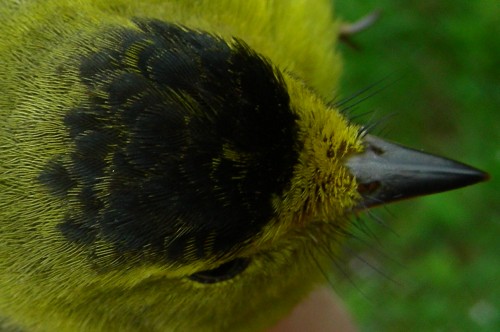
The solid black cap shown in the photo below is indicative of an after-hatch-year male, but to confirm age and sex it is advisable to consider the wing and tail too.
After-hatch-year birds have distinct greenish edging on the primary coverts.
The rectrices are broad and fairly rounded on after-hatch-year Wilson's Warblers.
The extent of black on the crown is intermediate and very similar for after-hatch-year females and hatch-year males; wing and tail need to be examined to determine age and sex.
After-hatch-year Wilson's Warblers have green edging on the primary coverts; using them to determine age, the crown can then be used to identify sex.
The rectrices are typically broad and fairly rounded on after-hatch-year Wilson's Warblers.
The extent of black on the crown is intermediate and very similar for after-hatch-year females and hatch-year males (generally more extensive for females); wing and tail need to be examined to determine age and sex.
Hatch-year Wilson's Warblers typically have minimal edging on the primary coverts, though when fresh, they may show some greenish.
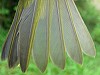
Rectrices are relatively narrow, and generally taper toward a point.
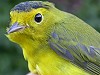
Hatch-year females are easily recognizable by having little to no black on the crown.
The primary coverts have minimal edging and are brownish, contrasting with the darker greater coverts.
Rectrices are relatively narrow, and generally taper toward a point.
|