|
|
McGILL BIRD OBSERVATORY |
|||
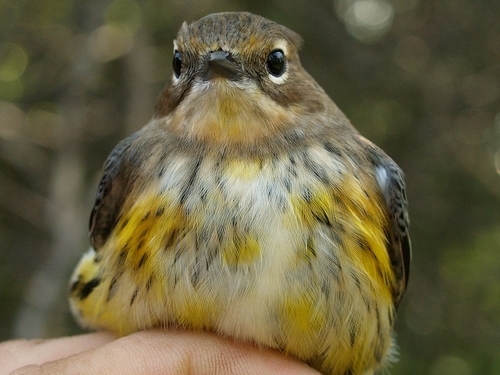
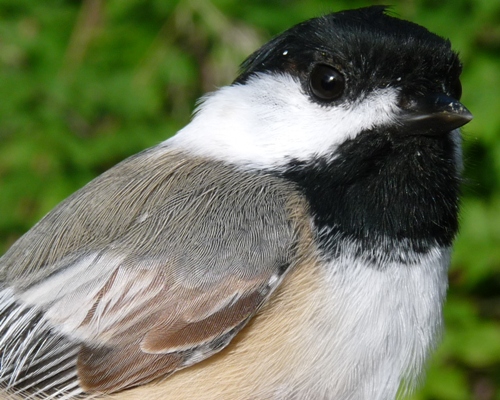
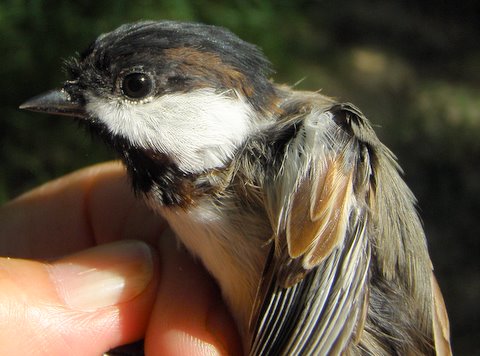
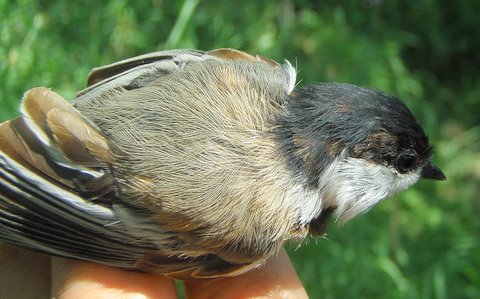
Banding offers us a rare opportunity to take a close look at some of the oddities of the bird world. Abnormal pigmentation, deformities, irregular moulting, and even hybrids are under normal circumstances difficult to spot and describe, but having birds in the hand allows us to document their occurrence and investigate the causes behind them. On this page we feature photos of some of these 'odd birds', along with commentary on some. We welcome your input - please e-mail us (oddities@migrationresearch.org) if you have similar experiences or any comments to share. Yellow-rumped Warbler with unusually extensive yellow plumage (McGill Bird Observatory, Quebec - September 2010) Black-capped Chickadee with brown/faded wing feathers (McGill Bird Observatory, Quebec - October 2010)
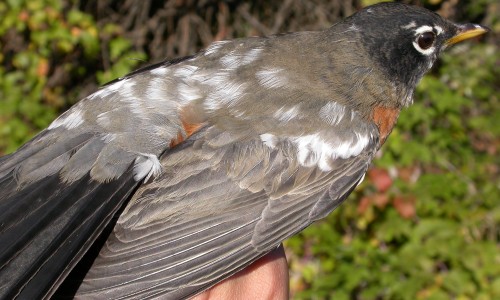
Leucistic American Robin (McGill Bird Observatory, Quebec - October 2004)
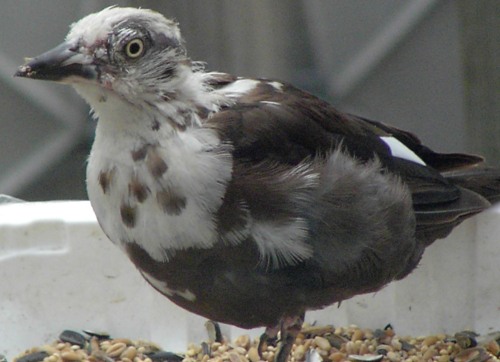
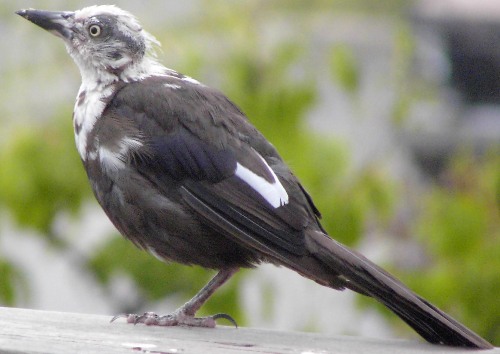
Leucistic hatch-year Common Grackle (Markham, Ontario - July 2008)
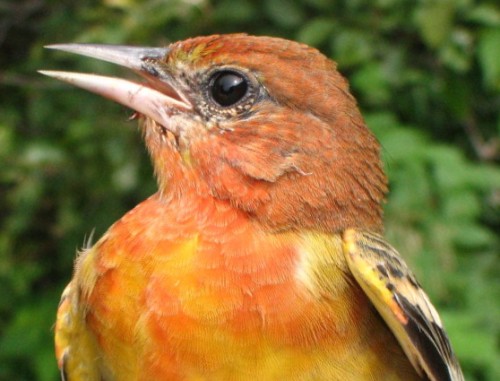
Hatch-year Baltimore Orioles with red pigmentation (McGill Bird Observatory, Quebec - August 2006)
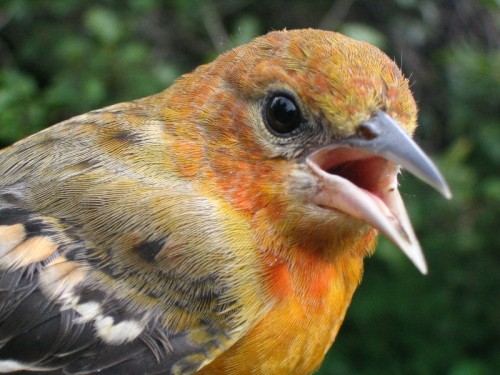
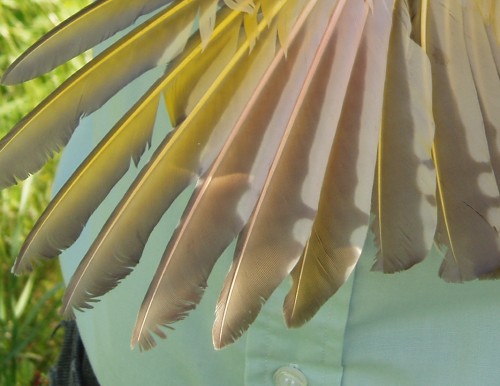
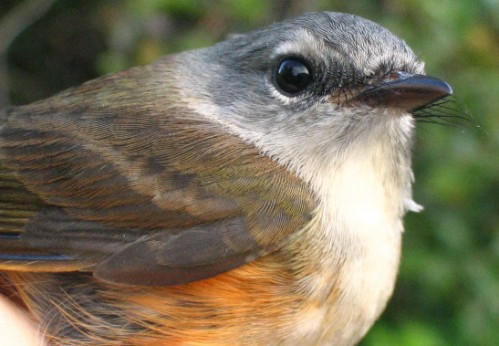
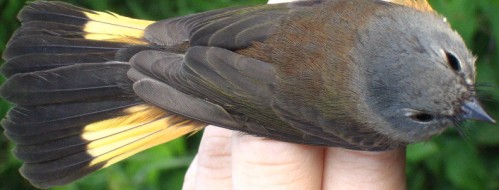
Yellow-shafted Flicker with pinkish primaries at Pointe-aux-Prairies QC, June 2005 Hatch-year male American Redstart with unusually orange pigmentation (McGill Bird Observatory, Quebec - August 2006)
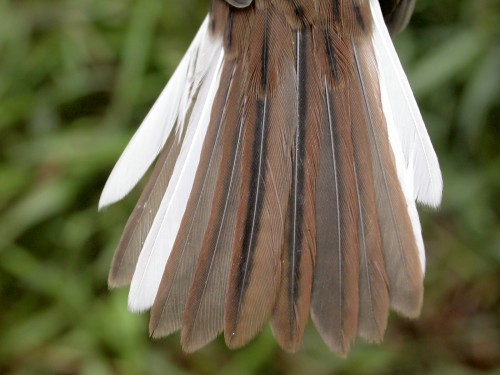
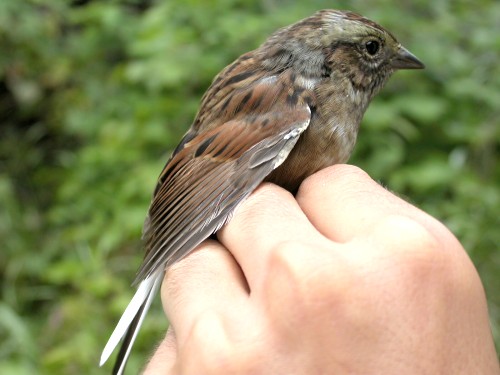
Swamp Sparrow with irregular white rectrices (McGill Bird Observatory, Quebec - September 2005)
Female House Sparrow with a single white primary covert (McGill Bird Observatory, Quebec - April 2006)
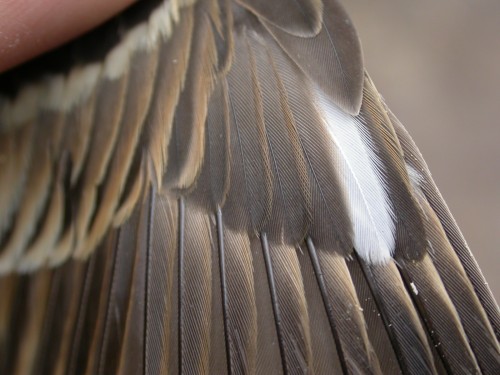
Ovenbird with irregular white alula and primary covert (McGill Bird Observatory, Quebec - September 2007)
Common Redpoll with orange cap (McGill Bird Observatory, Quebec - March 2006)
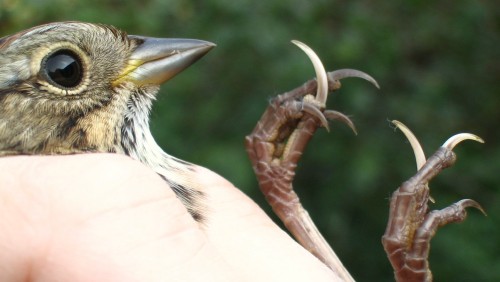
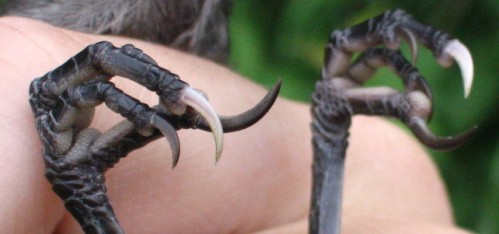
Lincoln's Sparrow with white toenails (McGill Bird Observatory, Quebec - September 2006)
Gray Catbird with white toenails (McGill Bird Observatory, Quebec - September 2006)
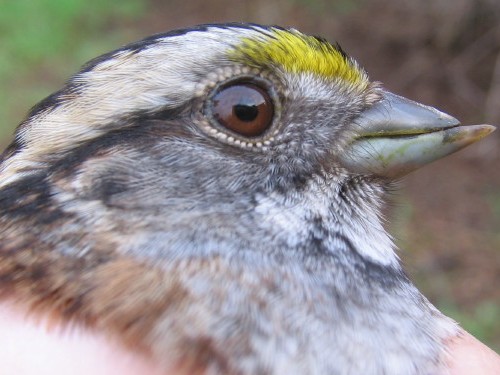
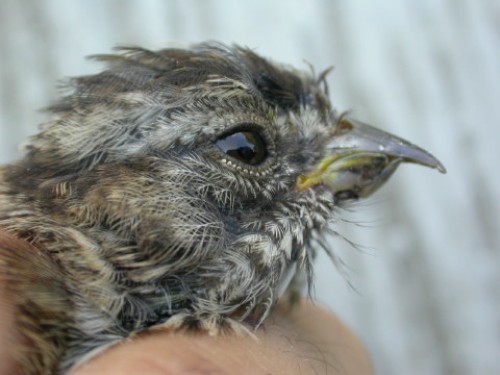
White-throated Sparrows with unusually short/long mandibles (McGill Bird Observatory, Quebec)
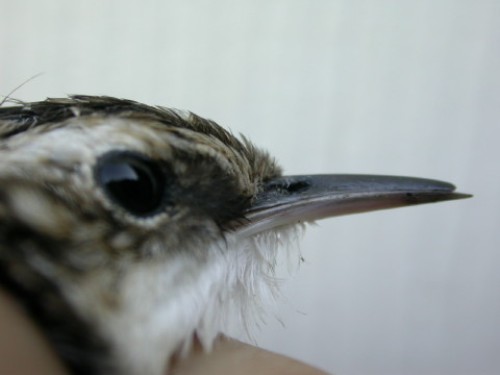
Brown Creeper with broken tip of upper mandible (McGill Bird Observatory, Quebec - September 2005)
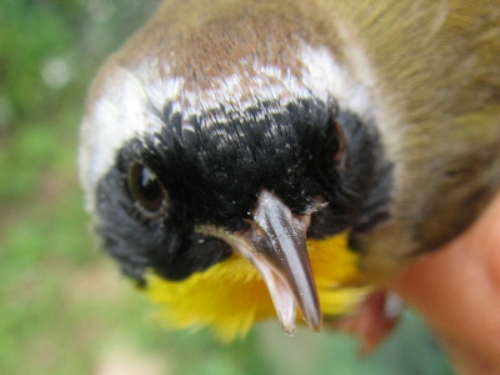
Common Yellowthroat with crossed mandibles (McGill Bird Observatory, Quebec - September 2006)
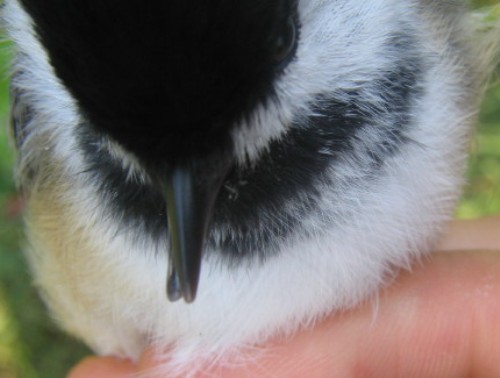
Black-capped Chickadee with crossed mandibles (McGill Bird Observatory, Quebec - September 2005)
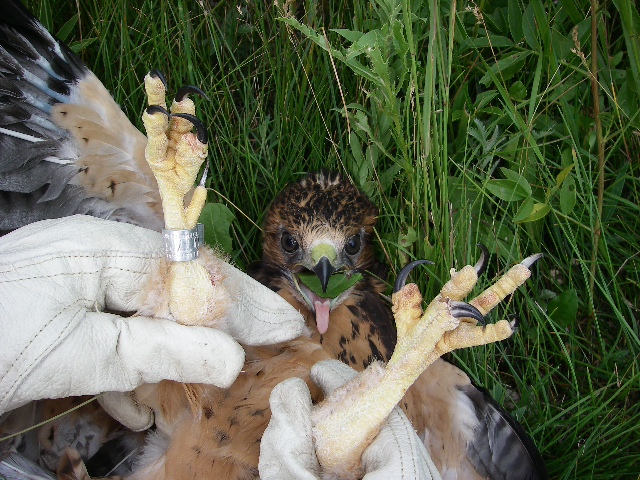
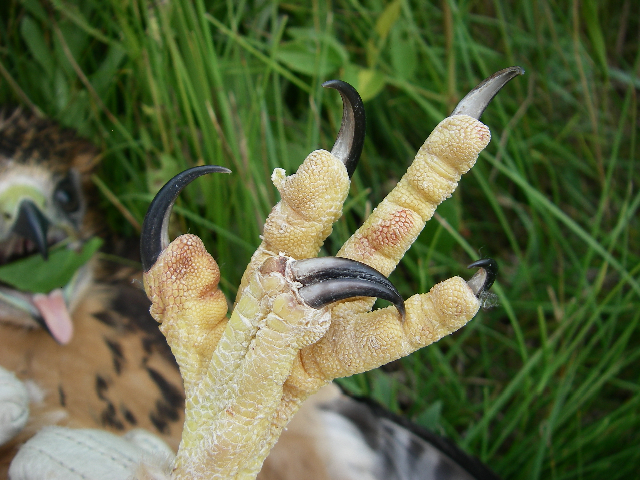
Swainson's Hawk with extra toes and talons (Saskatchewan - July 2009) The two photos below were sent to us by Dan Zazalenchuk, who banded it and a sibling as nestlings. He noted that while the other young hawk appeared normal, this one had trouble standing on its left leg, as the double-taloned toe kept folding under, though one week later it was standing and making short flights. We would be interested in hearing (and sharing photos) of any similar instances. Please e-mail us at mbo@migrationresearch.org
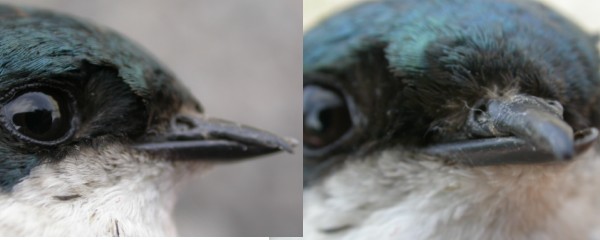
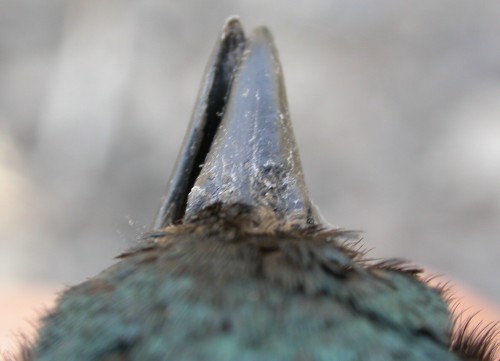
Tree Swallow with crossed bill (Hamilton, Ontario - May 2006)
Hatch-year Song Sparrow replacing
primary coverts (McGill Bird Observatory, Montreal QC, August 2006)
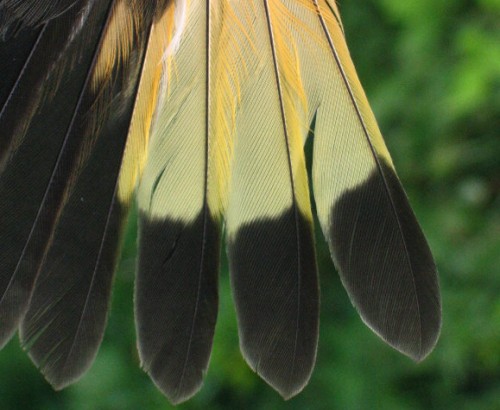
Hatch-year Common Yellowthroat with some rectrices replaced (McGill Bird Observatory, Quebec - August 2006)
Hatch-year White-throated Sparrow with rectrix being replaced (McGill Bird Observatory, Quebec - September 2006)
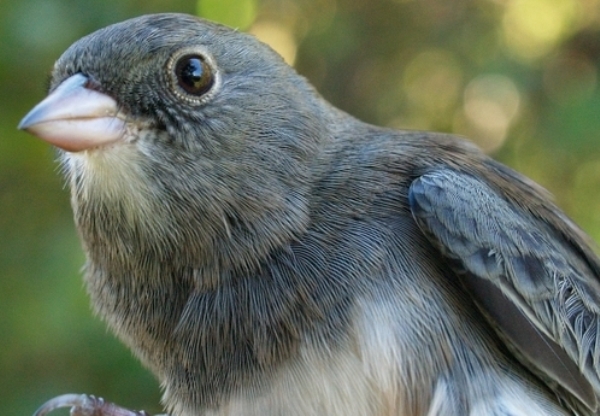
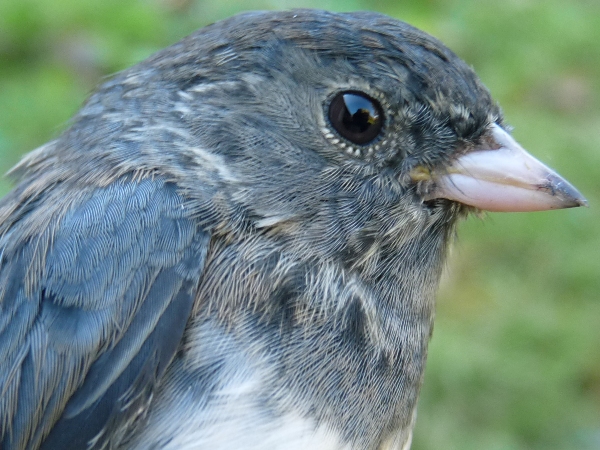
Apparent Slate-colored Junco x White-throated Sparrow (McGill Bird Observatory, Quebec - October 2010)
Apparent Slate-colored Junco x (White-throated?) Sparrow (McGill Bird Observatory, Quebec - October 2010)
Possible hybrid chickadee (Inglewood Bird
Sanctuary, Calgary AB, July 2007)
|